
Christmas Toffee Crunch Cake
The toothpick test tells you a lot about this cake: a few moist crumbs are right, while a clean, dry pick usually means it stayed in the oven too long.…

By Ava
•
•
Reading time: 9 min
Tip: save now, make later.
The toothpick test tells you a lot about this cake: a few moist crumbs are right, while a clean, dry pick usually means it stayed in the oven too long. That small difference keeps the Christmas Toffee Crunch Cake tender instead of crumbly, and it matters even more in a large 9×13-inch pan where the center takes longer to bake than the edges.
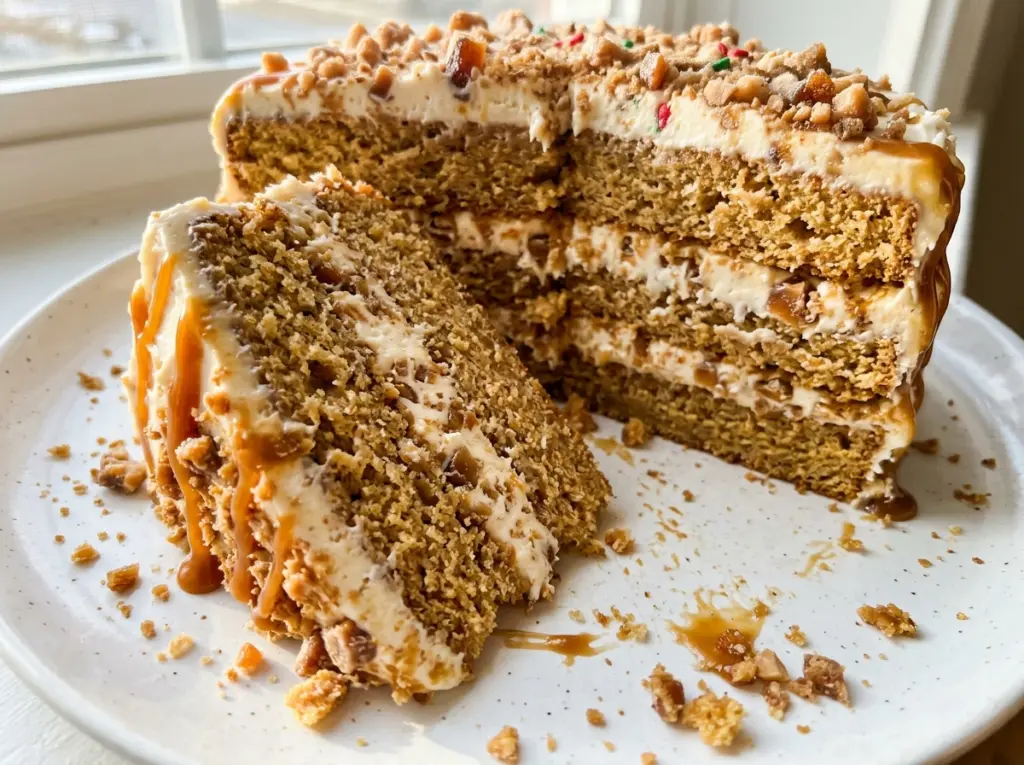
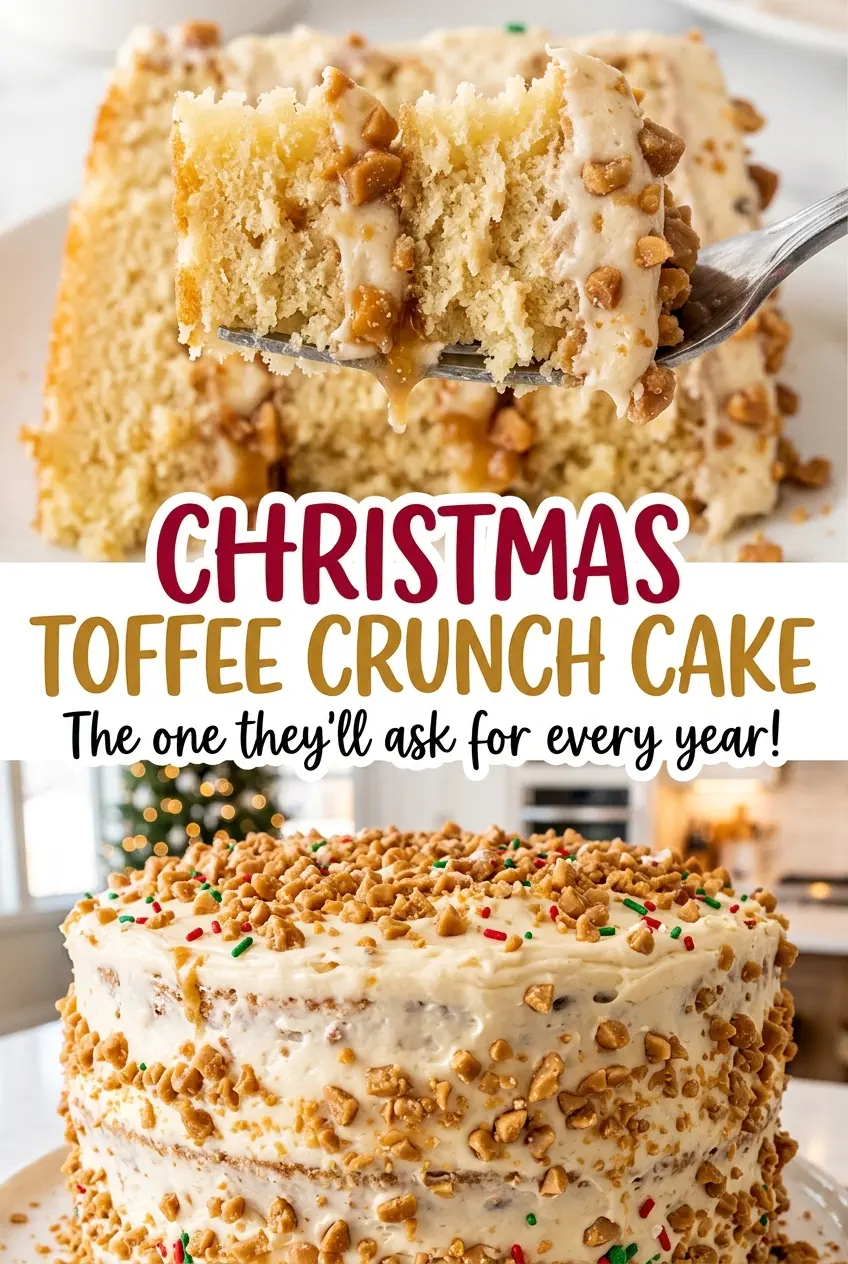
I like this cake because the soft crumb and smooth butter frosting give the toffee bits a sturdy place to land. The batter comes together with a whisk, and the cake serves 15 without needing layers or special decorating skills. Once the frosting is spread edge to edge, the red and green sprinkles make the toffee topping look festive with very little fuss. Each square has a tender bite under a crisp, buttery crunch.
Kitchen Note
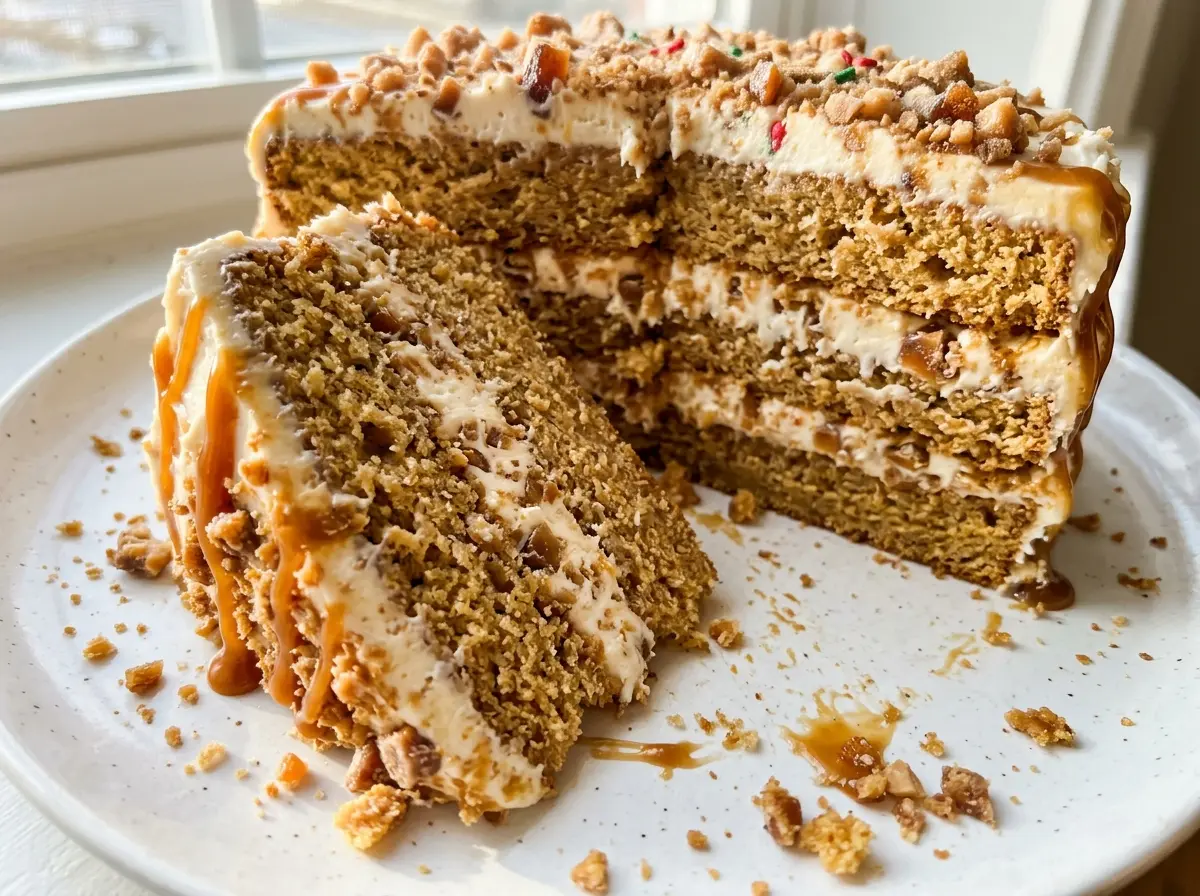
Wait until you’re ready to serve before scattering the toffee bits and sprinkles over the frosting. The toffee stays crunchy instead of softening while the cake sits.
Save this Christmas Toffee Crunch Cake for its tender crumb, creamy frosting, and crisp toffee finish.
Why This Cake Isn’t Mixed Like a Butter Cake
A butter cake often starts by beating butter and sugar until they’re pale and fluffy. This batter takes another route: vegetable oil and sugar are whisked together, then eggs and vanilla go in before the dry ingredients and sour cream mixture. Oil stays fluid at room temperature, so the cake has a soft, moist crumb without needing that butter-and-sugar creaming step.
That also means there’s no reason to keep beating once the flour disappears. Flour develops gluten when it’s mixed with liquid, and too much mixing can make a tender snack cake feel tight or chewy. Alternate the dry ingredients with the sour cream and milk mixture, then stop as soon as the batter looks evenly combined. A few small lumps are less troubling than a bowl of overworked batter.
The result is a straightforward sheet cake with a close, tender crumb that can support a generous layer of frosting. It doesn’t need to rise into tall, airy layers to feel special; the contrast between soft cake and crunchy toffee does the work.
What the Oil, Sour Cream, and Toffee Each Bring
- Vegetable oil — It keeps the crumb soft after the cake cools, and its neutral taste lets vanilla and toffee come through. Use a fresh, mild-tasting oil; a strongly flavored oil would be noticeable here.
- Sour cream — Its thickness adds moisture without making the batter loose, and its slight tang balances the sweet frosting. I wouldn’t replace it with milk; milk doesn’t provide the same body, and the batter would lose that creamy tang.
- Whole milk — Alongside the sour cream, it loosens the batter enough to spread in the pan. Room-temperature milk blends more easily into the other room-temperature ingredients than cold milk straight from the refrigerator.
- Eggs — They help bind the oil, sugar, and dairy into one batter and give the cake structure as it bakes. Room-temperature eggs whisk in more smoothly than cold ones.
- Salted butter — This is the base of the frosting, so its flavor comes through plainly. Choose butter that tastes fresh, and let it soften until it yields when pressed; melted butter won’t beat into the same smooth frosting.
- Heavy cream — It loosens the powdered sugar and butter into a spreadable frosting. Add it in the alternating additions with the sugar so the frosting comes together gradually rather than turning thin all at once.
- Toffee bits — These add the crisp, buttery crunch that defines the topping. Use bits that are fresh and crisp from the package; stale toffee loses the texture contrast this cake needs.
- Holiday sprinkles — Red and green sprinkles add color without changing the frosting’s texture. Their appearance matters more than a premium brand, so an inexpensive jar works well.
From a Smooth Batter to a Crunchy Toffee Finish
Whisk the Dry and Wet Ingredients Separately
Heat the oven to 350°F and grease a 9×13-inch baking pan. In a medium bowl, whisk together the flour, baking powder, baking soda, and salt so the leaveners are distributed through the flour. In a large bowl, whisk the oil and granulated sugar, then whisk in the eggs and vanilla. The egg mixture should look cohesive before the dairy and dry ingredients go in.
Bring the Batter Together Without Overmixing
Whisk the sour cream and milk together in a separate bowl. Add the dry ingredients and sour cream mixture to the egg mixture in alternating additions, mixing just until combined. Scrape the sides of the bowl as needed so there aren’t pockets of dry flour hiding at the bottom. The batter will be thick enough to spread, not pour like a thin liquid.
Bake Until the Center Gives the Right Clue
Spread the batter evenly in the greased pan and bake for 30 to 35 minutes. Start checking near the shorter end of that range, because ovens don’t all bake at the same pace. Insert a toothpick in the center; it’s ready when it comes out with a few moist crumbs, not wet batter. If the pick is completely clean and dry, the cake may have baked longer than it needed.
Cool Completely, Then Frost and Finish
Set the pan on a wire rack and let the cake cool completely in the pan before frosting it. Beat the softened butter in a large bowl until smooth, then beat in the powdered sugar in three additions, alternating with the heavy cream. Stop when the frosting is smooth and spreadable, and spread it evenly over the cooled cake. Scatter on the toffee bits and red and green sprinkles close to serving time.
Two Topping Changes for a Different Kind of Crunch
Keep the Finish Toffee-Only
Leave off the holiday sprinkles and use the toffee bits as the whole topping. The cake keeps its buttery crunch but looks simpler, with the frosting showing between the pieces.
Make It Sprinkle-Only
Skip the toffee bits and finish the frosting with the red and green sprinkles. You lose the crisp candy crunch, but the cake is easier to slice and has a clean, soft frosting top.
Storage and Reheating
- Refrigerator: Keep the frosted cake covered for up to 3 days. The butter frosting firms up when chilled.
- Freezer: Freeze portions without the toffee or sprinkles in an airtight container for up to 2 months. Thaw in the refrigerator; the frosting may be a little less smooth after thawing.
- Reheating: This cake doesn’t need reheating. Serve it chilled or let a slice lose its refrigerator chill; microwaving can soften the frosting too much.
Questions That Come Up Before You Bake This Cake
Christmas Toffee Crunch Cake
Ingredients
Equipment
Method
- Heat the oven to 350°F.
- Grease a 9x13-inch baking pan.
- Whisk the flour, baking powder, baking soda, and salt in a medium bowl.
- Whisk the oil and granulated sugar in a large bowl.
- Whisk in the eggs and vanilla extract.
- Whisk the sour cream and milk together.
- Add the dry ingredients and sour cream mixture to the egg mixture in alternating additions, mixing just until combined.
- Spread the batter in the prepared pan.
- Bake for 30 to 35 minutes, until a toothpick inserted in the center comes out with a few moist crumbs.
- Cool the cake completely in the pan on a wire rack.
- Beat the softened butter in a large bowl until smooth.
- Beat in the powdered sugar in three additions, alternating with the heavy cream, until the frosting is smooth and spreadable.
- Spread the frosting evenly over the cooled cake.
- Scatter the toffee bits and holiday sprinkles over the frosting just before serving to keep the toffee crunchy.