
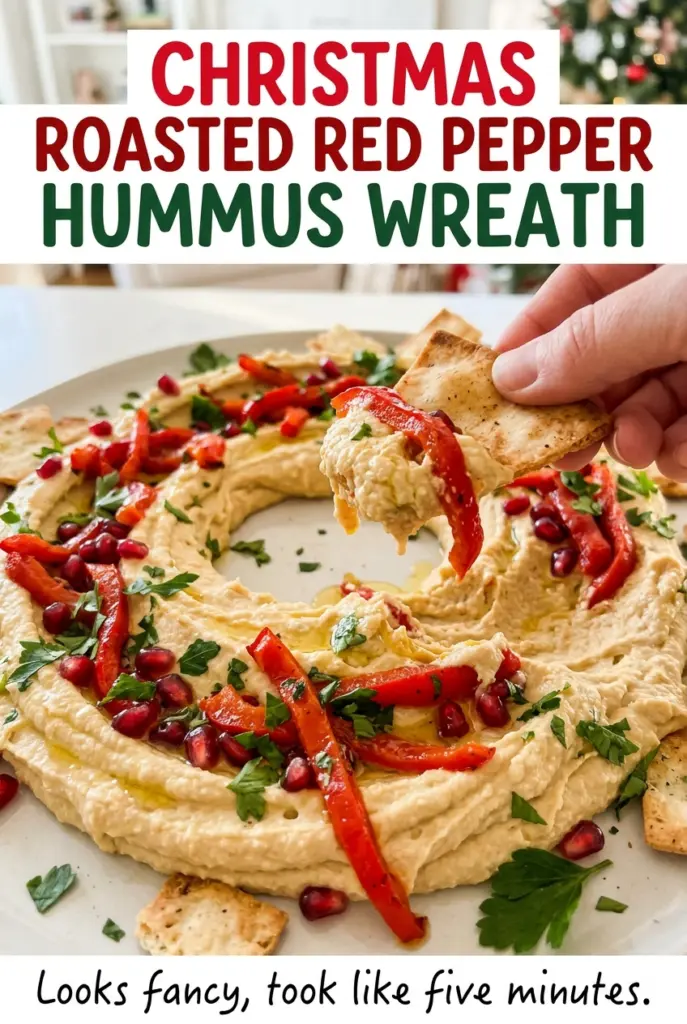
Christmas Roasted Red Pepper Hummus Wreath
The food processor starts with a little stutter as the chickpeas tumble around the blade, then the mixture turns pale and creamy once the ice water goes in. That smooth…

By Ava
•
•
Reading time: 9 min
Tip: save now, make later.
The food processor starts with a little stutter as the chickpeas tumble around the blade, then the mixture turns pale and creamy once the ice water goes in. That smooth texture gives this Christmas Roasted Red Pepper Hummus Wreath its lovely contrast: rich hummus underneath, with parsley, pomegranate, and feta scattered across the top.
I like this one because the wreath looks festive without asking you to fuss over a complicated appetizer. The roasted red peppers blend right into the chickpeas, adding color and a gentle sweetness, while the toppings make the platter look dressed for the table. You can make the hummus in the processor, shape it on a platter, and decorate it right there.
The small details matter most when you want the ring to hold its shape: the peppers need to be dry, and the hummus needs enough time in the processor to turn silky. The finished wreath is creamy through the center, bright around the edges, and ready to share.
Kitchen Note
Drain the roasted red peppers well and pat them dry before blending. Loose moisture can make the hummus softer than you want, and a soft base is harder to shape into a neat ring.
Save this Christmas Roasted Red Pepper Hummus Wreath for a colorful appetizer with creamy chickpeas, bright pomegranate, and a festive ring shape.
Why the Center Opening Needs to Stay Wide Enough to Read as a Wreath
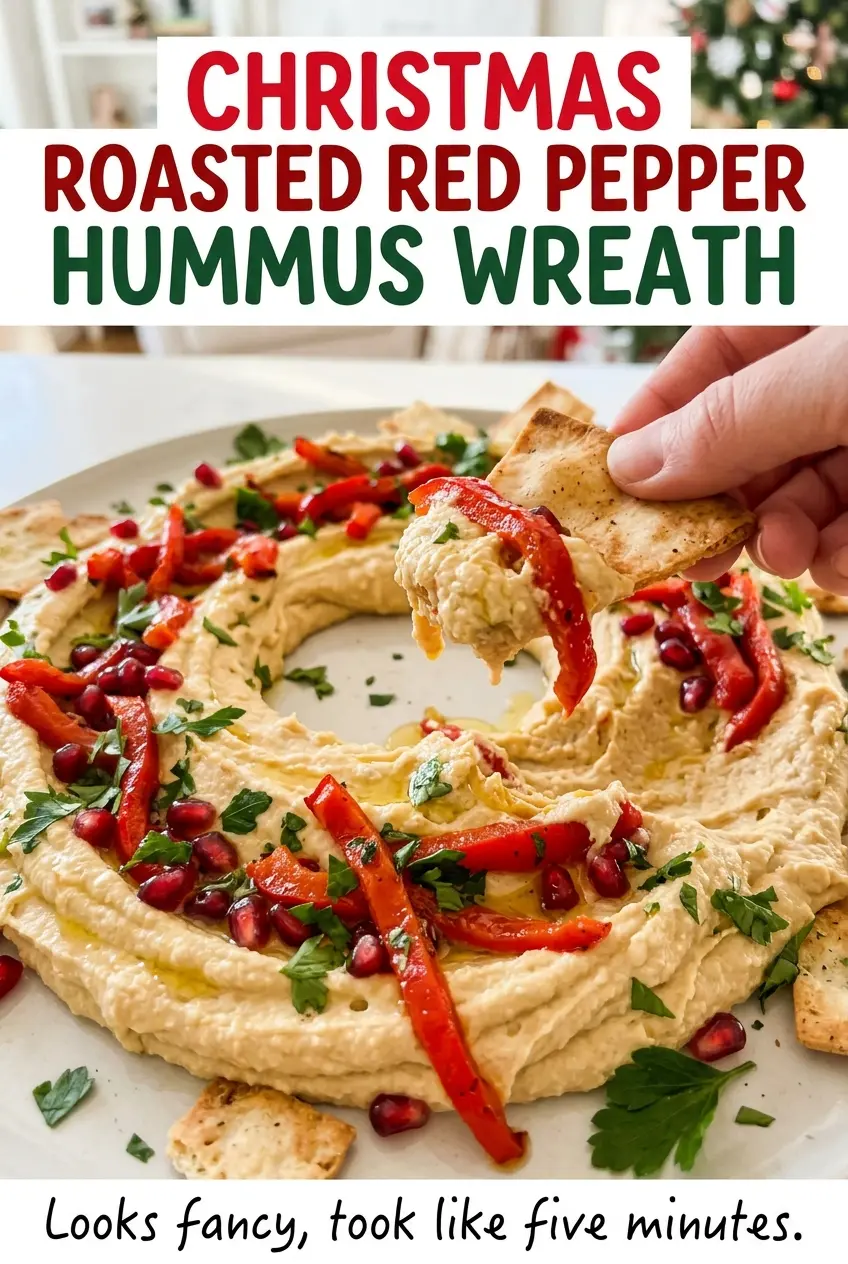
The hummus does more than hold the toppings; its shape is what makes this appetizer look like a wreath instead of a dip piled on a platter. I shape it into an 8-inch ring with a 3-inch opening in the center. That leaves a clear circle of platter visible through the middle, so the wreath outline stays easy to recognize when the parsley, pomegranate, and feta are added.
Use the 12-inch serving platter for a comfortable border around the hummus. Spoon the mixture onto the platter first, then guide it into a ring rather than trying to build a perfect circle in midair. Keep the inside edge open as you smooth the hummus; if the center gets filled in, pull some of the mixture outward to restore the opening. A slightly relaxed, hand-shaped edge looks natural under the garnish, while an overly thin ring can disappear beneath it.
The shape also gives you room to arrange the toppings where they show. Think of the hummus as the wreath base and the parsley, pomegranate, and feta as the decoration, not something to mix into the dip.
What Gives This Hummus Its Roasted-Pepper Color and Creamy Body

- Tahini — This sesame paste gives the hummus its characteristic nutty richness and helps the base feel full rather than bean-heavy. Stir it in its jar if the oil has separated. There isn’t a direct substitute that keeps the same flavor; leaving it out makes a less rich hummus.
- Chickpeas — Canned chickpeas keep the prep straightforward and blend into the familiar hummus texture. If you use cooked-from-dry chickpeas instead, cook them until completely tender before blending; firmer beans can leave the finished dip grainy.
- Jarred roasted red peppers — These bring both the warm color and a mellow roasted sweetness. Choose peppers with a clean roasted flavor; a raw pepper won’t give the same result. Their drained, dry texture matters more than buying a premium brand.
- Lemon juice and garlic — Lemon keeps the sesame and chickpeas from tasting heavy, while the small garlic clove adds a savory edge. Bottled lemon juice can stand in for fresh juice, though its flavor is less bright. For a milder result, omit the garlic rather than adding another seasoning.
- Extra-virgin olive oil and ice water — The olive oil adds richness, and dividing it keeps some for the finished drizzle. Ice water helps the blended chickpeas turn smooth and creamy; don’t replace it with oil, which would make the hummus heavier.
- Parsley, pomegranate, and feta — The parsley brings a fresh green finish, pomegranate adds tart little bursts, and feta contributes a salty, tangy note. Since these sit on top, fresh-looking parsley and plump arils make the wreath look its best. The feta is the easiest ingredient to omit for a dairy-free version.
Blend the Base First, Then Let the Ice Water Finish It
Start with the Tahini, Lemon, Garlic, and Salt
Process the tahini, lemon juice, garlic, and kosher salt for 30 seconds, then scrape down the sides and process for 30 seconds more. Scraping matters because tahini can cling to the bowl above the blade, leaving part of the mixture behind. The mixture should look evenly combined before the chickpeas go in. If you see streaks on the processor wall, scrape them back into the center.
Break Down the Chickpeas and Peppers
Add the drained and rinsed chickpeas, the dried roasted red peppers, and 2 tablespoons of the olive oil. Process for 1 minute, then scrape down the sides so any pieces near the rim return to the blade. At this point the mixture will be thick, and small chickpea flecks are normal. Don’t stop here expecting the final silky texture.
Use Ice Water for the Creamy Finish
Add the ice water and process for 1 to 2 minutes, until the hummus is smooth and creamy. Let the processor run long enough for the chickpea texture to even out; stopping as soon as the water disappears can leave the dip coarse. If the hummus is clinging high on the bowl, pause to scrape it down and keep blending. The finished mixture should look cohesive, not separated or watery.
Shape and Decorate the Platter
Spoon the hummus onto a 12-inch serving platter and shape it into an 8-inch ring with a 3-inch opening in the center. Drizzle the remaining 1 tablespoon of olive oil over the surface. Scatter the parsley, pomegranate arils, and feta across the ring, keeping the center opening visible. A light hand with the toppings lets the colorful hummus show through.
Easy Ways to Change the Wreath Without Losing Its Character
Make It Dairy-Free
Leave off the feta and keep the parsley and pomegranate. The hummus stays creamy, and the topping leans brighter and fruitier without the feta’s salty tang.
Serve It as a Dip Instead of a Wreath
For a more casual table, spoon the hummus into a serving bowl and arrange the same parsley, pomegranate, and feta over the top. You keep the roasted-pepper flavor and garnish but skip the ring shape, making it easier to set out with other dips.
Leave Out the Pomegranate
Skip the pomegranate arils if you prefer a more savory finish, and decorate with parsley and feta. The wreath loses the tart pops of fruit but still has the green-and-white contrast over the red-pepper hummus.
Make-Ahead and Storage
- Refrigerator: Keep leftover hummus covered and refrigerated for 3 to 4 days. The fresh toppings may soften, so the wreath looks best when you add them close to serving.
- Freezer: Freeze the hummus without its toppings in an airtight container for up to 3 months. Thaw it in the refrigerator and stir until smooth before shaping and decorating.
- Serving: This is a cold dip, so it doesn’t need reheating. If the hummus has firmed up in the refrigerator, stir it before arranging it on the platter; don’t warm it, since that changes its cool, creamy texture.
Questions That Come Up While Making This Hummus Wreath
Christmas Roasted Red Pepper Hummus Wreath
Ingredients
Equipment
Method
- Process the tahini, lemon juice, garlic, and salt in a food processor for 30 seconds, then scrape down the sides and process for 30 seconds more.
- Add the chickpeas, roasted red peppers, and 2 tablespoons of the olive oil; process for 1 minute, then scrape down the sides.
- Add the ice water and process for 1 to 2 minutes, until smooth and creamy.
- Spoon the hummus onto a 12-inch serving platter and shape it into an 8-inch ring with a 3-inch opening in the center.
- Drizzle the remaining 1 tablespoon olive oil over the hummus, then decorate with the parsley, pomegranate arils, and feta.