

Christmas Pomegranate Glazed Chicken Meatballs
As pomegranate juice simmers, its sharp, fruity smell softens and the color deepens; a few minutes later, a glossy glaze clings to the back of a spoon. That little transformation…

By Ava
•
•
Reading time: 9 min
Tip: save now, make later.
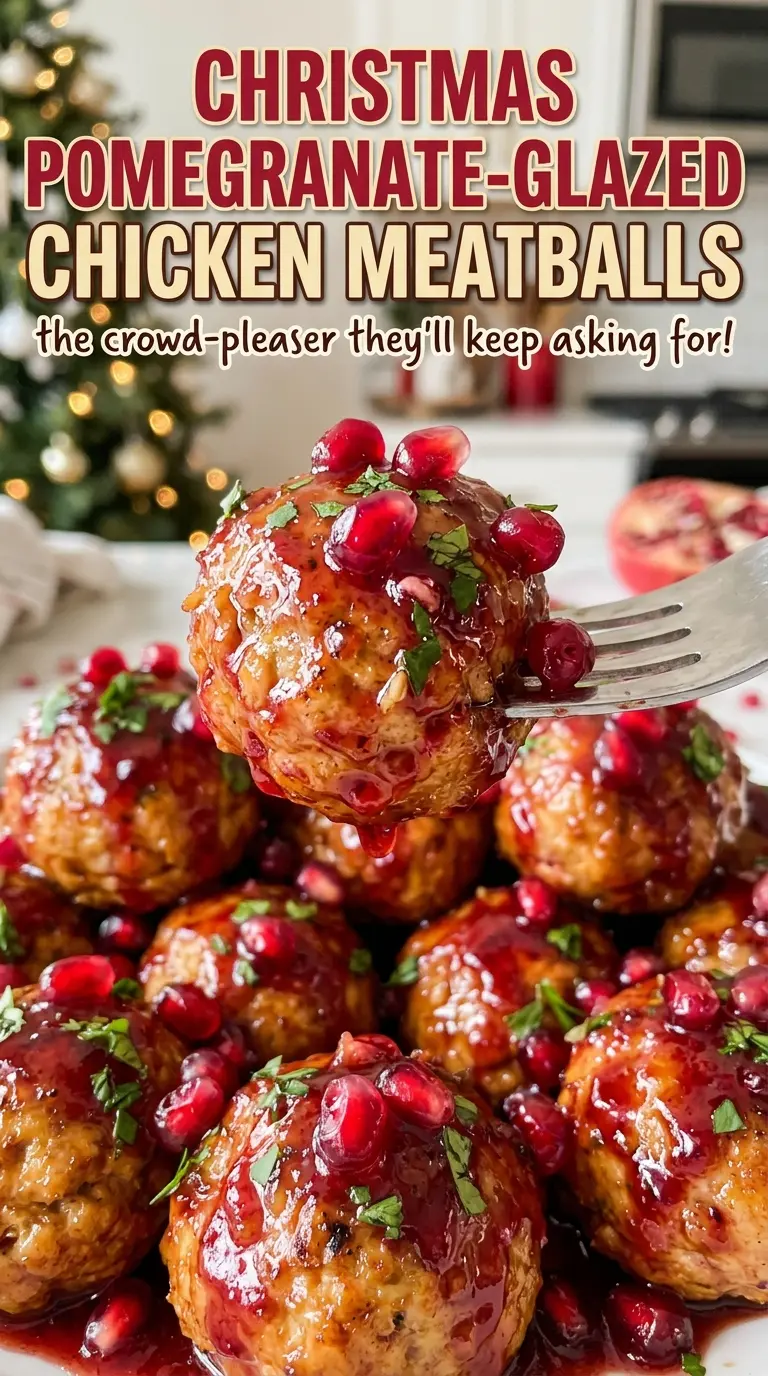
As pomegranate juice simmers, its sharp, fruity smell softens and the color deepens; a few minutes later, a glossy glaze clings to the back of a spoon. That little transformation is what makes these Christmas Pomegranate Glazed Chicken Meatballs feel special without turning them into an all-day project. The baked chicken meatballs stay tender, and the ruby arils on top give each one a bright, juicy pop.
I make the glaze while the meatballs are in the oven, so both parts are ready at nearly the same time. The glaze gets its body in two stages: the juice mixture simmers first, then a cold cornstarch slurry thickens it quickly without needing a long reduction. Toss the meatballs gently so their surfaces stay intact, and you’ll have a platter of savory-sweet bites with a shiny pomegranate coating.

Kitchen Note
I scatter the pomegranate arils and parsley over the meatballs after they’re in the serving dish. The arils stay plump and distinct, and the parsley keeps its fresh color instead of disappearing into the warm glaze.
Save these Christmas Pomegranate Glazed Chicken Meatballs for a festive platter with tender centers and a bright, glossy pomegranate finish.
Why This Pomegranate Glaze Needs Both a Simmer and a Slurry
Pomegranate juice starts out thin, tart, and quite a bit sharper than the finished glaze tastes. Simmering it with honey, balsamic vinegar, and soy sauce gives those flavors time to come together, but waiting for the liquid to reduce enough to coat meatballs would take longer than this dish needs. The cornstarch slurry gives the glaze a quick, controlled finish instead.
Whisking cornstarch with cold water before it goes into the saucepan matters. Dry cornstarch dropped into hot liquid tends to clump, leaving little pale lumps in an otherwise smooth glaze. Once the slurry is whisked in, the sauce only needs a brief simmer to turn glossy and lightly thickened. Stop there: it should coat the meatballs, not set up like a thick jelly as it cools.
The texture is also easier to judge in the pan than by the clock alone. When the glaze looks shiny and leaves a light coating on a spoon, it’s ready for the meatballs. If you cook it until it looks very thick in the saucepan, it can become too sticky once it clings to the hot chicken.
What Gives These Chicken Meatballs Their Tender Bite and Bright Finish
- Ground chicken — It keeps the meatballs mild enough for the pomegranate glaze to stand out. Fresh ground chicken that looks moist, not watery, is the useful choice here; the same amount of ground turkey works if you want a slightly different savory base.
- Panko and egg — Panko gives the mixture a light structure without making it bready, while the egg helps hold the chicken together. Regular dry breadcrumbs can work in place of panko, though the centers may feel a little more compact. For a gluten-free version, use gluten-free panko.
- Finely grated yellow onion and garlic — Grated onion blends into the chicken and brings moisture as well as savory flavor; a rough chop would leave larger pieces that interrupt the meatball texture. Mince the garlic finely so it disperses evenly through the mixture.
- 100% pomegranate juice — This is the foundation of the glaze, so choose unsweetened juice rather than a juice cocktail. A sweetened blend changes both the tartness and how the glaze tastes after simmering.
- Honey, balsamic vinegar, and soy sauce — Honey rounds out the fruit’s tart edge, balsamic adds depth, and soy sauce brings savory balance. Use tamari in place of soy sauce for a gluten-free version; the glaze will keep its savory note.
- Cornstarch and cold water — Whisking them together makes a smooth slurry that thickens the glaze without adding floury flavor. The water needs to be cold when you mix it with the cornstarch.
- Pomegranate arils and fresh parsley — The arils bring a burst of tart juice against the sticky glaze, while parsley gives the platter a fresh, green finish. Fresh parsley has a cleaner flavor here than dried herbs.
From Gently Mixed Chicken to a Shiny Pomegranate Coat
Shape the Meatballs Without Compacting Them
Heat the oven to 400°F and line a rimmed baking sheet with parchment paper. Gently mix the ground chicken, panko, egg, grated onion, garlic, salt, and pepper only until combined; a long, forceful mix can make the meatballs dense. Shape the mixture into about 30 meatballs, each about 1 1/2 inches wide, keeping them close in size so they cook at the same pace. Arrange them on the prepared sheet.
Bake Until the Centers Are Cooked Through
Bake the meatballs for 18–22 minutes, checking that the centers reach 165°F. Ground chicken can look pale even when it’s cooked, so use the center temperature rather than browning as your cue. Take the pan out and let the meatballs rest for 5 minutes before tossing them with the glaze. That short pause gives them a moment to settle after baking.
Simmer the Juice Mixture Before Thickening
While the meatballs bake, combine the pomegranate juice, honey, balsamic vinegar, and soy sauce in a small saucepan. Bring the mixture to a simmer over medium heat, stirring occasionally, and cook for 5–7 minutes. It should look a little more cohesive and smell less sharply tart than it did at the start. Keep it at a simmer rather than letting it boil hard.
Whisk in the Slurry and Coat Gently
In a small bowl, whisk the cornstarch with the cold water until smooth, then whisk it into the saucepan. Simmer for 1–2 minutes, watching for a glossy sauce that has thickened lightly; it will cling better than the unthickened juice mixture. Add the cooked meatballs and gently toss to coat, then transfer them to a serving dish. Finish with the pomegranate arils and chopped parsley.
Three Practical Ways to Adapt the Meatballs and Glaze
Make the Meatballs Gluten-Free
Replace the panko with gluten-free panko and use tamari instead of soy sauce. The texture and savory-sweet balance stay close to the original, though some gluten-free crumbs absorb moisture differently, so mix just until combined and shape the meatballs gently.
Use Ground Turkey Instead of Chicken
Swap in the same amount of ground turkey for the ground chicken. The meatballs will have a more pronounced savory flavor, and lean turkey can make them a touch firmer. Keep the same size and use the center temperature to judge when they’re cooked.
Trade Honey for Maple Syrup
Use the same amount of pure maple syrup in place of the honey. It gives the glaze a woodsy sweetness instead of honey’s round floral note, while the balsamic and pomegranate still keep the sauce tangy. The cornstarch slurry remains important for getting a coating consistency.
Storage and Reheating
- Refrigerator: Store cooked meatballs in an airtight container for 3–4 days. The glaze will thicken as it chills, and the arils will soften.
- Freezer: Freeze the glazed meatballs in an airtight freezer-safe container for up to 3 months for best quality. Thaw them in the refrigerator before reheating.
- Reheating: Warm them covered in the microwave at medium power, stirring gently partway through, until hot all the way through. High heat can toughen the chicken and make the glaze scorch around the edges.
Questions That Come Up When Making Pomegranate Chicken Meatballs
Christmas Pomegranate Glazed Chicken Meatballs
Ingredients
Equipment
Method
- Heat the oven to 400°F.
- Line a rimmed baking sheet with parchment paper.
- In a large bowl, gently mix the ground chicken, panko, egg, onion, garlic, salt, and pepper until just combined.
- Shape the mixture into about 30 meatballs, each about 1 1/2 inches wide.
- Arrange the meatballs on the baking sheet.
- Bake for 18–22 minutes, until the centers reach 165°F.
- Rest for 5 minutes.
- While the meatballs bake, combine the pomegranate juice, honey, balsamic vinegar, and soy sauce in a small saucepan and bring to a simmer over medium heat.
- Cook for 5–7 minutes, stirring occasionally.
- In a small bowl, whisk the cornstarch with the cold water.
- Whisk the mixture into the saucepan and simmer for 1–2 minutes, until the glaze is glossy and lightly thickened.
- Add the cooked meatballs to the glaze and gently toss to coat.
- Transfer the meatballs to a serving dish.
- Sprinkle with the pomegranate arils and parsley.