

Christmas Pesto Mozzarella Puff Pastry Snowflakes
As the snowflake bakes, the pointed edges turn deep gold and the pastry rises into crisp, delicate layers. The pesto and mozzarella stay tucked between two circles, so every twist…

By Ava
•
•
Reading time: 8 min
Tip: save now, make later.
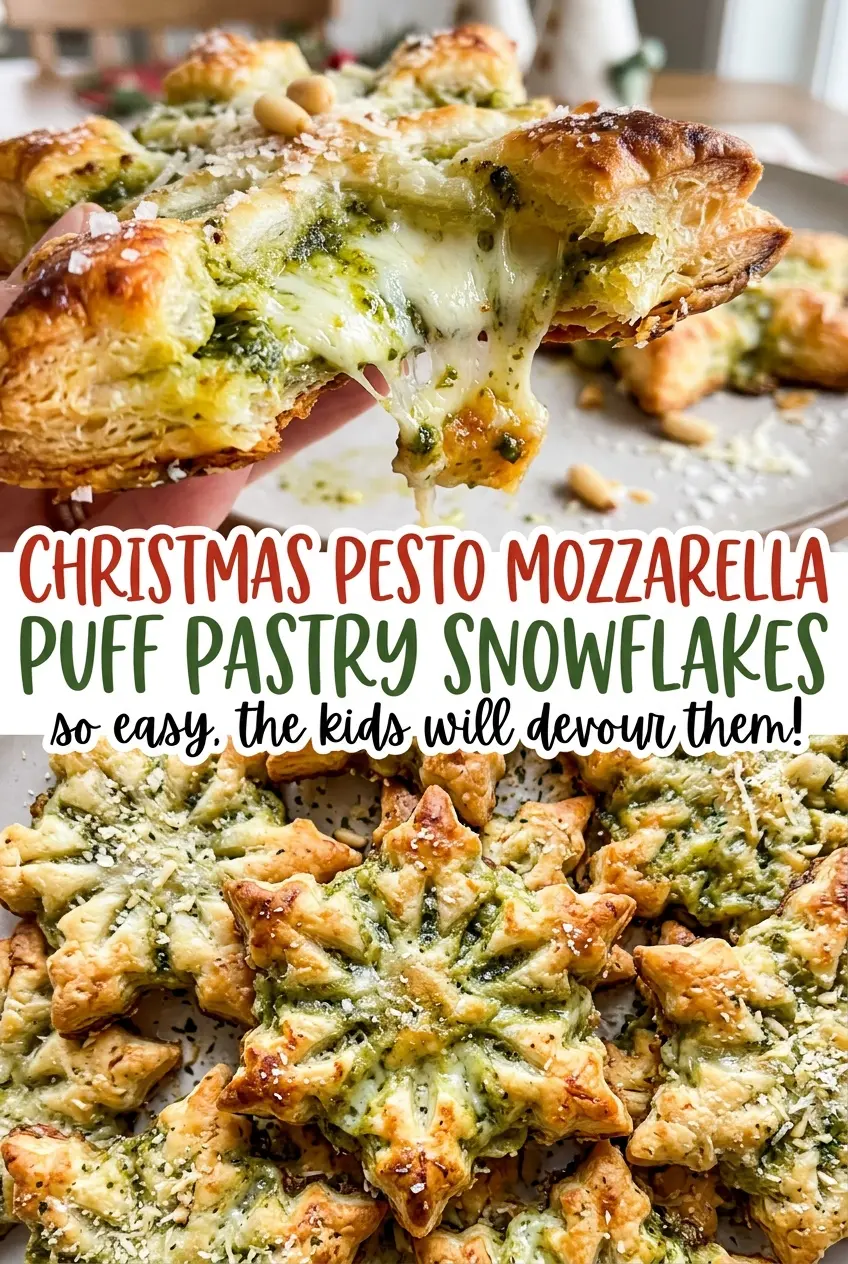
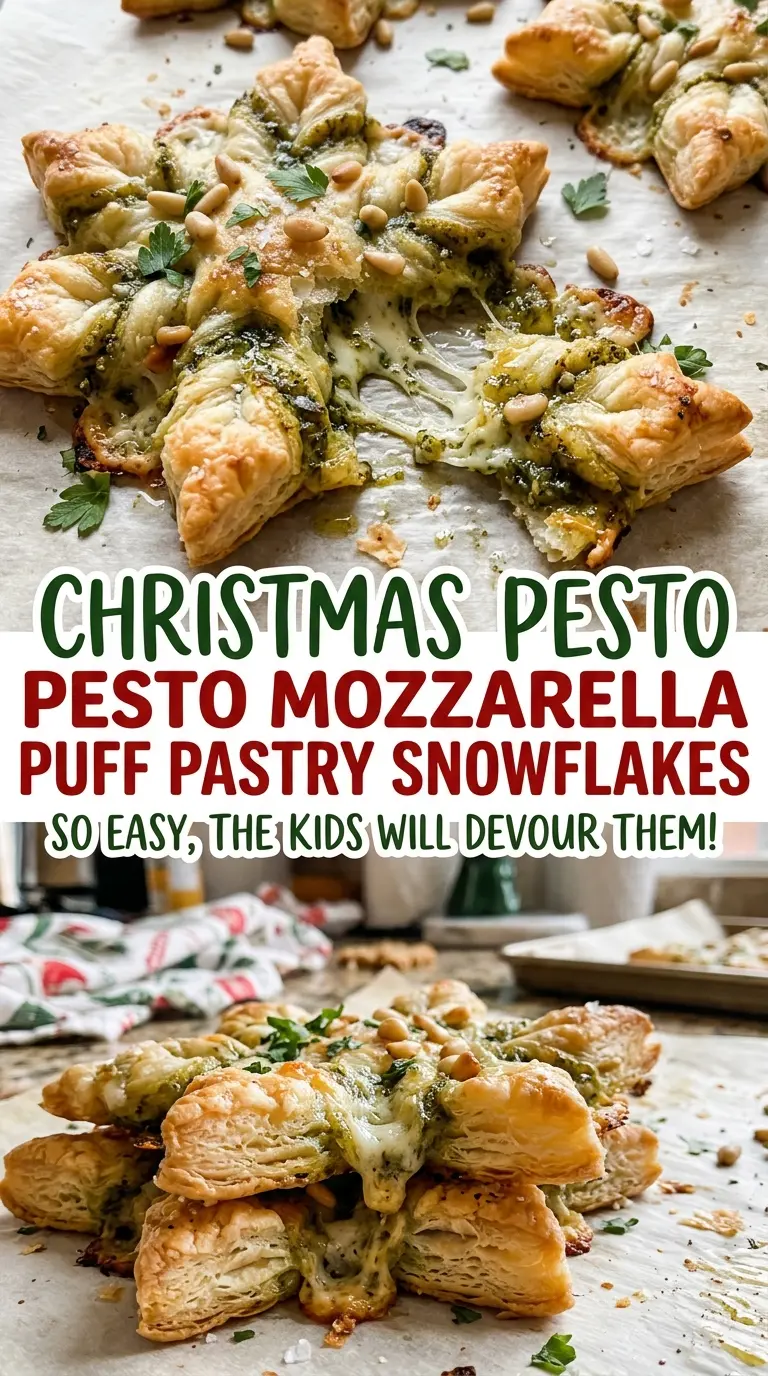
As the snowflake bakes, the pointed edges turn deep gold and the pastry rises into crisp, delicate layers. The pesto and mozzarella stay tucked between two circles, so every twist gets a little savory filling without needing a complicated braid. These Christmas pesto mozzarella puff pastry snowflakes look special on a holiday table, but the shaping is easier than it first appears.
I like that the center stays connected while the outer strips twist into a starburst. A small glass gives you a clear boundary for the cuts, and pinching each pair of tips helps the shape hold as the pastry puffs. Serve it after a short rest, when the cheese has settled and the pastry is still warm and flaky.
Kitchen Note
Leave the 2-inch glass in place while you cut all 16 strips. It gives you a clear stopping point and keeps the middle joined; lift it out before you start twisting.
Save these Christmas pesto mozzarella puff pastry snowflakes for a golden, cheesy centerpiece with an easy twist-and-pinch shape.
Cold Puff Pastry Is What Gives the Snowflake Its Lift
Puff pastry gets its height from layers of dough separated by fat. When the pastry is thawed but still cold, those layers stay distinct and the sheets are easier to cut and move without stretching. If the dough gets warm and floppy, the circles can lose their clean edges, and the finished snowflake may rise less evenly.
Work with the pastry while it still feels cool and firm, rather than waiting until it feels soft all the way through. Matching circles also matter: a top sheet that overhangs the bottom can pull against the twists, while a centered top circle keeps the filling enclosed. The goal isn’t perfect geometry; it’s two circles that meet neatly, with enough room around the edge to seal. That gives the pastry layers space to puff around the pesto and cheese.
Why Low-Moisture Mozzarella and Thick Pesto Matter
- Puff pastry — The frozen sheets make the flaky structure and save you from rolling dough from scratch. Brand matters less than the condition of the pastry: thaw it until workable, but keep it cold so the circles cut cleanly. Trim the scraps rather than stretching the dough to make the circles larger.
- Basil pesto — Pesto supplies the concentrated basil flavor and a little oil to coat the filling. A thick pesto spreads in an even layer; a loose, oily one can make the top circle slide around. Sun-dried tomato pesto is a useful swap in the same volume, with a deeper, sweeter taste.
- Low-moisture mozzarella — This cheese melts into the pesto without releasing as much water as fresh mozzarella. Choose low-moisture mozzarella even if you’re buying it already shredded; a low-moisture provolone is another workable swap for a slightly sharper, saltier center.
- Egg and water — Beating them together makes a thin wash that brushes across the pastry and helps it bake to a deep golden brown. Beat until the yolk and white are fully combined so you don’t leave streaks of egg on the surface.
How to Cut and Twist the Snowflake Without Losing Its Shape
Cut Two Matching Circles
Heat the oven to 400°F and line a rimmed baking sheet with parchment paper. Cut a 9-inch circle from each sheet of puff pastry, then trim away the scraps. Set one circle on the prepared baking sheet and keep the second nearby for the top. If the pastry starts feeling soft as you work, pause long enough to handle it gently rather than pulling at the edges.
Spread the Filling and Seal the Edge
Spread the pesto over the first circle, leaving a 1/2-inch border uncovered all the way around. Sprinkle the mozzarella evenly over the pesto so the filling doesn’t collect in one spot. Lay the second pastry circle on top and press the edges together lightly to seal. Keep the filling inside that border; pesto or cheese caught between the edges makes them harder to join.
Make the Sixteen Twists
Set a 2-inch round glass in the center of the pastry. Cut from the outside edge to the glass in 16 evenly spaced strips, then remove the glass. Twist each neighboring pair of strips away from each other twice, and pinch the tips together. Keep the twists moving away from each other rather than winding both strips in the same direction; that’s what opens the snowflake arms.
Brush, Bake, and Rest
Beat the egg with the water in a small bowl and brush the mixture over the pastry. Bake for 20 to 25 minutes, until the snowflake is puffed and deep golden brown; pale pastry needs more time to develop that crisp, flaky finish. Let it rest on the pan for 10 minutes before serving. The short rest gives the melted filling a chance to settle before you pull apart the twists.
Two Easy Ways to Change the Pesto Snowflake
Give the Filling a Little Heat
Stir a pinch of crushed red pepper into the basil pesto before spreading it. The pastry shape and cheese stay the same, while the filling gets a gentle warmth that cuts through the mozzarella.
Make a Dairy-Free Snowflake
Use dairy-free puff pastry, dairy-free basil pesto, and shredded dairy-free mozzarella in place of the standard ingredients. Keep the same filling amounts and shaping method; the dairy-free cheese may melt less smoothly, so expect a slightly different center texture.
Storage and Reheating
- Refrigerator: Refrigerate leftovers within 2 hours and keep them covered for 3 to 4 days. The pastry softens after chilling.
- Freezer: Freeze fully cooled portions in an airtight container for up to 2 months. The pastry may lose some crispness after thawing.
- Reheating: Warm in a 350°F oven until the center reaches 165°F and the pastry feels crisp again. A microwave heats it quickly but makes the layers soft.
Questions That Come Up When Making Puff Pastry Snowflakes
Christmas Pesto Mozzarella Puff Pastry Snowflakes
Ingredients
Equipment
Method
- Heat the oven to 400°F.
- Line a rimmed baking sheet with parchment paper.
- Cut a 9-inch circle from each sheet of puff pastry, trimming away the scraps.
- Place one pastry circle on the prepared baking sheet.
- Spread the pesto over it, leaving a 1/2-inch border.
- Sprinkle the mozzarella evenly on top.
- Lay the second pastry circle over the filling and press the edges together lightly to seal.
- Set a 2-inch round glass in the center of the pastry and cut from the outer edge to the glass in 16 evenly spaced strips.
- Remove the glass and twist each neighboring pair of strips away from each other twice.
- Pinch the tips together.
- Beat the egg with the water in a small bowl.
- Brush the egg mixture over the pastry.
- Bake for 20 to 25 minutes, until puffed and deep golden brown.
- Let rest on the pan for 10 minutes before serving.