
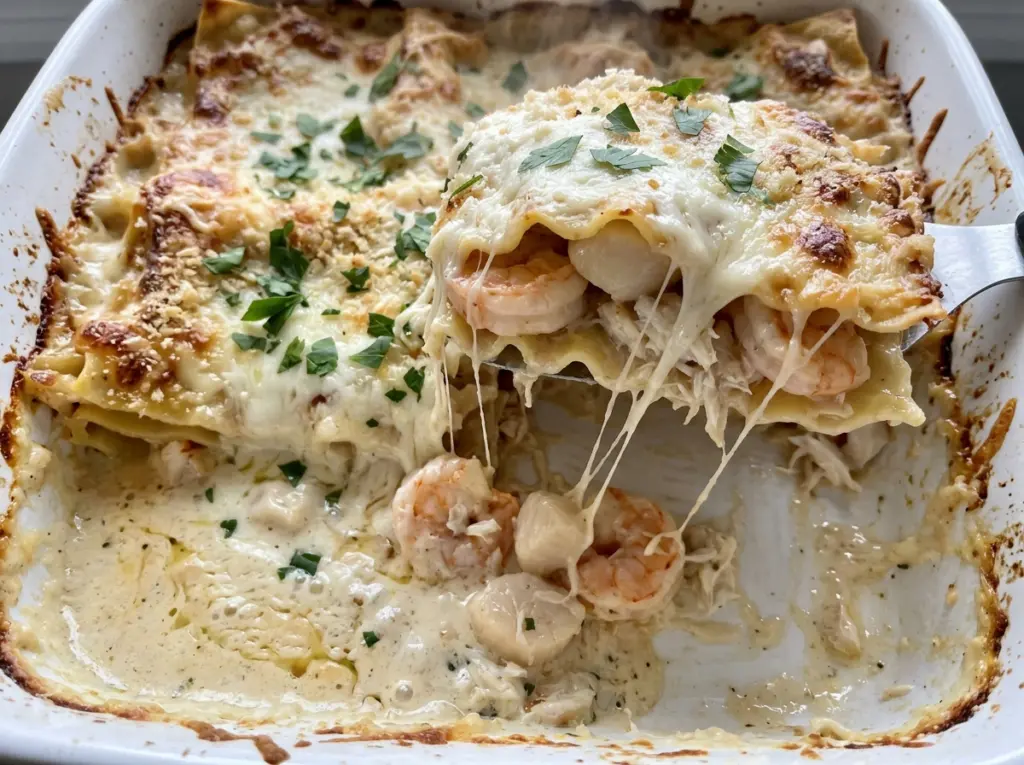
Christmas Eve Seafood Lasagna
When the béchamel starts clinging to the back of a spoon, the whole kitchen smells buttery and warm. That’s when I know the base for Christmas Eve Seafood Lasagna is…

By Ava
•
•
Reading time: 10 min
Tip: save now, make later.
When the béchamel starts clinging to the back of a spoon, the whole kitchen smells buttery and warm. That’s when I know the base for Christmas Eve Seafood Lasagna is ready—not runny, not stiff, just thick enough to settle between the noodles.
I build the seafood filling around ricotta and spinach, then fold in the shrimp, scallops, and crab gently. The seafood stays in tender pieces instead of disappearing into the filling, and lemon zest cuts through the creamy sauce without taking over.
It’s a layered bake with a little hands-on prep, but each part has a clear job: the béchamel keeps the noodles tender, the filling carries the seafood, and a short rest helps the slices hold together. You get a bubbling top and a rich, savory center in every serving.
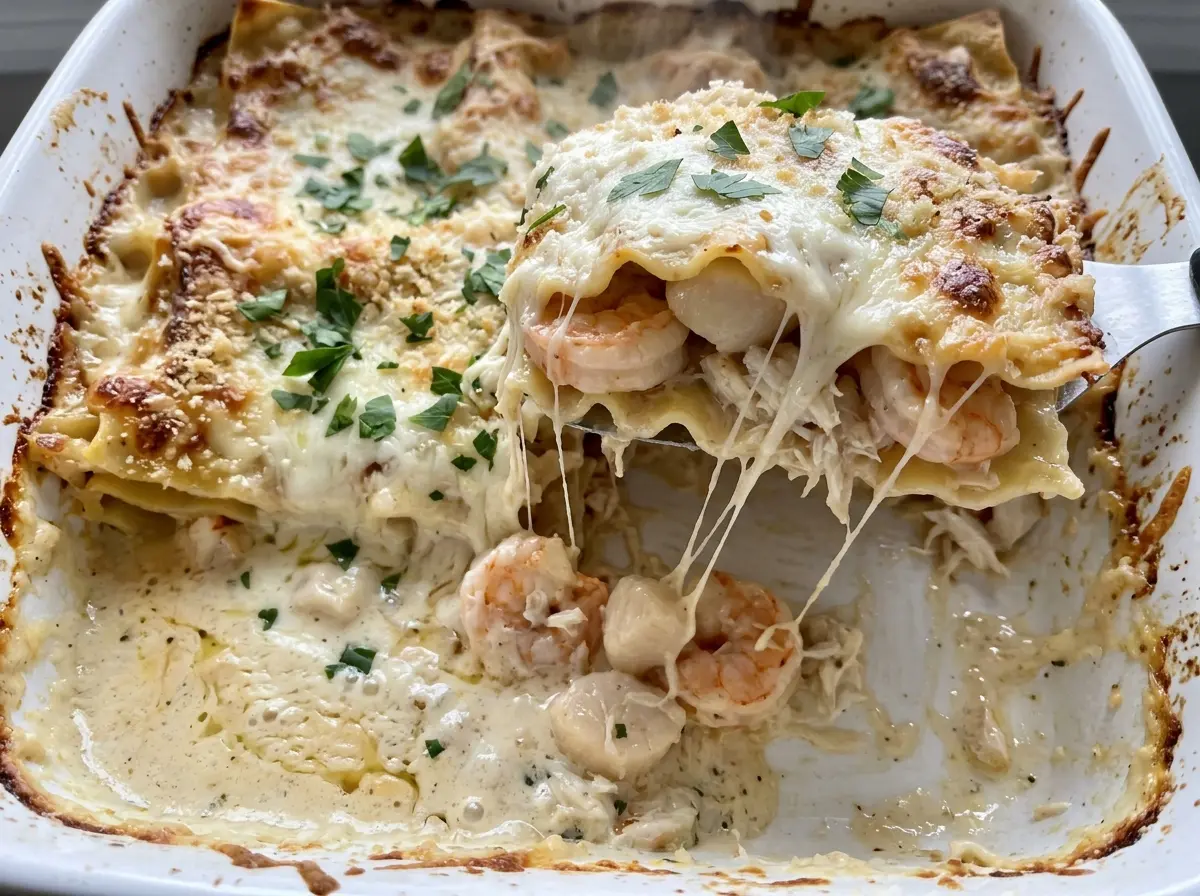
Kitchen Note
Drain the noodles and lay them flat on a baking sheet rather than stacking them. A pile starts sticking together while you finish the filling, and pulling the sheets apart can tear the edges you need for neat layers.
Save this Christmas Eve Seafood Lasagna for a special dinner with creamy béchamel, tender seafood, and layers that hold after a short rest.
Why the Seafood Belongs in the Ricotta, Not in Separate Layers
It might seem natural to arrange the shrimp, scallops, and crab in their own layers, but mixing them into the ricotta makes this lasagna easier to portion and more balanced to eat. Each scoop of filling carries a little seafood instead of leaving you with one slice that has all the shrimp and another that’s mostly cheese.
There’s a texture benefit, too. Ricotta and spinach give the cooked seafood a soft, steady place between the noodles, while the béchamel adds moisture around the layers. Keep the seafood in recognizable pieces by folding it in gently; a vigorous stir breaks up the delicate crab and turns the filling pasty. You want the mixture combined, not mashed.
This is also why the crab goes in after the shrimp and scallops cook. Lump crab is already tender, so it only needs to be folded through the warm mixture. The more gently you handle it, the more distinct pieces you’ll find when you cut into the finished lasagna.
Why Whole-Milk Ricotta and a Light Béchamel Both Matter Here

- Whole milk and the roux — Whole milk gives the béchamel body without making it taste heavy, while butter and flour thicken it into a sauce that coats the noodles. Two-percent milk can stand in at the same volume, though the sauce will be a little less rich. Keep the flour and butter in balance so the sauce thickens smoothly.
- Shrimp and bay scallops — Raw seafood cooks quickly and keeps a tender texture in the finished bake. Choose shrimp that smell clean and briny, not strongly fishy, and pat the scallops dry before they hit the skillet. If you can’t find bay scallops, use the same weight of shrimp cut into the same small pieces; you’ll lose the scallops’ sweet, delicate bite but keep the filling balanced.
- Lump crabmeat — Pick through it for shell fragments before folding it into the cooked seafood. Lump meat gives the filling larger, sweet pieces; claw meat can replace it for a stronger crab flavor and smaller flakes. Either way, handle it gently so the pieces don’t vanish into the ricotta.
- Whole-milk ricotta and frozen spinach — Whole-milk ricotta makes a creamy, cohesive filling; part-skim ricotta works but gives a leaner result. Frozen chopped spinach is convenient and already cut to distribute evenly. Thaw it fully and squeeze out as much liquid as you can before mixing, or excess moisture can loosen the filling.
- Parmesan, mozzarella, and lemon zest — Finely grated Parmesan seasons the filling and gives the top a savory finish, while low-moisture mozzarella melts without adding the water that fresh mozzarella would. A block of Parmesan grated at home melts smoothly, but finely grated packaged Parmesan is a practical choice. Freshly grated lemon zest brings a bright note that dried lemon peel can’t quite match.
From Spoon-Coating Béchamel to Clean, Set Layers
Whisk the Béchamel Until It Coats a Spoon
Heat the oven to 375°F and lightly grease a 9×13-inch baking dish with 1 teaspoon of olive oil. Melt the butter in a 3-quart saucepan over medium heat, whisk in the flour, and cook for 1 minute. Gradually whisk in the milk, then bring the sauce to a gentle simmer, whisking often for 5–7 minutes. When it coats a spoon, stir in 1 teaspoon of kosher salt, 1/4 teaspoon of black pepper, and the nutmeg; keep it warm over the lowest heat and stir occasionally.
Cook the Seafood Briefly, Then Fold in the Crab
Heat the remaining 2 teaspoons of olive oil in a 12-inch skillet over medium-high heat. Cook the shrimp and patted-dry scallops in two batches, stirring gently for 2–3 minutes per batch, until opaque and the largest shrimp pieces reach 145°F. Transfer them to a bowl, lower the heat to medium-low, and cook the garlic in the skillet for 30 seconds. Stir the garlic into the seafood and fold in the crab without breaking it up.
Mix a Filling That Still Has Pieces in It
In a large bowl, combine the ricotta, spinach, 1/2 cup of the Parmesan, parsley, lemon zest, remaining 1/2 teaspoon of salt, and remaining 1/4 teaspoon of black pepper. Fold in the seafood mixture until it’s distributed through the ricotta. Stop once the filling looks even; continued mixing will crush the crab and make the mixture dense.
Layer, Bake, and Let the Center Set
Cook the lasagna noodles in an 8-quart pot of boiling water according to the package directions until al dente, then drain them. Spread 1 cup of béchamel in the prepared dish and arrange 3 noodles on top. Add one-third of the seafood filling, 1 cup of béchamel, and 3/4 cup of mozzarella; repeat that noodle, filling, sauce, and mozzarella layer twice. Finish with the remaining noodles, béchamel, 3/4 cup mozzarella, and 1/2 cup Parmesan. Cover tightly with foil and bake for 20 minutes, then uncover and bake for 10–15 minutes, until the edges bubble and the center reaches 165°F. Rest the lasagna for 15 minutes before slicing.
Two Thoughtful Ways to Adapt This Seafood Lasagna
Make It Gluten-Free Without Losing the Layers
Use regular gluten-free lasagna noodles and cook them according to their package directions. Replace the all-purpose flour in the béchamel with the same amount of a cup-for-cup gluten-free flour blend made for baking. The noodles may feel less flexible when you layer them, so handle them carefully.
Trade the Crab for Cooked Lobster
Replace the lump crabmeat with the same weight of cooked lobster meat, cut into bite-size pieces. Fold it in at the same point as the crab so it stays tender. The result is a firmer, more luxurious seafood filling with less of crab’s sweet, delicate flavor.
Storage and Reheating
- Refrigerator: Refrigerate leftovers within 2 hours and eat them within 3–4 days. The noodles soften a little as they sit.
- Freezer: I don’t recommend freezing this lasagna. The béchamel and ricotta can turn grainy, and the seafood may lose its tender texture after thawing.
- Reheating: Warm individual slices covered in the microwave at medium power in short intervals. Check the middle as you go; uncovered edges can dry out before the center is hot.
Questions That Come Up When Making Seafood Lasagna
Christmas Eve Seafood Lasagna
Ingredients
Equipment
Method
- Heat the oven to 375°F.
- Lightly grease a 9x13-inch baking dish with 1 teaspoon of the olive oil.
- Melt the butter in a 3-quart saucepan over medium heat, then whisk in the flour and cook for 1 minute.
- Gradually whisk in the milk and bring to a gentle simmer, whisking often; cook for 5–7 minutes, until thick enough to coat a spoon.
- Stir in 1 teaspoon of the salt, 1/4 teaspoon of the black pepper, and the nutmeg.
- Keep the béchamel warm over the lowest heat, stirring occasionally.
- Heat the remaining 2 teaspoons of olive oil in a 12-inch skillet over medium-high heat.
- Cook the shrimp and scallops in two batches, stirring gently, for 2–3 minutes per batch, until opaque and the largest shrimp pieces reach 145°F; transfer to a bowl.
- Reduce the heat to medium-low, add the garlic to the skillet, and cook for 30 seconds.
- Stir the garlic into the seafood, then gently fold in the crabmeat.
- In a large bowl, mix the ricotta, spinach, 1/2 cup of the Parmesan, parsley, lemon zest, remaining 1/2 teaspoon salt, and remaining 1/4 teaspoon black pepper; gently fold in the seafood mixture.
- Cook the lasagna noodles in an 8-quart pot of boiling water according to the package directions until al dente; drain and lay flat on a baking sheet.
- Spread 1 cup of béchamel in the baking dish and arrange 3 noodles on top.
- Spread one-third of the seafood filling over the noodles, spoon 1 cup of béchamel over the filling, and sprinkle with 3/4 cup mozzarella; repeat this noodle, filling, sauce, and mozzarella layer twice.
- Top with the remaining 3 noodles, all remaining béchamel, the remaining 3/4 cup mozzarella, and the remaining 1/2 cup Parmesan.
- Cover the dish tightly with foil and bake for 20 minutes, then uncover and bake for 10–15 minutes, until bubbling at the edges and 165°F in the center.
- Let the lasagna rest for 15 minutes before serving.