
Christmas Eggnog Cream Puff Pastries
The dough looks like a thick paste when the flour first hits the pan, then suddenly pulls together into one smooth ball. That change is your cue that choux pastry…

By Ava
•
•
Reading time: 10 min
Tip: save now, make later.
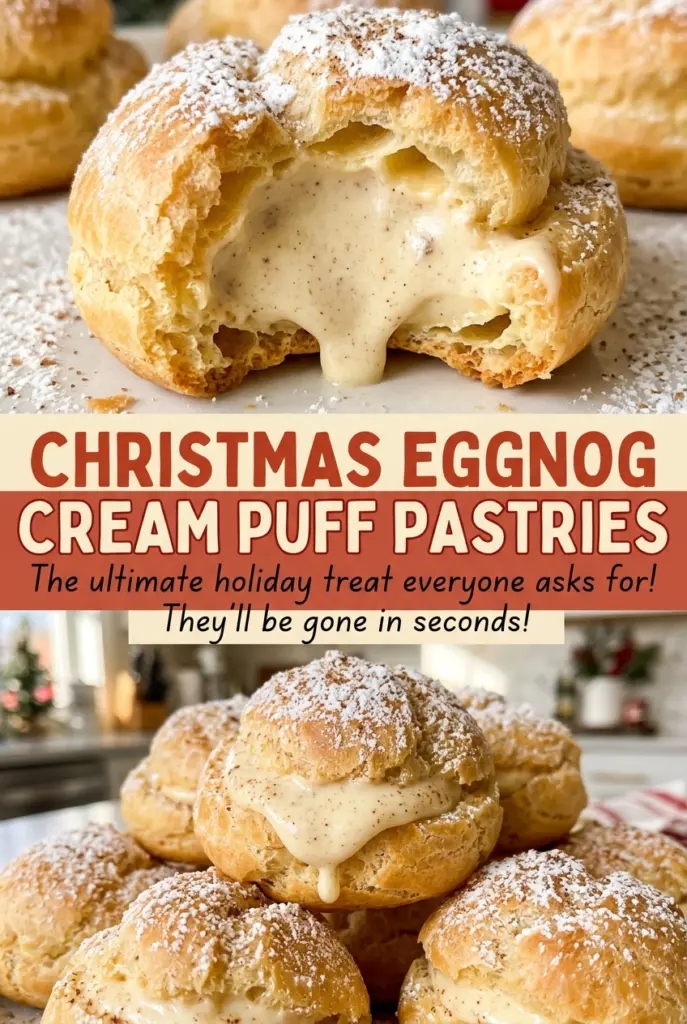
The dough looks like a thick paste when the flour first hits the pan, then suddenly pulls together into one smooth ball. That change is your cue that choux pastry is coming together. These Christmas eggnog cream puff pastries pair crisp, airy shells with a cool custard that tastes warmly of eggnog and nutmeg.
I like this dessert because its two parts can be prepared separately: the shells need time to cool, and the pastry cream needs a good chill before it goes inside. The filling starts with eggnog warmed until steaming, then gets combined gradually with the yolks so they thicken into a smooth cream instead of turning into bits of scrambled egg.
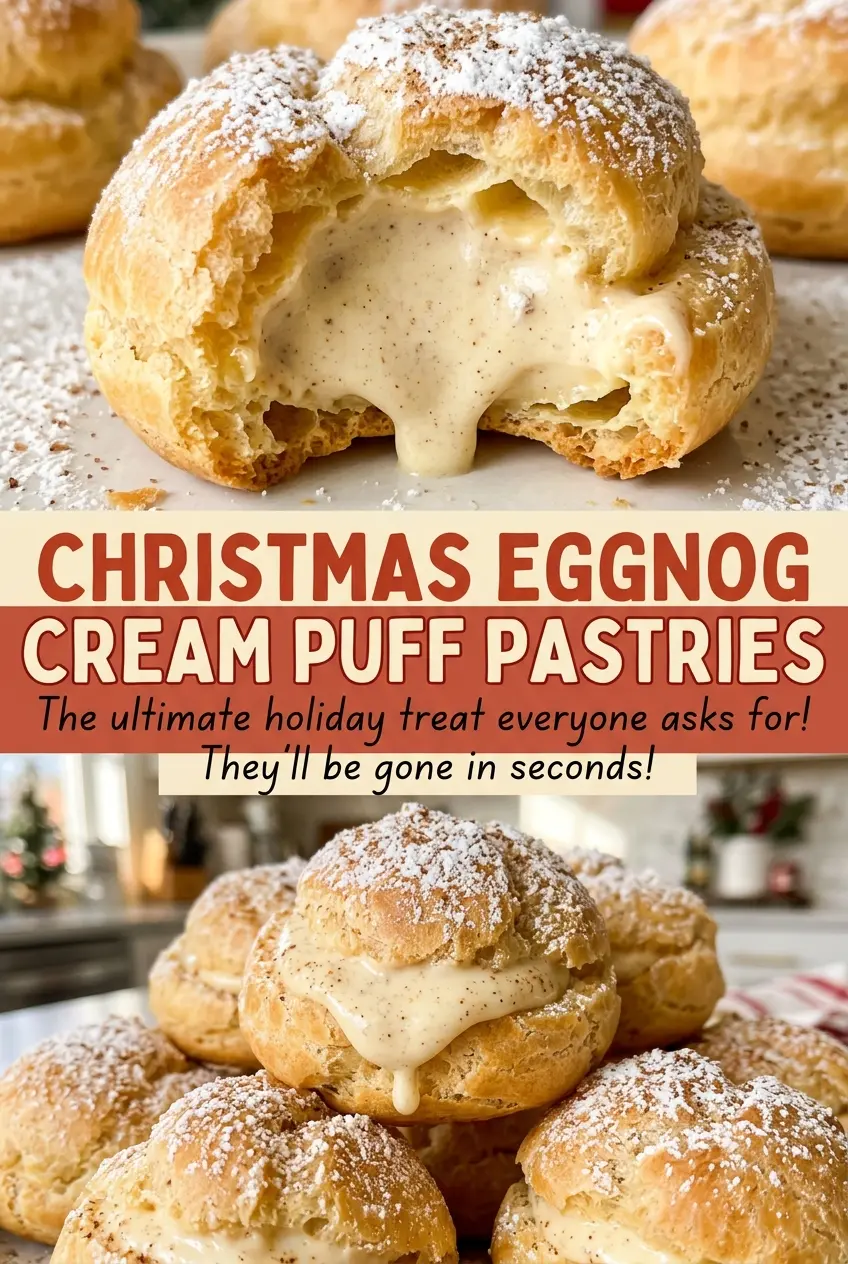
Once filled, each puff gets its little pastry top back and a light dusting of powdered sugar. Serve them while the shells still have a bit of crispness around the edges and the eggnog cream is cold.
Kitchen Note
Press the plastic wrap right against the pastry cream, not just over the bowl. That contact keeps a skin from forming while the cream chills, so you get a smooth filling when it’s time to assemble.
Save these Christmas eggnog cream puff pastries for a dessert with crisp shells and chilled, nutmeg-scented filling.
Why Eggnog Pastry Cream Needs a Slow Temper
Eggnog has more going on than plain milk: it brings its own sweetness and a spiced, custardy taste. But it’s still a liquid, and pouring it straight into the yolks can heat them too quickly. Whisking about half of the steaming eggnog into the yolk mixture first gently raises its temperature before everything goes back into the saucepan.
That gradual start gives you time to combine the ingredients evenly. Keep the whisk moving as you pour, then continue whisking constantly once the mixture returns to the pan. When it thickens and bubbles, the cornstarch has done its work; the extra minute of whisking finishes the cream so it will hold inside the puffs instead of running out when you take a bite.
Eggnog brands vary in sweetness and spice, so the finished cream won’t taste identical every time. The vanilla and nutmeg round it out without masking the eggnog itself.
What Eggnog and Cornstarch Bring to the Filling
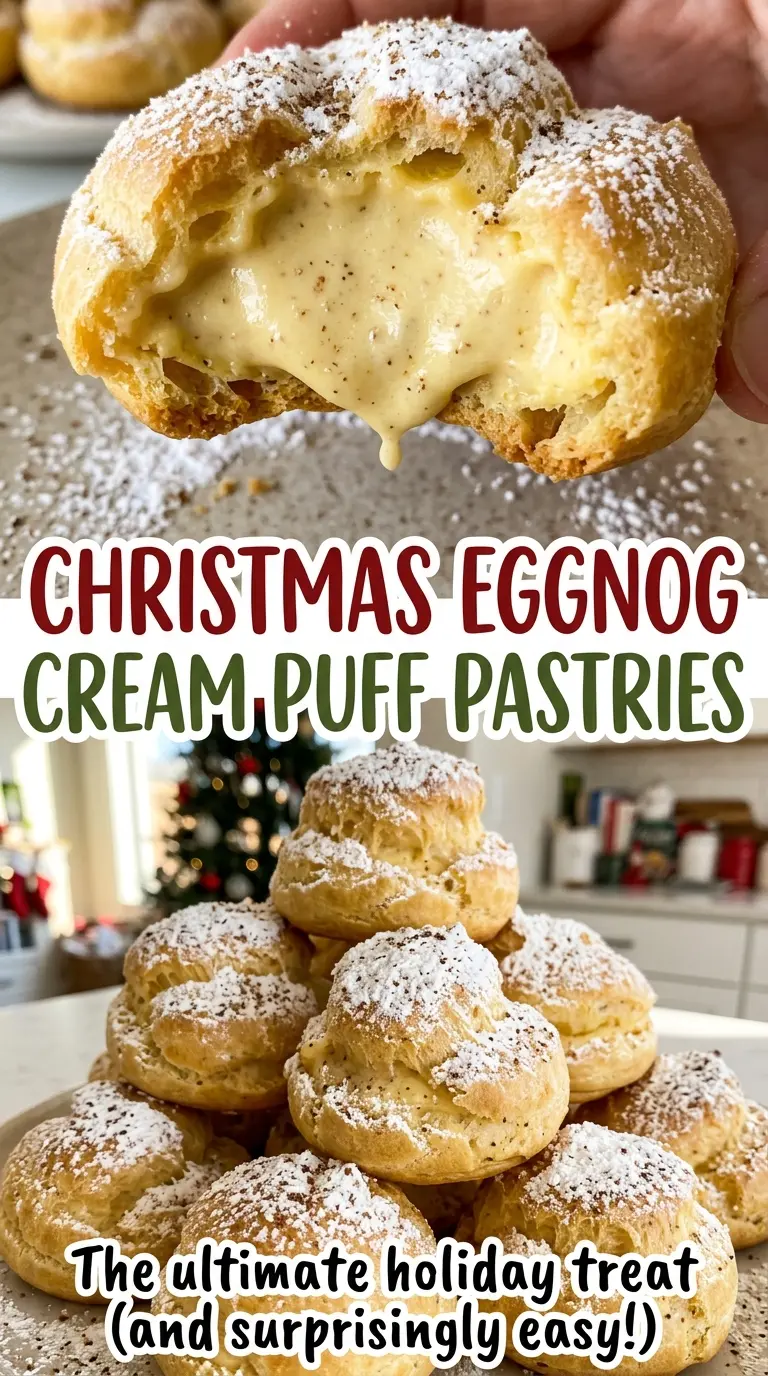
- Eggnog — It provides the filling’s dairy base as well as its distinctive sweet, spiced flavor. Pick an eggnog you enjoy drinking, since its taste carries through; plain milk isn’t a direct replacement and won’t give you the same result.
- Cornstarch — This is what thickens the cream enough to sit neatly inside the shells. There isn’t a dependable one-for-one swap that gives the same smooth, set texture, so use cornstarch rather than trying to thicken the filling with flour.
- Eggs and yolks — Room-temperature whole eggs blend into the choux dough more easily, while the yolks enrich and thicken the cream. Keep the whites out of the custard; using whole eggs there changes its texture.
- All-purpose flour and unsalted butter — Ordinary all-purpose flour gives the choux dough its structure, and unsalted butter lets the measured salt stay controlled. Use fresh butter, but there’s no need for a specialty flour or a premium brand.
- Vanilla and nutmeg — These give the filling its familiar holiday warmth. Ground nutmeg is convenient here, and a fresh bottle of vanilla extract is more useful than an elaborate substitute.
From Panade to Filled Puffs: The Texture Cues That Matter
Bring the Flour Together in the Pan
Heat the oven to 425°F and line a large baking sheet with parchment paper. Bring the water, butter, and kosher salt to a boil in a medium saucepan over medium heat, stirring until the butter melts. Take the pan off the heat, add all the flour at once, and stir vigorously until the dough forms a smooth ball. Return it to medium-low heat and stir for 1 to 2 minutes; the dough should look less wet and pull together cleanly.
Beat in the Eggs Gradually
Transfer the dough to a large bowl and let it cool for 5 minutes before adding the eggs. Beat in one egg at a time, letting each one incorporate before adding the next. The finished dough should look smooth and glossy, not broken or streaky. Spoon 12 equal mounds, about 2 inches wide, onto the baking sheet, leaving about 2 inches between them.
Bake Until the Shells Feel Dry
Bake for 15 minutes at 425°F, then reduce the oven to 350°F without opening the door. Bake for another 20 to 25 minutes, until the puffs are deep golden brown and feel dry. If they’re pale or still feel damp, they need more time in the oven; shells that aren’t dried through are more likely to collapse. Turn off the oven, crack the door, and leave the puffs inside for 10 minutes, then transfer them to a wire rack to cool completely.
Temper and Thicken the Eggnog Cream
Whisk the egg yolks, sugar, cornstarch, and salt in a medium bowl until smooth. Warm the eggnog in a medium saucepan over medium heat until steaming, then slowly whisk about half into the yolk mixture. Pour that mixture back into the saucepan and cook over medium heat, whisking constantly, until thick and bubbling. Keep whisking for 1 minute, then remove the pan from the heat.
Chill the Filling Before Assembly
Whisk the butter, vanilla, and nutmeg into the hot cream until smooth. Scrape it into a bowl, press plastic wrap directly onto the surface, and refrigerate until cold, at least 2 hours. Cut the tops off the fully cooled puffs and set them aside. Spoon or pipe cold pastry cream into each puff bottom, replace the tops, and dust with powdered sugar just before serving.
Two Small Changes for a Different Eggnog Puff
Leave Out the Nutmeg
Skip the ground nutmeg for a milder, more vanilla-forward filling that lets the eggnog’s own spice stand on its own. The pastry cream will still thicken and fill the shells as usual.
Serve Them Open-Topped
Spoon or pipe the cream into the puff bottoms and leave the pastry tops off. You’ll see more of the eggnog filling, and the shells keep their crisp edges a little longer than fully assembled puffs.
Storage and Reheating
- Refrigerator: Keep filled puffs covered and refrigerated; they’re best within 2 days. The shells soften as they sit with the cream.
- Freezer: Freeze unfilled shells in an airtight container for up to 1 month. Filled puffs don’t freeze well because the custard can turn grainy and the shells lose their texture.
- Reheating: Warm unfilled shells in a 300°F oven for 5 to 8 minutes to refresh their crispness, then cool completely before filling. Don’t heat filled puffs; warm custard softens the shells.
Questions I Get Asked About Eggnog Cream Puffs
Christmas Eggnog Cream Puff Pastries
Ingredients
Equipment
Method
- Heat the oven to 425°F.
- Line a large baking sheet with parchment paper.
- Bring the water, butter, and salt to a boil in a medium saucepan over medium heat, stirring until the butter melts.
- Remove the pan from the heat and add the flour all at once.
- Stir vigorously until the mixture forms a smooth ball.
- Return the pan to medium-low heat and stir for 1 to 2 minutes to dry the dough slightly.
- Transfer the dough to a large bowl and let it cool for 5 minutes.
- Beat in the eggs one at a time until the dough is smooth and glossy.
- Spoon 12 equal mounds of dough, about 2 inches wide, onto the prepared baking sheet, spacing them about 2 inches apart.
- Bake for 15 minutes.
- Reduce the oven to 350°F without opening the door and bake for 20 to 25 minutes more, until the puffs are deep golden brown and feel dry.
- Turn off the oven, crack the door, and leave the puffs inside for 10 minutes.
- Transfer the puffs to a wire rack and cool completely.
- Whisk the egg yolks, sugar, cornstarch, and salt in a medium bowl until smooth.
- Heat the eggnog in a medium saucepan over medium heat until steaming.
- Slowly whisk about half of the hot eggnog into the yolk mixture.
- Pour the yolk mixture back into the saucepan and cook over medium heat, whisking constantly, until thick and bubbling.
- Continue whisking for 1 minute.
- Remove the pan from the heat and whisk in the butter, vanilla, and nutmeg until smooth.
- Scrape the pastry cream into a bowl.
- Press plastic wrap directly onto its surface.
- Refrigerate until cold, at least 2 hours.
- Cut the tops off the cooled puffs and set the tops aside.
- Spoon or pipe the cold pastry cream into the puff bottoms.
- Replace the tops and dust with powdered sugar just before serving.