
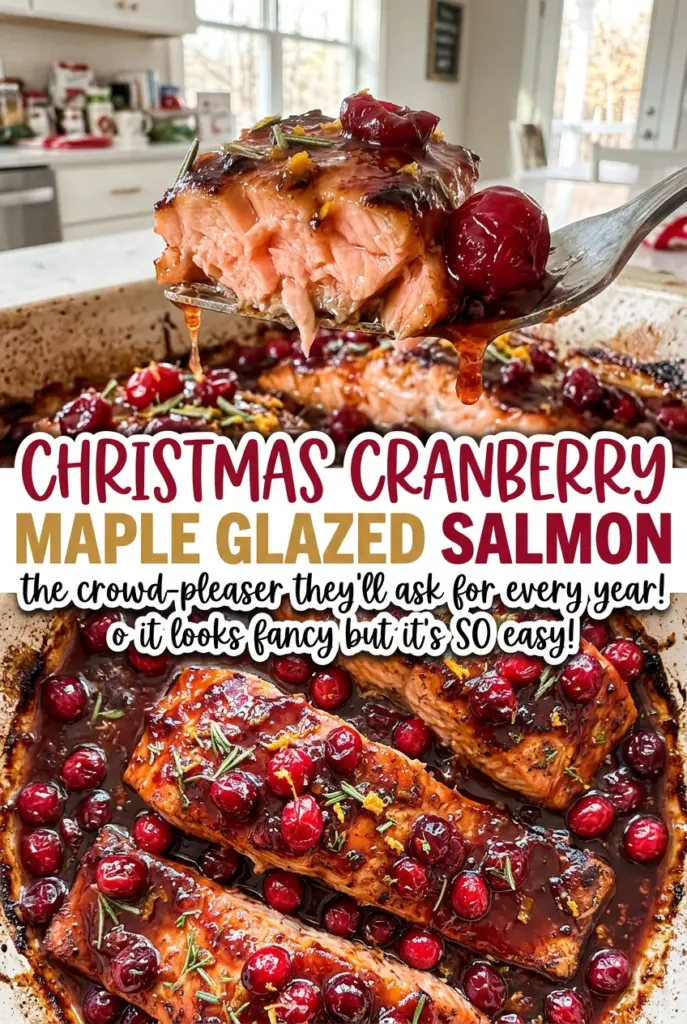
Christmas Cranberry Maple Glazed Salmon
The cranberries start popping against the sides of the saucepan, and the maple-orange smell gets there before the glaze is ready. I wait until most of the berries have burst…

By Ava
•
•
Reading time: 8 min
Tip: save now, make later.
The cranberries start popping against the sides of the saucepan, and the maple-orange smell gets there before the glaze is ready. I wait until most of the berries have burst and the liquid turns glossy and thick enough to cling to a spoon. That’s the moment this Christmas Cranberry Maple Glazed Salmon gets its bright, sweet-tart finish.
I spoon only half of the glaze over the salmon before it goes into the oven. The rest stays in the saucepan for serving, so the fish gets a cooked-on layer while the extra glaze keeps its fresh cranberry flavor.
Skin-on salmon stays steady on the baking sheet, and a quick rest after baking gives the fillet a chance to settle before you serve it. The result is tender salmon under a ruby-colored cranberry maple glaze, with enough sauce left to bring a little more brightness to each portion.
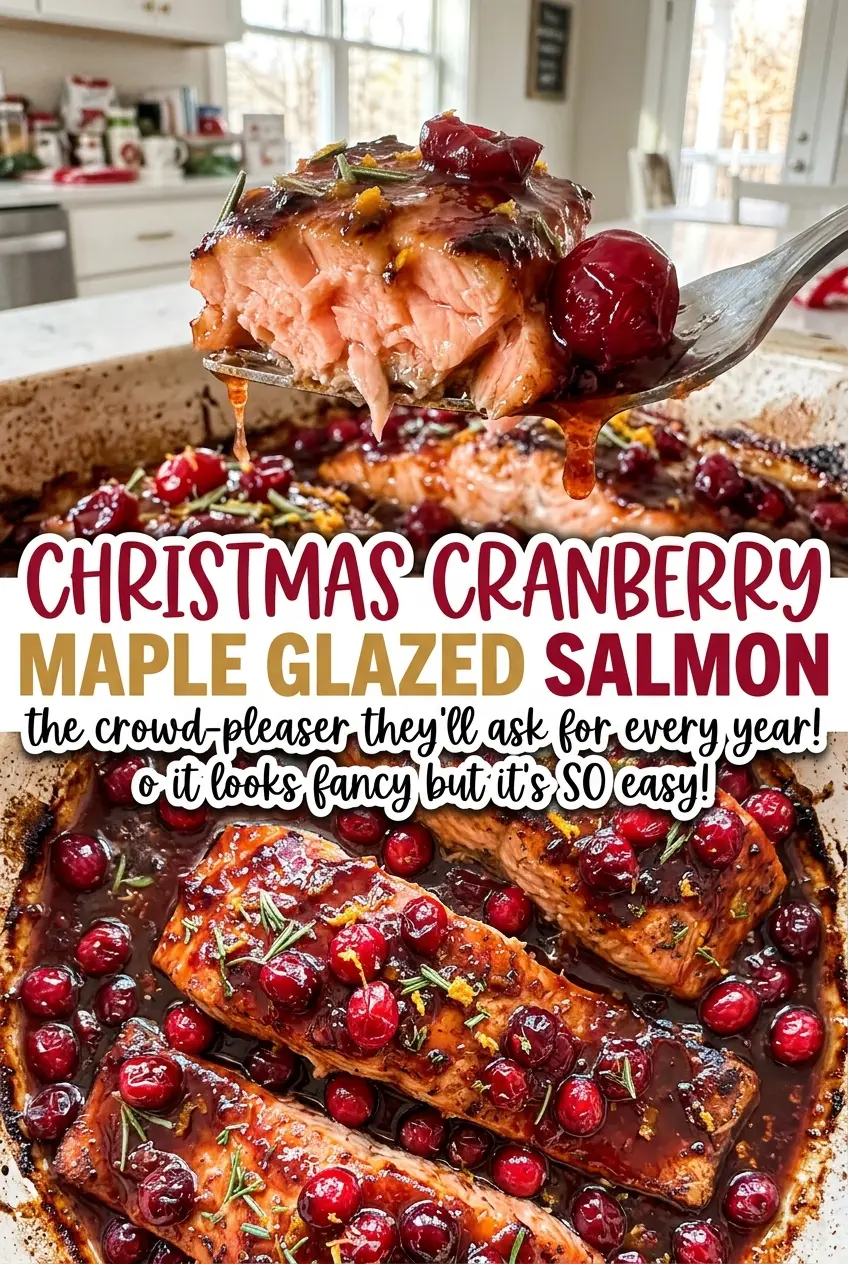
Kitchen Note
Pat the salmon dry before brushing it with oil. A damp surface can make the glaze slide around instead of sitting evenly over the fillet.
Save this Christmas cranberry maple glazed salmon for its sweet-tart cranberry topping and tender, oven-baked fish.
Why the Salmon Gets Cranberry Glaze Twice
Putting all the glaze on before baking sounds convenient, but it misses what makes this version work. The portion that goes into the oven cooks against the salmon and settles into a shiny coating. The reserved portion stays in the saucepan, where it keeps a brighter, fruitier taste for serving.
That contrast matters because cranberries bring plenty of tartness, while maple syrup rounds it out. Orange juice adds a citrus note, and Dijon brings a little savory sharpness so the glaze doesn’t taste like cranberry jam. Once the berries burst and the mixture thickens, it’s balanced enough to work both as a coating and as a spoonable finish.
Use the glaze in two distinct moments: a thin, even layer before the salmon bakes, then the rest at the table. Don’t pour the whole batch over the fish at once. Keeping some back lets you control how much sauce goes on each serving, and it gives the salmon a fresh, glossy finish without hiding its texture.
What Gives This Cranberry Glaze Its Sweet-Tart Balance
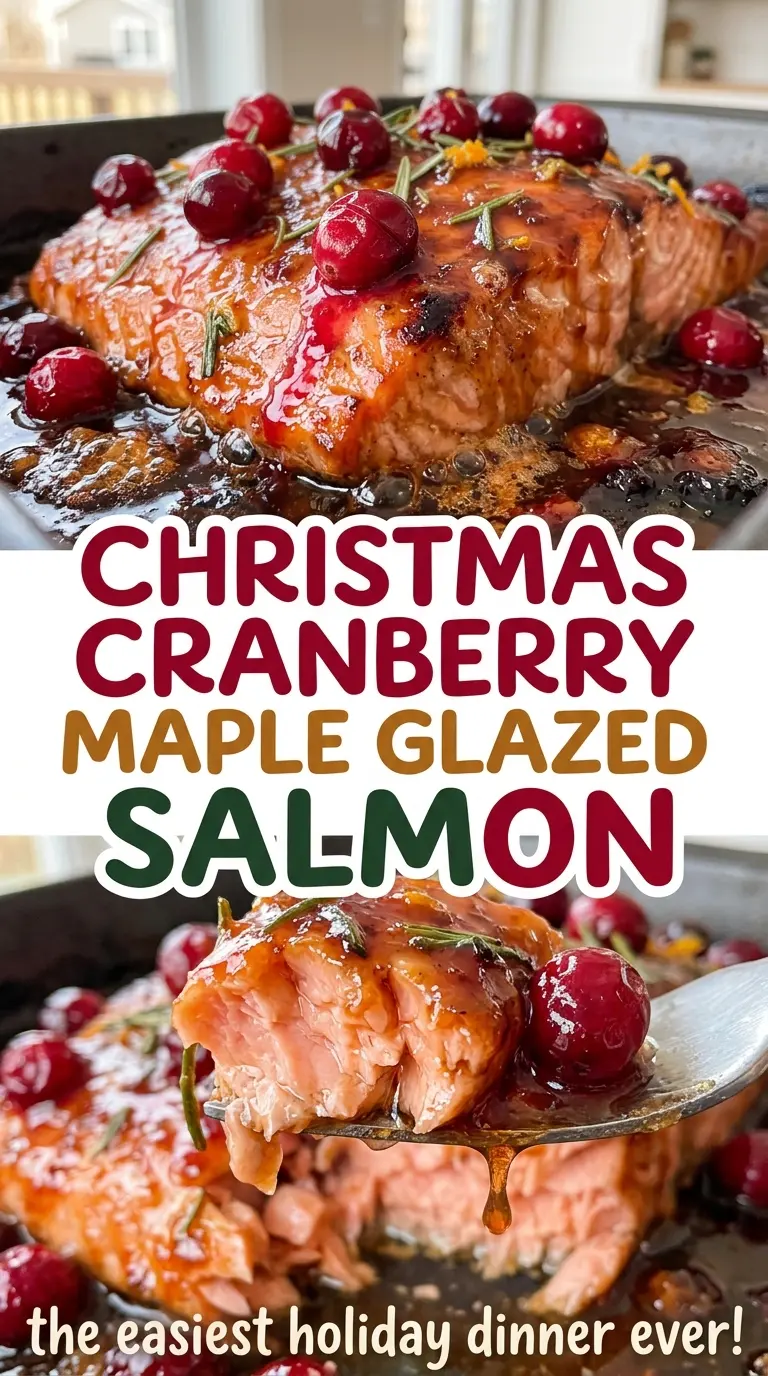
- Cranberries — Fresh or frozen berries both work here. They bring the tartness and the texture; as they cook, most burst and thicken the glaze. Dried cranberries aren’t a direct substitute because they won’t break down into the same sauce.
- Pure maple syrup — Pure syrup gives the glaze a rounded sweetness that complements the cranberries. Pancake syrup has a different flavor and consistency, so stick with pure maple syrup for this balance.
- Orange juice — The citrus softens the sharp edge of the berries and keeps the glaze from tasting one-note. A fresh-squeezed or bottled orange juice works; the flavor is a supporting note rather than the main event.
- Dijon mustard — Dijon adds a gentle savory tang beneath the fruit and maple. It shouldn’t make the sauce taste mustardy; it helps keep the sweetness in check.
- Skin-on salmon — The skin gives the fillet a sturdy base on the parchment-lined baking sheet and helps it hold together when you lift and serve it. Choose a fillet with fairly even thickness so the thinner end is less likely to cook ahead of the center.
- Olive oil — A light brush helps the salt and pepper coat the salmon evenly before the glaze goes on. There’s no need for an expensive bottle here; use an olive oil you already like cooking with.
The Stovetop-to-Oven Sequence That Keeps the Glaze on Track
Simmer the Berries Until the Sauce Thickens
Combine the cranberries, maple syrup, orange juice, Dijon mustard, and the smaller portion of salt in a small saucepan. Bring the mixture to a boil over medium-high heat, then lower the heat to medium-low. Simmer for 8 to 10 minutes, stirring occasionally, until most of the cranberries have burst and the glaze has thickened. Take it off the heat before it reduces so far that it becomes difficult to spoon over the fish.
Season the Salmon on the Prepared Sheet
Heat the oven to 400°F and line a rimmed baking sheet with parchment paper. Set the salmon skin side down, pat it dry, and brush it with olive oil. Season the top with the remaining salt and black pepper before adding the glaze. Keeping the fillet skin side down gives it a stable base while you brush and bake it.
Bake with Half the Glaze, Then Rest
Spoon half of the cranberry glaze evenly over the salmon, spreading it across the top rather than letting it pool at one end. Bake for 12 to 18 minutes, checking the thickest part of the fillet for 145°F. The exact time depends on the thickness of the salmon, so use the temperature at the center as your doneness cue. Rest the fish for 3 minutes, then serve it with the remaining glaze.
Three Simple Ways to Adapt the Salmon and Glaze
Use Honey Instead of Maple
Replace the maple syrup with the same amount of honey. The glaze will have a more floral sweetness and a slightly different finish, while the cranberries still provide the tart contrast.
Make the Glaze Gluten-Free
Use a certified gluten-free Dijon mustard in place of regular Dijon, keeping the same amount. The glaze keeps its familiar tangy note, so this adjustment doesn’t change the overall balance.
Trade the Orange for Lemon
Replace the orange juice with the same amount of lemon juice for a sharper, more tart glaze. The cranberry flavor will stand out more, with less of the rounded citrus sweetness.
Storage and Reheating
- Refrigerator: Refrigerate leftover salmon and glaze in separate airtight containers for 3 to 4 days. The salmon will be less moist after chilling.
- Freezer: Freeze the cooked salmon and glaze separately in airtight containers for up to 2 months. Thaw overnight in the refrigerator; the salmon’s texture may be a little softer after freezing.
- Reheating: Place the salmon in a covered baking dish with a spoonful of glaze and warm it in a 275°F oven until it reaches 165°F. Avoid reheating uncovered at high heat, which can dry out the fish.
Questions That Come Up When Making Cranberry Maple Salmon
Christmas Cranberry Maple Glazed Salmon
Ingredients
Equipment
Method
- Combine the cranberries, maple syrup, orange juice, Dijon mustard, and 1/4 teaspoon salt in a small saucepan.
- Bring the mixture to a boil over medium-high heat.
- Reduce the heat to medium-low and simmer for 8 to 10 minutes, stirring occasionally, until most cranberries have burst and the glaze has thickened.
- Remove the glaze from the heat.
- Heat the oven to 400°F.
- Line a rimmed baking sheet with parchment paper.
- Set the salmon skin side down on the prepared baking sheet.
- Pat the salmon dry.
- Brush the salmon with the olive oil.
- Season it with 1 teaspoon salt and the black pepper.
- Spoon half of the cranberry glaze evenly over the salmon.
- Bake for 12 to 18 minutes, until the thickest part reaches 145°F.
- Rest the salmon for 3 minutes.
- Serve with the remaining glaze.