
Christmas Charcuterie Board – Festive Holiday Recipe
The board can look like a jumble for the first minute: a bowl here, a wedge of cheese there, fruit waiting for a place to land. Then the clusters start…

By Ava
•
•
Reading time: 9 min
Tip: save now, make later.
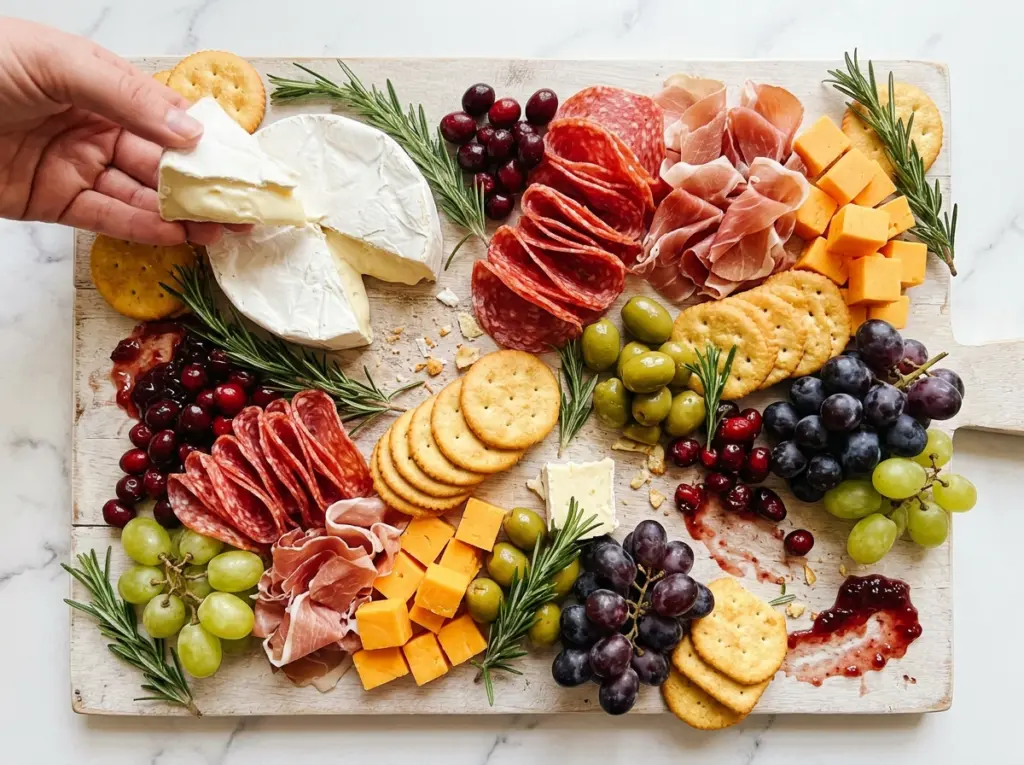
The board can look like a jumble for the first minute: a bowl here, a wedge of cheese there, fruit waiting for a place to land. Then the clusters start to connect, and the open spaces turn into a wreath. That’s the simple visual trick behind this Christmas charcuterie board, a no-cook spread sized to serve 10.
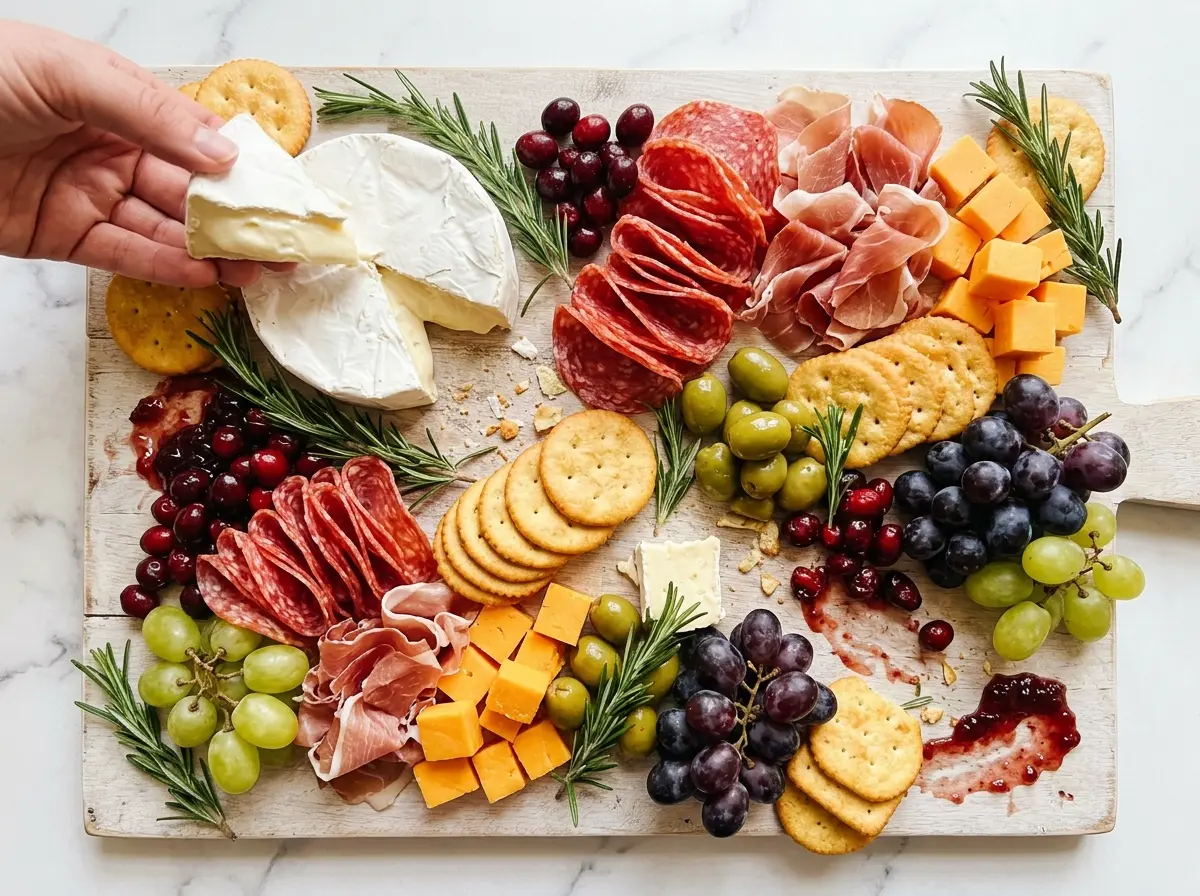
I build the shape around two small bowls, then let the cheese and folded ribbons of salami and prosciutto create the ring. Grapes and strawberries fill the gaps, while crackers, almonds, and rosemary finish the open spots. There’s plenty of color, but each ingredient still has room to be picked up without dismantling the whole board. The result is festive and easy to graze from, with sweet fruit and fig jam beside salty bites and creamy Brie.
Kitchen Note
I dry the washed grapes, strawberries, and rosemary thoroughly before they go on the board. Even a little surface water can leave damp spots around the crackers, and the fruit looks much neater when it isn’t dripping.
Save this Christmas charcuterie wreath for a holiday gathering with fig jam, Brie, fruit, and little ribbons of salami and prosciutto.
Why the Two Bowls Make This Holiday Wreath Easier to Build
The jam and olives aren’t just dips to tuck wherever there’s room. Setting their bowls on opposite sides of the 18-inch round board gives the layout two clear anchors. Once those are in place, the cheese and folded meats can curve around them instead of spreading into one crowded pile. The wreath reads as a wreath even before every gap is filled.
That layout also helps with balance. A board with only large wedges and folded meat can look heavy in one area, while fruit alone tends to scatter. Loose clusters give each item a defined spot, and the grapes and strawberries bridge the spaces between them. Keep the clusters relaxed rather than making a perfectly tight ring; the open pockets are useful places for the smaller pieces. You’ll end up with a board that looks intentional but is still easy to serve from.
Think of the bowls as starting points, not barriers. Keep a little breathing room around each one, then build outward. If one side looks fuller, adjust a cluster before adding more pieces; the shape is easier to tune while the board still has open space.
How the Sweet, Salty, and Creamy Pieces Balance on This Board
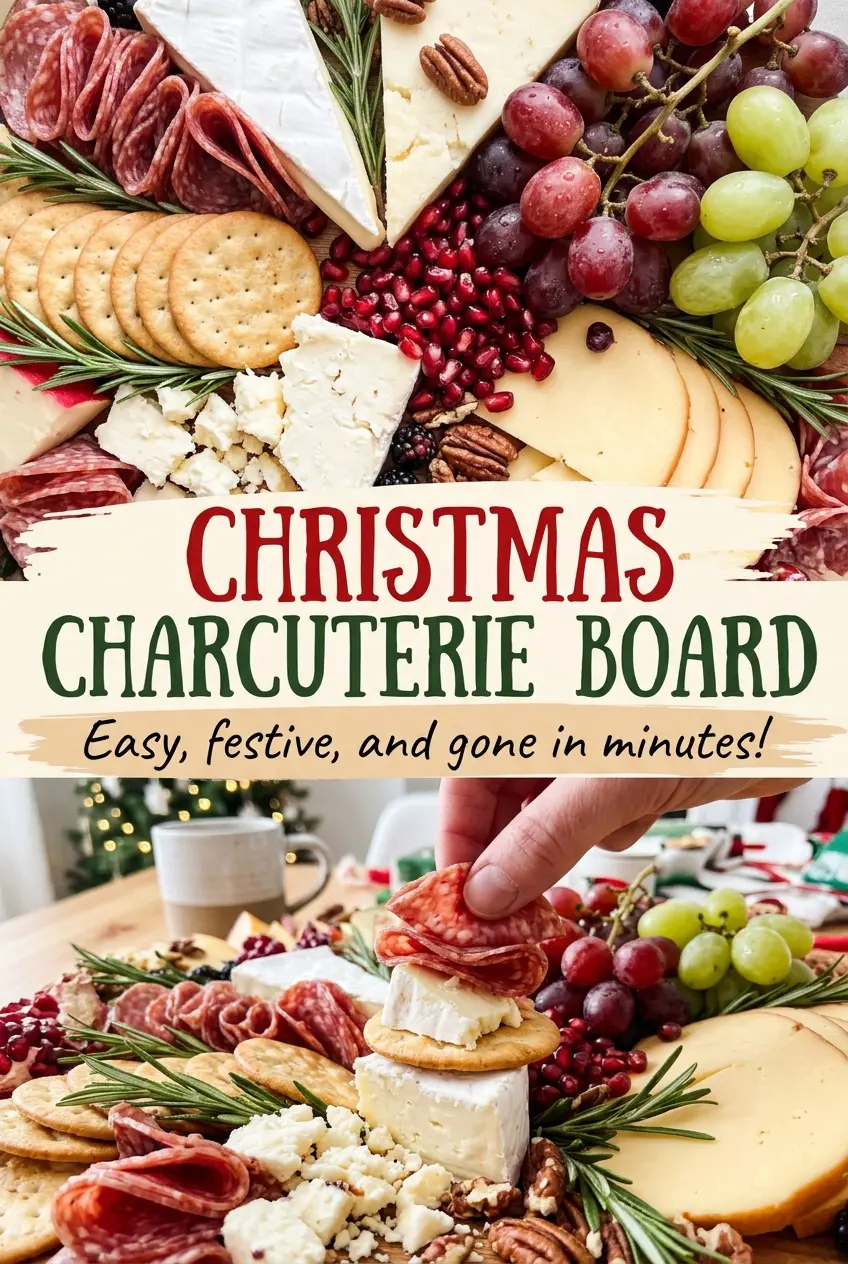
- Fig jam and green olives — The separate bowls give you a sweet, spoonable bite and a briny one without either flavor taking over the board. Use pitted olives so guests don’t have to stop and deal with pits. There isn’t a like-for-like swap among the listed ingredients, so leaving one bowl out is better than expecting another item to taste the same.
- Sharp cheddar and Brie — The cheddar’s firm cubes are easy to pick up, while the Brie wedges bring a softer, creamy contrast. Cutting the cheddar into even 1/2-inch cubes keeps the pieces manageable. A standard grocery-store wedge of Brie works well here; the two cheeses play different roles, so one isn’t an exact replacement for the other.
- Genoa salami and prosciutto — The thin slices fold into loose ribbons, which give the board height and make the meat easy to take in small bites. The two meats bring different shapes and textures, so keep them in their own loose clusters rather than stacking them flat.
- Red grapes and strawberries — Their fresh fruitiness gives the richer cheese and meats a bright counterpoint. Choose fruit that’s in good condition, and keep the strawberries hulled and whole so they’re easy to arrange among the clusters.
- Water crackers, roasted almonds, and rosemary — Crackers give guests a crisp base, almonds add a crunchy bite, and rosemary supplies the green finish that makes the wreath feel festive. The rosemary is an accent, not a main part of the snack, so tuck the sprigs into open spaces rather than covering the food.
Building the Wreath Without Crowding the Board
Anchor the Layout with the Bowls
Spoon the fig jam and green olives into separate small bowls. Set them on opposite sides of the 18-inch round serving board, leaving enough room to arrange food around each bowl. This gives the wreath its basic shape before the larger ingredients go down. If the bowls sit too close together, the ring will feel cramped.
Make Loose Clusters of Cheese and Meat
Arrange the cheddar, Brie, salami, and prosciutto around the bowls in loose clusters. Fold the salami and prosciutto into soft ribbons rather than laying each slice flat. That creates a little height and makes the meat easier to pick up. Leave pockets between clusters for the fruit and smaller items instead of trying to cover every inch at once.
Fill the Open Spaces with Fruit
Add the red grapes and strawberries to the spaces between the cheese and meat. The fruit should fill gaps without hiding the clusters you’ve already made. If a section looks crowded, move a few pieces to a more open spot rather than pressing them into place. A little visible board helps the wreath keep its shape.
Tuck in the Crunch and Rosemary
Place the water crackers and roasted almonds in the remaining spaces. Tuck in the fresh rosemary sprigs as green accents, keeping them visible around the edge of the arrangement. These smaller pieces finish the open areas, so add them after the larger clusters and fruit are in place. Serve the board right after assembling it.
Three Ways to Adapt the Board Without Losing Its Festive Feel
Make a Vegetarian Wreath
Leave off the Genoa salami and prosciutto, then let the cheddar, Brie, and roasted almonds form the savory clusters. The board will have less of the salty, cured-meat contrast, but the cheeses, olives, and fruit still give it a satisfying mix of creamy, briny, and sweet bites.
Arrange It as an Open Crescent
Use the same 18-inch round board and ingredients, but curve the clusters into an open crescent instead of closing the wreath. This leaves more open board visible and gives you a natural spot to reach in from either side. It changes the look without changing what goes on the platter.
Set Out Individual Grazing Plates
For a more structured gathering, divide the same ingredients among individual plates instead of making one shared centerpiece. Keep a little of each cheese, meat, fruit, cracker, and almond together on each plate, with the jam and olives served from their small bowls. You’ll lose the wreath effect, but guests can pick up a complete assortment at once.
Making Ahead and Handling Leftovers
- Refrigerator: Refrigerate perishable leftovers within 2 hours, or within 1 hour if the room temperature is above 90°F. Store leftovers covered and use them within 3 to 4 days; crackers and fruit may lose some of their crisp, fresh texture.
- Freezer: Don’t freeze the assembled board. The fruit, crackers, and cheeses won’t keep their original textures after thawing.
- Before serving: You can wash and dry the fruit and rosemary and cut the cheeses ahead, keeping each component covered and refrigerated separately. Arrange the board close to serving time so the crackers stay crisp.
Questions That Come Up While Putting This Board Together
Christmas Charcuterie Board – Festive Holiday Recipe
Ingredients
Equipment
Method
- Spoon the fig jam and green olives into separate small bowls.
- Set the bowls on opposite sides of an 18-inch round serving board.
- Arrange the cheddar, Brie, salami, and prosciutto in loose clusters around the bowls to form a wreath shape, folding the salami and prosciutto into loose ribbons.
- Fill the open spaces with the grapes and strawberries.
- Tuck the crackers and almonds into the remaining spaces.
- Add the rosemary sprigs as green accents.
- Serve immediately.
- Refrigerate perishable leftovers within 2 hours, or within 1 hour if the room temperature is above 90°F.