

Christmas Brown Sugar Glazed Cocktail Sausages
The glaze goes into the oven looking loose, then turns shiny around the sausages as it bubbles at the edges. That’s the moment these Christmas Brown Sugar Glazed Cocktail Sausages…

By Ava
•
•
Reading time: 8 min
Tip: save now, make later.
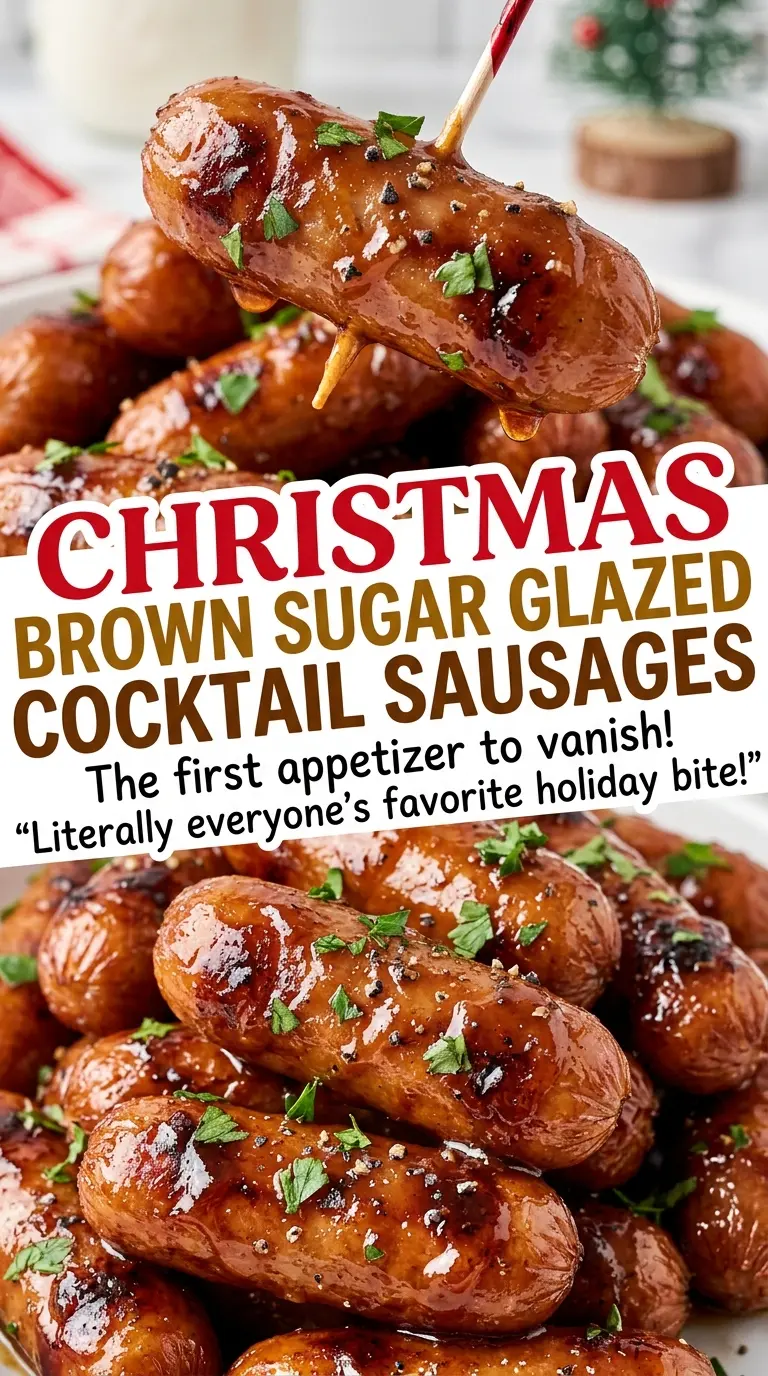
The glaze goes into the oven looking loose, then turns shiny around the sausages as it bubbles at the edges. That’s the moment these Christmas Brown Sugar Glazed Cocktail Sausages start looking ready for the appetizer table. The sauce has a sweet, tangy bite, and it coats each sausage without needing a complicated list of ingredients.
I heat the glaze in a small saucepan first, just long enough for the brown sugar to dissolve. That gives it a smooth start before it goes over the sausages, rather than leaving grains of sugar behind in the baking dish. Dijon mustard and apple cider vinegar keep the sweetness from taking over.
The oven does the rest while you stir the sausages every 10 minutes. After a short rest, the glaze clings to the warm bites instead of pooling at the bottom of the dish. One batch serves 12, and the glossy, sweet-tangy sausages are easy to pick up and enjoy.

Kitchen Note
Give the sausages their full five-minute rest before setting out the platter. The glaze is loose and piping hot straight from the oven, then settles into a neater coating as it cools slightly.
Save these Christmas brown sugar glazed cocktail sausages for a party spread that needs a glossy, sweet-tangy bite with very little hands-on work.
Why This Glaze Tastes Balanced Instead of Candy-Sweet
A brown sugar glaze can easily lean too far into sweetness, especially when it’s meant to coat a savory bite. Here, the sugar isn’t working alone. Ketchup brings a familiar tomato tang, while Dijon and apple cider vinegar give the sauce a sharper edge. Worcestershire adds a savory note that keeps the finish from tasting like a dessert topping.
That balance matters because the sausages and glaze bake together in one dish. As the sauce heats, it coats the sausage surfaces and concentrates around them; the sweet-and-tangy flavor stays present without needing a second sauce at the table. The mustard and vinegar aren’t there to make the glaze sour. They give the brown sugar enough contrast that each bite still tastes savory.
It’s also why I wouldn’t simplify the glaze to brown sugar and ketchup alone. Those two ingredients provide the base, but the smaller amounts of mustard, vinegar, and Worcestershire make the overall taste more rounded. You notice the sweetness first, then the tang and savory finish arrive right behind it.
The Ingredients That Keep a Brown Sugar Glaze in Check
- Light brown sugar — Packed light brown sugar gives the sauce its sweetness and a gentle molasses note. Dark brown sugar works in the same amount if that’s what you have; it makes the glaze taste deeper and more molasses-forward.
- Ketchup — Regular ketchup is a good fit here, and there’s no need to buy a specialty brand. It gives the glaze a smooth tomato base; barbecue sauce isn’t a direct swap because its sweetness and spices can change the balance.
- Dijon mustard — Dijon adds a sharper, more complex mustard flavor than yellow mustard. Yellow mustard works one-for-one if you prefer a milder, familiar taste, though the glaze will lose some of Dijon’s bite.
- Apple cider vinegar — Its fruity acidity brightens the sweet sauce. Plain white vinegar can stand in at the same amount, but its flavor is more direct, so stick with apple cider vinegar if you want the softer tang.
- Worcestershire sauce — This brings savory depth in a small amount, so an inexpensive bottle is fine. Soy sauce can replace it measure for measure, but the result will be saltier and less layered.
- Cocktail sausages — Choose sausages you enjoy eating on their own; they’re the main savory part of each bite. Keep them whole for this method so they’re easy to coat and serve without the edges drying out.
The Three Moments That Make the Sausages Glossy
Stir the Glaze Until the Sugar Dissolves
Put the brown sugar, ketchup, Dijon, apple cider vinegar, and Worcestershire sauce in a small saucepan over medium heat. Stir as the mixture warms, paying attention to the bottom and corners of the pan where sugar can settle. After about 3 minutes, the sugar should be dissolved and the glaze should look smooth. If you can still feel gritty sugar, keep stirring until the texture evens out.
Arrange the Sausages in One Layer
Heat the oven to 350°F and arrange the cocktail sausages in a 9×13-inch baking dish. Spread them across the dish rather than leaving them piled in the center; an even layer makes it easier to coat them well. Pour the warm glaze over the sausages and stir until each one has a coating. Scrape the sauce from the bottom of the dish back over the sausages as you mix.
Bake and Stir as the Sauce Clings
Bake for 30 to 35 minutes, stirring every 10 minutes. Each stir moves the sausages through the glaze, so the ones at the edges don’t sit in one spot for the whole bake. Look for sausages that are hot throughout and a glaze that looks glossy on their surfaces. If the sauce still looks loose, use the full baking window and judge by those visual cues rather than pulling the dish early.
Let the Glaze Settle Before Serving
Take the dish out of the oven and let the sausages rest for 5 minutes. The sauce will still be hot, so use a spoon to transfer the sausages rather than grabbing them by hand. Give the glaze a gentle stir around the dish if some has gathered at the edges. Serve once the coating has settled over the sausages.
How to Change the Sausage Flavor Without Losing the Glaze
Use Smoked Cocktail Sausages
Replace plain cocktail sausages with smoked cocktail sausages to bring a woodier, more savory note beneath the sweet glaze. The sauce stays the same, but the finished bites taste less mild and more like a smoky-sweet appetizer.
Choose Spicy Cocktail Sausages
For a warmer finish, use spicy cocktail sausages in place of mild ones. Their heat plays against the brown sugar, while the ketchup and vinegar still give the glaze its familiar tang. Check the flavor of the sausages before choosing this version; some are much hotter than others.
Make a Gluten-Free Version
Use gluten-free cocktail sausages and gluten-free Worcestershire sauce, and choose gluten-free-labeled ketchup and Dijon mustard. The glaze keeps its sweet-tangy character, but packaged sausage and sauce ingredients vary, so check each product before cooking.
Storage and Reheating
- Refrigerator: Store leftovers in an airtight container for 3 to 4 days. The glaze firms up when cold, then loosens as it warms.
- Freezer: Freeze the sausages with their glaze in a sealed freezer-safe container for up to 2 to 3 months for best quality. Thaw in the refrigerator before reheating for more even warming.
- Reheating: Put them in a baking dish at 350°F and warm until hot throughout, stirring once so the glaze redistributes. Don’t reheat uncovered for longer than needed or the sauce can dry around the edges.
Questions That Come Up Before the Pan Goes In
Christmas Brown Sugar Glazed Cocktail Sausages
Ingredients
Equipment
Method
- Heat the brown sugar, ketchup, Dijon mustard, apple cider vinegar, and Worcestershire sauce in a small saucepan over medium heat, stirring, until the sugar dissolves and the glaze is smooth, about 3 minutes.
- Heat the oven to 350°F.
- Arrange the cocktail sausages in a 9x13-inch baking dish.
- Pour the glaze over the sausages and stir to coat.
- Bake for 30 to 35 minutes, stirring every 10 minutes, until hot throughout and glossy.
- Let the sausages rest for 5 minutes before serving.