
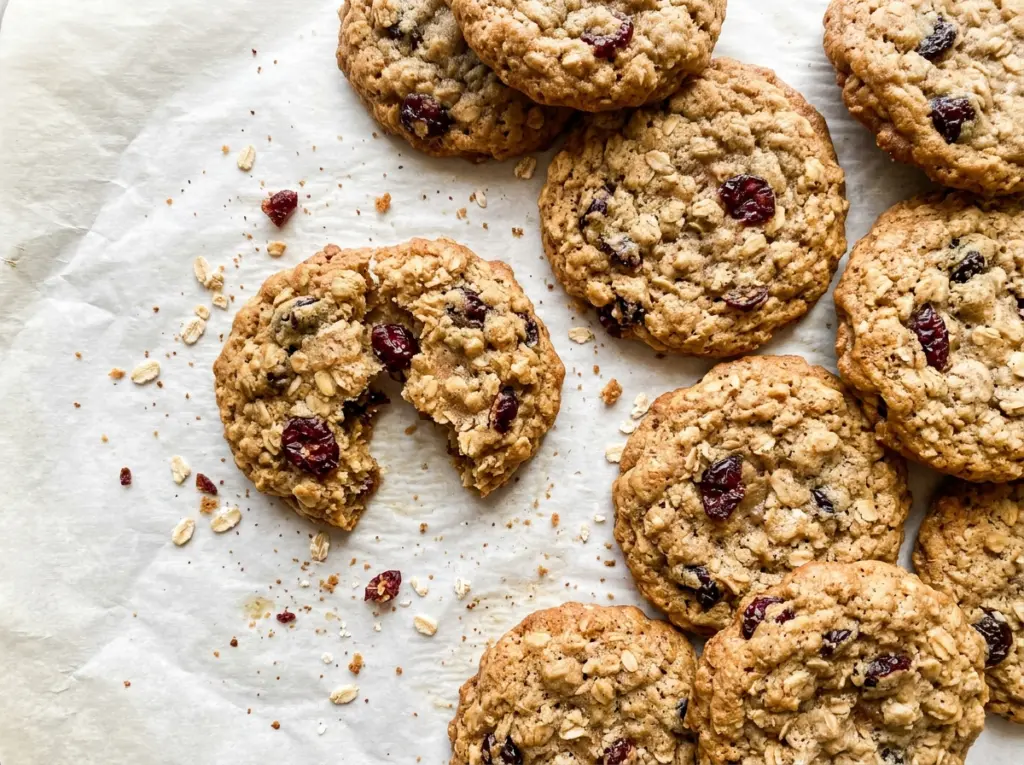
Chewy Cranberry Oatmeal Cookies
The edges of oatmeal cookies can look ready while the centers are still soft, and that’s exactly the moment to pull these from the oven. They firm up as they…

By Ava
•
•
Reading time: 8 min
Tip: save now, make later.
The edges of oatmeal cookies can look ready while the centers are still soft, and that’s exactly the moment to pull these from the oven. They firm up as they rest, so waiting for the middle to look completely baked is how a chewy cookie turns dry. I learned to watch the edges instead when I tested these Chewy Cranberry Oatmeal Cookies.
The dough gets a short rest in the refrigerator before baking. That gives the oats a chance to take up some moisture and helps the cookies hold their shape, while brown sugar keeps the centers pleasantly chewy. Old-fashioned oats add a hearty bite, and dried cranberries bring a bright, tart contrast to the buttery dough.
Each batch makes 36 cookies, so there’s plenty to bake at once and keep on hand. A little patience at the oven pays off in golden edges, soft centers, and cranberries tucked into every bite.
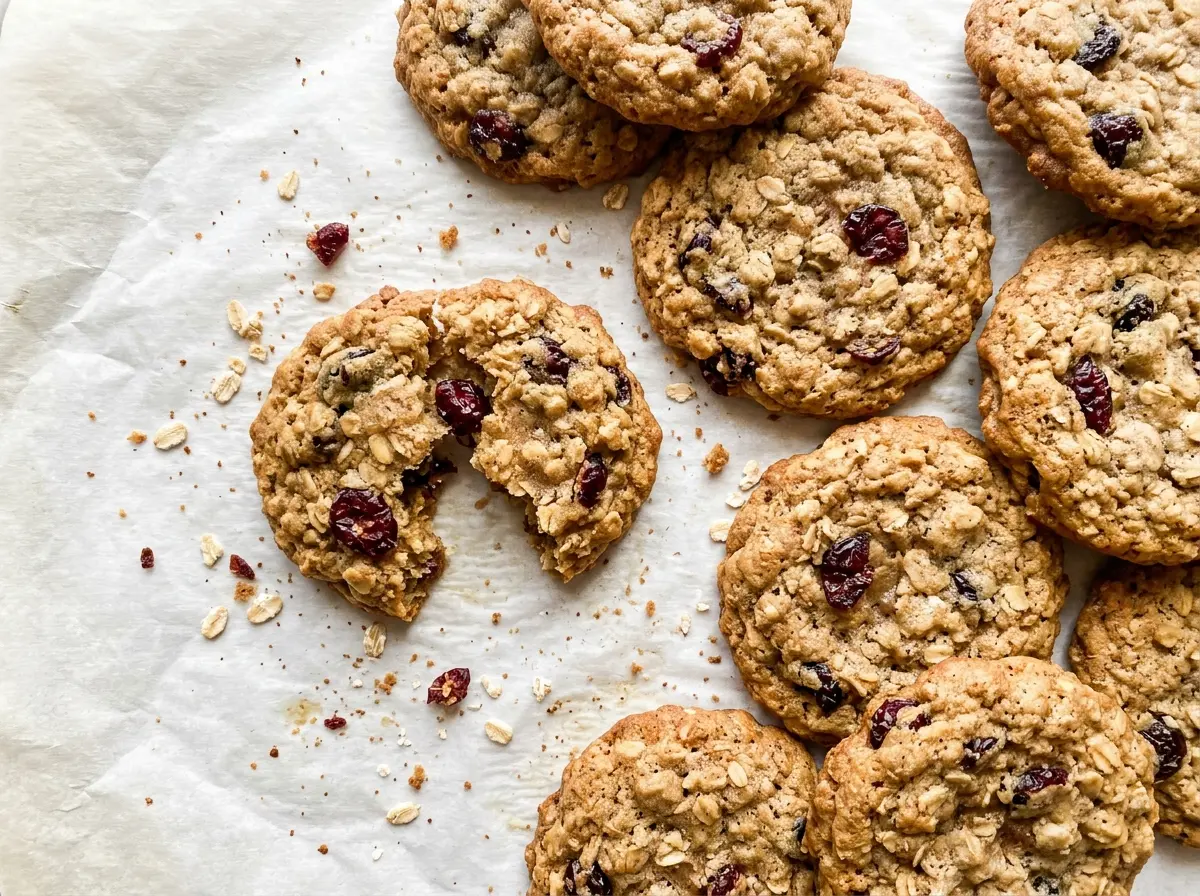
Kitchen Note
Let the cookies rest on the baking sheets for the full 5 minutes before moving them. They’re delicate while hot, and that brief pause helps the centers set without losing their softness.
Save these Chewy Cranberry Oatmeal Cookies for a batch with soft centers, golden edges, and a tart cranberry bite.
Why a Short Chill Helps These Oatmeal Cookies Stay Chewy
Oats make this dough feel sturdy, but they also absorb moisture as they sit. Giving the mixed dough 30 minutes in the refrigerator lets the oats begin to soften before the cookies reach the oven. That short pause also firms the butter, which helps the scoops spread more gradually instead of flattening right away.
The balance of ingredients matters here, too. There are enough oats to give each cookie a substantial, textured bite, while the flour helps hold everything together. Brown sugar brings moisture and a deeper sweetness; granulated sugar contributes a little more crispness at the edges. The result isn’t a thin, snappy oatmeal cookie or a dense oat bar. It’s a cookie with a soft middle and edges that set up neatly.
If you skip the chill, the dough will be softer and more difficult to portion cleanly. The cookies may spread more quickly, changing that contrast between a tender center and a lightly golden edge. The rest is short, but it gives this particular dough a chance to settle before baking.
What the Oats, Sugars, and Cranberries Bring to the Dough

- Old-fashioned rolled oats — These give the cookies their distinct, pleasantly chewy texture. Their larger flakes stay recognizable in the baked cookie, unlike finer oats that can make the dough feel more uniform. Use rolled oats for the texture this batch is designed to have.
- Dried cranberries — Their tartness cuts through the sweetness and adds a soft, fruity chew. Choose cranberries that are pliable rather than hard and dried out; they’ll be easier to distribute through the dough and more pleasant in the finished cookies.
- Light brown sugar and granulated sugar — Brown sugar gives the centers moisture and a gentle molasses note, while granulated sugar supports browning and a little crispness around the edges. Both are doing a different job, so keeping the balance matters.
- Butter — Softened butter creams smoothly with the sugars and helps create the cookie’s tender crumb. It should yield when pressed but shouldn’t look melted or greasy; butter that’s too warm can make creaming less effective.
- Eggs and vanilla — The eggs bind the oats and flour into a cohesive dough, and vanilla rounds out the sweetness. Add the eggs one at a time so they incorporate into the butter mixture rather than leaving it streaky.
- Flour, baking soda, and cinnamon — Flour gives the dough structure, baking soda helps the cookies spread and brown, and cinnamon adds warmth without hiding the cranberries. Measure the flour without packing it down so the dough doesn’t turn dry or heavy.
Mixing and Baking for Set Edges and Soft Centers
Cream the Butter and Sugars Until Smooth
Beat the softened butter with both sugars in a large bowl for about 2 minutes, until the mixture looks creamy. Scrape the sides of the bowl if pockets of butter or sugar are clinging there. A creamy mixture gives the dough a more even starting point than butter that’s merely mashed together with the sugar.
Add the Eggs, Then Bring in the Dry Ingredients
Beat in the eggs one at a time, then mix in the vanilla. In a separate medium bowl, whisk the flour, baking soda, cinnamon, and salt before stirring them into the butter mixture. Stop as soon as the dry ingredients are combined; mixing longer than needed can make the cookies tougher.
Fold in the Oats and Give the Dough Its Rest
Stir in the oats and dried cranberries until they’re spread evenly through the dough, checking the bottom of the bowl for any plain pockets. Cover the bowl and refrigerate the dough for 30 minutes. The dough should feel firmer and easier to scoop after chilling, rather than soft and sticky.
Bake Until the Edges Tell You They’re Ready
Heat the oven to 350°F and line two large baking sheets with parchment paper. Scoop the dough into 36 portions, about 1 1/2 tablespoons each, and leave about 2 inches between them. Bake for 10–12 minutes, rotating the sheets and switching their positions halfway through, until the edges are set and lightly golden while the centers still look soft. Let the cookies rest on the baking sheets for 5 minutes, then transfer them to a wire rack to cool.
Small Changes for a Different Bite
Make the Cranberries Smaller in Every Bite
Chop the dried cranberries before stirring them into the dough if you prefer smaller, more evenly scattered fruit pieces. The flavor stays the same, but the tartness is spread more consistently through each cookie.
Bake a Smaller Cookie
For smaller cookies, portion less dough per scoop and begin checking them earlier than the standard batch. Use the same visual cue: the edges should be set and lightly golden while the centers still look soft. Smaller portions give you more edge in each bite and need closer attention in the oven.
Storage and Reheating
- Refrigerator: Store cooled cookies in an airtight container for up to 5 days. They’ll feel firmer straight from the fridge.
- Freezer: Freeze cooled cookies in an airtight container for up to 2 months. Thaw at room temperature before serving.
- Reheating: Warm a cookie in the microwave for about 8 seconds if you’d like a softer, warm center. Longer heating can make the edges tough.
Questions That Come Up While Baking These Cookies
Chewy Cranberry Oatmeal Cookies
Ingredients
Equipment
Method
- Beat the butter, brown sugar, and granulated sugar in a large bowl until creamy, about 2 minutes.
- Beat in the eggs one at a time, then mix in the vanilla extract.
- Whisk the flour, baking soda, cinnamon, and salt in a medium bowl, then stir the mixture into the butter mixture just until combined.
- Stir in the oats and dried cranberries until evenly distributed.
- Cover the dough and refrigerate it for 30 minutes.
- Heat the oven to 350°F and line two large baking sheets with parchment paper.
- Scoop the dough into 36 portions, about 1 1/2 tablespoons each, and arrange them about 2 inches apart on the baking sheets.
- Bake for 10–12 minutes, rotating the sheets and switching their positions halfway through, until the edges are set and lightly golden while the centers still look soft.
- Let the cookies rest on the baking sheets for 5 minutes.
- Transfer the cookies to a wire rack to cool.