
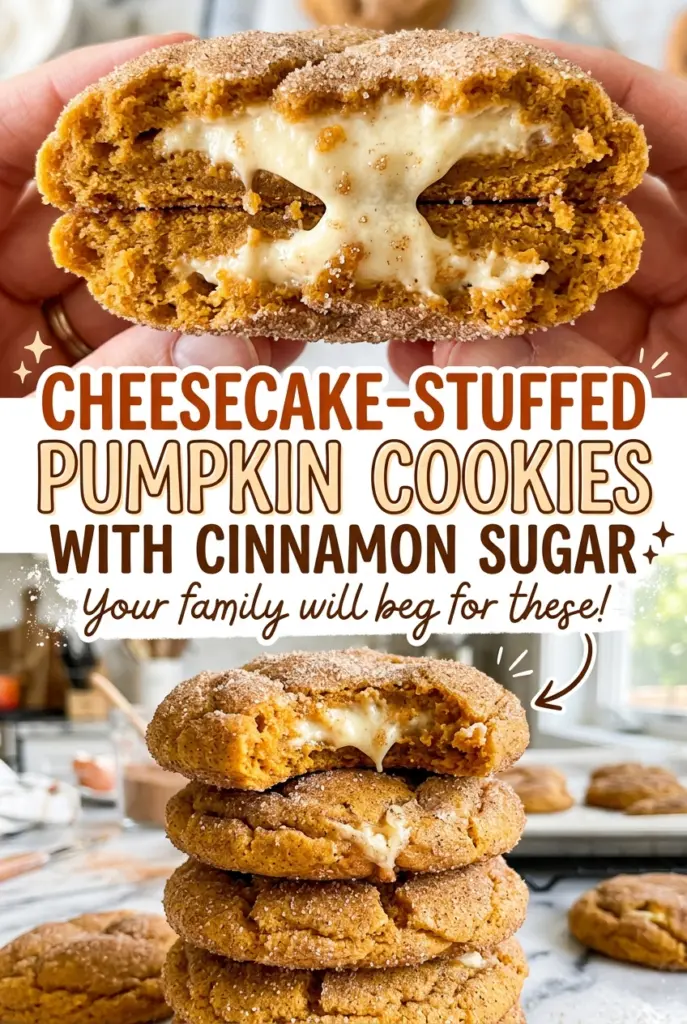
Cheesecake-Stuffed Pumpkin Cookies with Cinnamon Sugar
The cinnamon sugar starts to crackle around the edges before the centers are ready, and that’s the moment to watch rather than rush. These cheesecake-stuffed pumpkin cookies with cinnamon sugar…

By Ava
•
•
Reading time: 9 min
Tip: save now, make later.
The cinnamon sugar starts to crackle around the edges before the centers are ready, and that’s the moment to watch rather than rush. These cheesecake-stuffed pumpkin cookies with cinnamon sugar bake up with a soft pumpkin-spice shell and a creamy middle tucked inside. The filling gives each cookie a little surprise without turning the dough into a cakey pumpkin cookie.
Blotting the pumpkin puree makes a difference here. Canned pumpkin brings plenty of moisture, and drying its surface helps keep the dough sturdy enough to wrap around the filling. I use an egg yolk instead of a whole egg, too, so the dough stays rich without adding extra liquid.
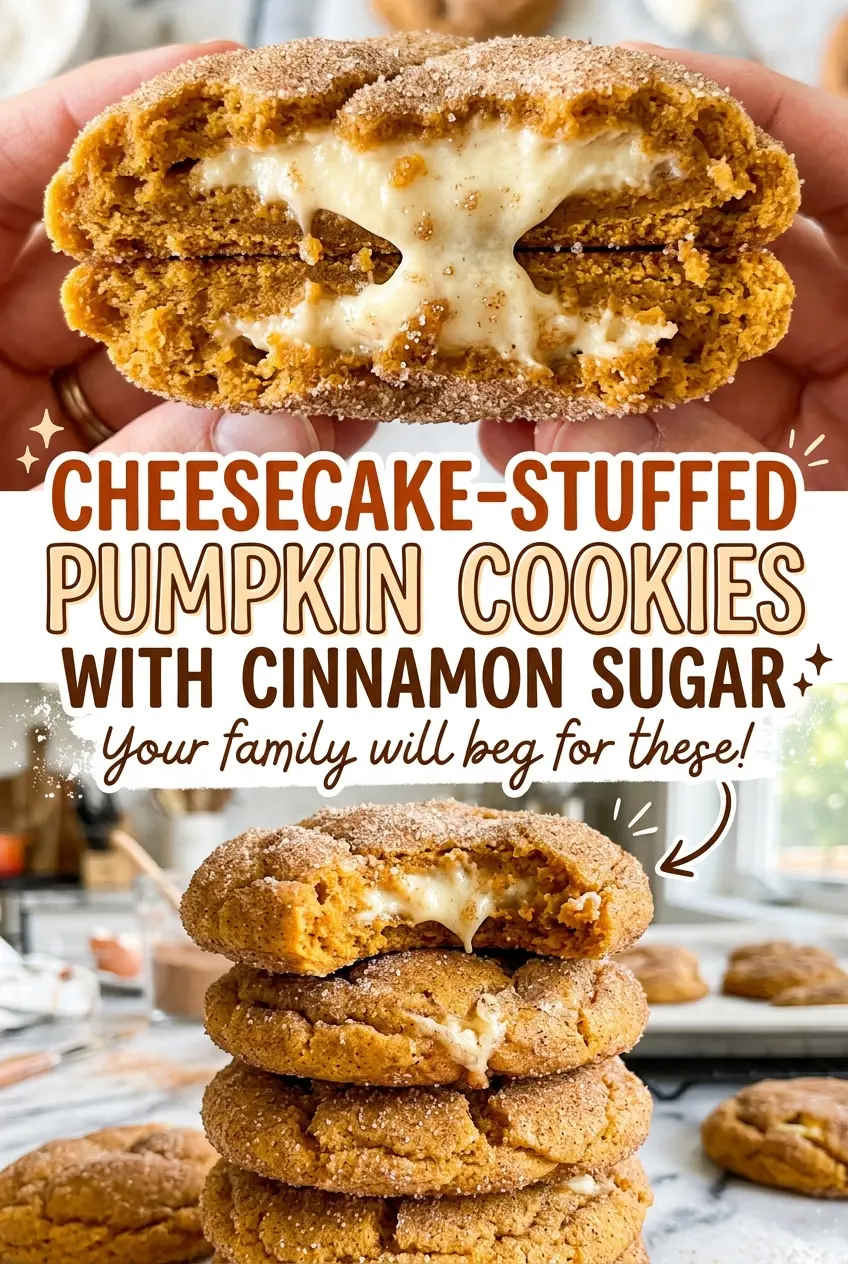
The finished cookies have a cinnamon-sugar crust, a tender center, and a cool, tangy cheesecake pocket once they’ve cooled. They’re worth the short chill and the bit of careful wrapping.
Kitchen Note
Keep the dough covered while it chills for 30 minutes. An uncovered surface can dry out and crack when you flatten the portions, making the filling harder to wrap neatly.
Save these cheesecake-stuffed pumpkin cookies with cinnamon sugar for a bake when you want a soft pumpkin cookie and a creamy center in every bite.
Why the Filling Needs Its Own Portion of Dough
A stuffed cookie depends on a little bit of structure: enough dough around the center to keep the cream cheese enclosed, but not so much that the pumpkin cookie overwhelms it. Dividing both the filling and dough into 24 equal portions gives you a consistent shell-to-center ratio. The cookies bake more evenly, too, when they’re close in size.
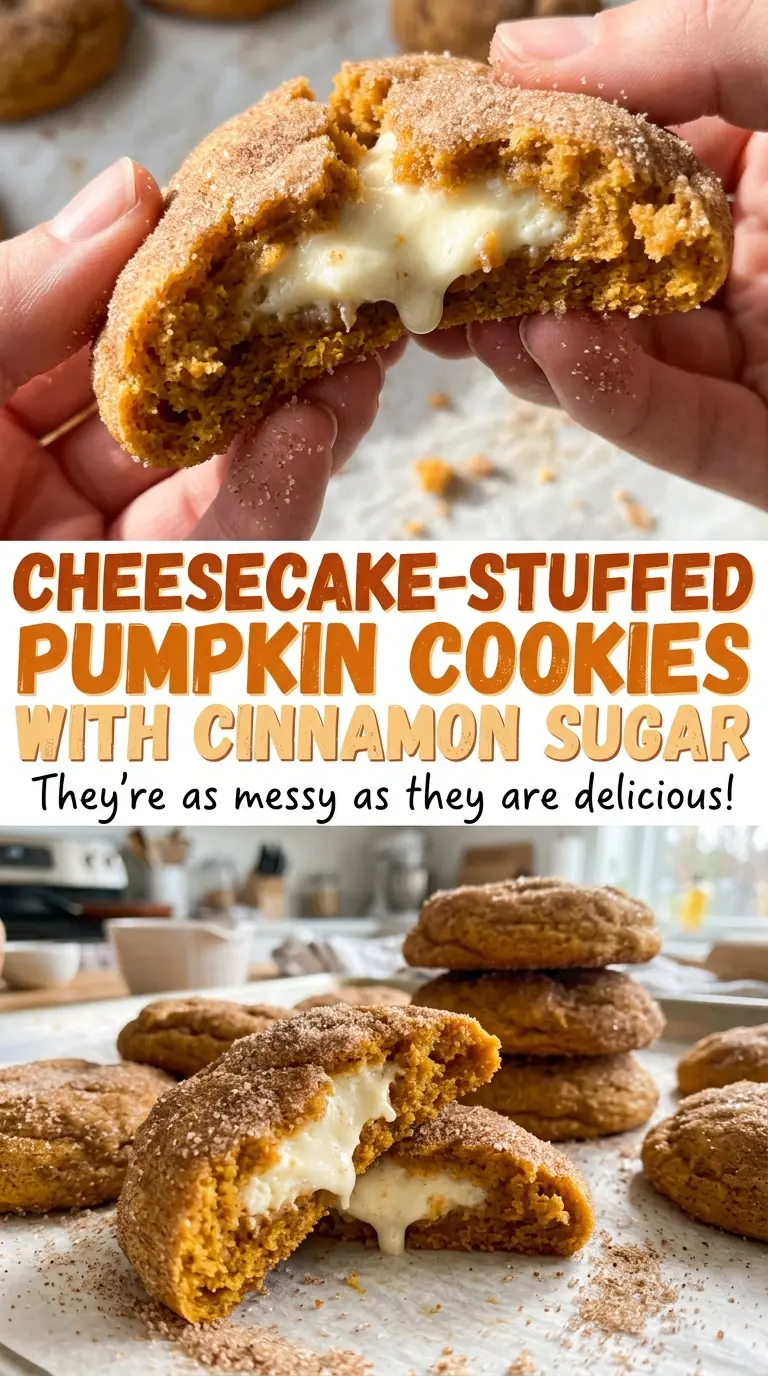
The filling is frozen before shaping, so it stays in a firm piece while you work. That makes it much easier to center it and close the dough around it than it would be with soft cream cheese. Pinching the seam closed matters; any opening gives the filling a place to escape as the dough warms in the oven. Once sealed, the cream cheese sits inside rather than blending into the cookie, so you get a distinct creamy middle instead of a cheesecake-flavored dough.
That balance is what makes these different from pumpkin cookies with a swirl or frosting. Each bite has a clear contrast between the spiced cookie outside and the tangy filling within.
What the Pumpkin, Egg Yolk, and Cream Cheese Each Bring
- Cream cheese — Use a softened block rather than whipped or spreadable cream cheese. A block gives the filling enough body to portion and freeze; there isn’t a direct swap that keeps the same rich, tangy center.
- Canned pumpkin puree — Choose plain pumpkin puree, not pumpkin pie filling, which is already sweetened and spiced. Blot it until the surface no longer looks wet; that prep keeps excess moisture from softening the dough.
- Butter and sugars — Unsalted butter lets the salt level stay balanced. Light brown sugar adds moisture and a mellow molasses note; dark brown sugar works in its place if you prefer a deeper one. The granulated sugar is split between the dough and the cinnamon coating, so keep those uses separate.
- Egg yolk — The yolk enriches the dough without the extra moisture of a whole egg. I wouldn’t replace it with a whole egg here; the dough could become too loose to seal around the filling neatly.
- Flour and baking soda — All-purpose flour gives the dough enough structure to hold the filling, while baking soda helps it bake up tender. A gluten-free 1:1 baking blend is the most practical alternative; see the variation below for what to expect.
- Cinnamon, ginger, and nutmeg — Ground spices work well here, so there’s no need for a specialty blend. Freshly opened spices will taste more fragrant, but older ground spices are fine if they still smell warm and distinct.
How to Chill, Seal, and Bake the Stuffed Cookies
Freeze the cheesecake portions until firm
Beat the softened cream cheese with the powdered sugar and vanilla until the mixture looks smooth, with no visible lumps. Scoop 24 level tablespoon portions onto a parchment-lined plate, then freeze them for 45 minutes. They should feel firm enough to lift without losing their shape. If the portions still bend or smear when handled, give them more time in the freezer before shaping.
Blot the pumpkin and bring the dough together
Spread the pumpkin puree on paper towels and blot it with additional paper towels until its surface no longer looks wet. Beat the softened butter with the brown sugar and a quarter cup of the granulated sugar until creamy, about 2 minutes, then beat in the pumpkin and egg yolk. Whisk the flour, baking soda, one teaspoon of the cinnamon, ginger, nutmeg, and salt in a separate bowl; mix that into the butter mixture just until no dry streaks remain. Cover and refrigerate the dough for 30 minutes so it’s easier to portion and handle.
Wrap each frozen center and coat it
Heat the oven to 350°F, position the racks in the upper and lower thirds, and line two 18×13-inch baking sheets with parchment. Stir the remaining granulated sugar with the remaining cinnamon in a shallow bowl. Divide the dough into 24 equal portions, flatten each one, place a frozen filling portion in the middle, then wrap and pinch the dough closed all around it. Roll each cookie in the cinnamon sugar and arrange 12 on each sheet; check each seam before it goes onto the pan so no filling is exposed.
Bake until the tops look dry, then cool on the pans
Bake for 13–16 minutes, switching the sheets between racks and rotating them front to back halfway through. The edges should look set and the tops should look dry; don’t wait for deep browning, which can leave the cookie centers overbaked. Let the cookies cool on the baking sheets for 10 minutes before moving them to a rack. They’re delicate while hot, and that short rest helps them hold together.
Two Useful Ways to Adjust These Pumpkin Cookies
A gluten-free batch with a 1:1 baking blend
Replace the all-purpose flour with the same amount of a gluten-free 1:1 baking flour blend that includes xanthan gum. The cookies may have a slightly more delicate or sandy bite, so handle the dough gently when sealing the filling and let the baked cookies rest on the pan before moving them.
A softer, cinnamon-forward spice mix
Leave out the ground ginger and nutmeg, keeping the cinnamon in both the dough and coating. The result has a gentler spice flavor that lets the pumpkin and cheesecake stand out more clearly, without changing how you shape or bake the cookies.
Storage and Reheating
- Refrigerator: Store leftovers in an airtight container and eat within 3 to 4 days. The cookie may firm up when chilled, while the cheesecake center stays creamy.
- Freezer: I don’t recommend freezing the finished cookies; the cream cheese filling can lose its smooth texture as it thaws.
- Reheating: No reheating is needed. Avoid the microwave, which can soften the filling much faster than the cookie and make the center runny.
Questions That Come Up While Making These Stuffed Cookies
Cheesecake-Stuffed Pumpkin Cookies with Cinnamon Sugar
Ingredients
Equipment
Method
- Beat the cream cheese, powdered sugar, and vanilla in a medium bowl until smooth.
- Scoop 24 level tablespoon portions onto a parchment-lined plate and freeze for 45 minutes, until firm.
- Spread the pumpkin puree on paper towels and blot with additional paper towels until its surface no longer looks wet.
- Beat the butter, brown sugar, and 1/4 cup of the granulated sugar in a large bowl until creamy, about 2 minutes.
- Beat in the blotted pumpkin and egg yolk until combined.
- Whisk the flour, baking soda, 1 teaspoon of the cinnamon, ginger, nutmeg, and salt in a separate medium bowl.
- Add the flour mixture to the butter mixture and mix just until no dry streaks remain.
- Cover the dough and refrigerate for 30 minutes.
- Heat the oven to 350°F.
- Position racks in the upper and lower thirds.
- Line two 18x13-inch baking sheets with parchment paper.
- Stir the remaining 1/4 cup granulated sugar and 1/2 teaspoon cinnamon in a shallow bowl.
- Divide the dough into 24 equal portions and flatten each portion.
- Wrap each flattened dough portion around a frozen filling portion and pinch the dough closed to seal.
- Roll each cookie in the cinnamon sugar and arrange 12 cookies on each prepared baking sheet.
- Bake for 13–16 minutes, switching the sheets between racks and rotating them front to back halfway through, until the edges are set and the tops look dry.
- Cool the cookies on the baking sheets for 10 minutes.
- Transfer the cookies to a rack to cool completely.
- Refrigerate leftovers in an airtight container.