
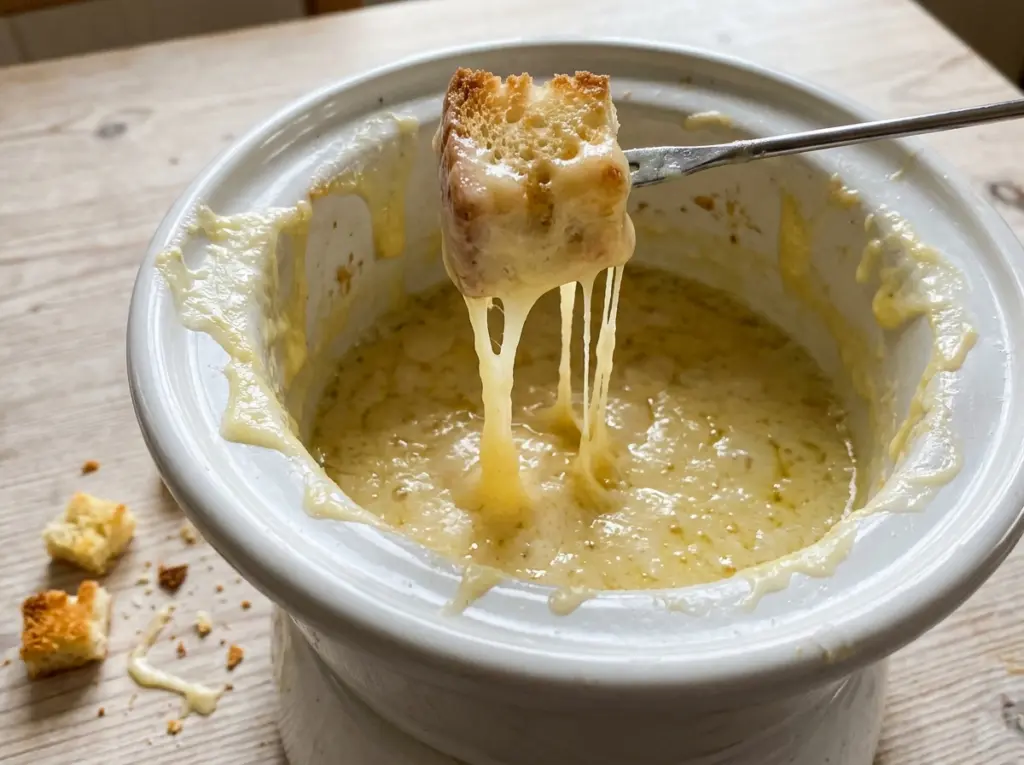
Cheese Fondue
When the wine turns steamy and the first little bubbles gather at the edge of the saucepan, it’s time to slow down and pay attention. Cheese fondue can go from…

By Ava
•
•
Reading time: 9 min
Tip: save now, make later.
When the wine turns steamy and the first little bubbles gather at the edge of the saucepan, it’s time to slow down and pay attention. Cheese fondue can go from glossy to greasy if the heat gets away from you, so I keep the burner moderate and add the cheese gradually. This version pairs Gruyère with Emmental for a fondue that’s savory, smooth, and made for dipping crusty French bread.
I rub the cut sides of a garlic clove around the saucepan, then discard it before the wine goes in. That leaves a gentle garlic note without bits of garlic in the finished pot. The other small detail that matters is coating the grated cheese with cornstarch before it meets the warm wine. Once the fondue is melted, I stir in kirsch and black pepper, then move it to a warmed fondue pot so it stays gently warm at the table.
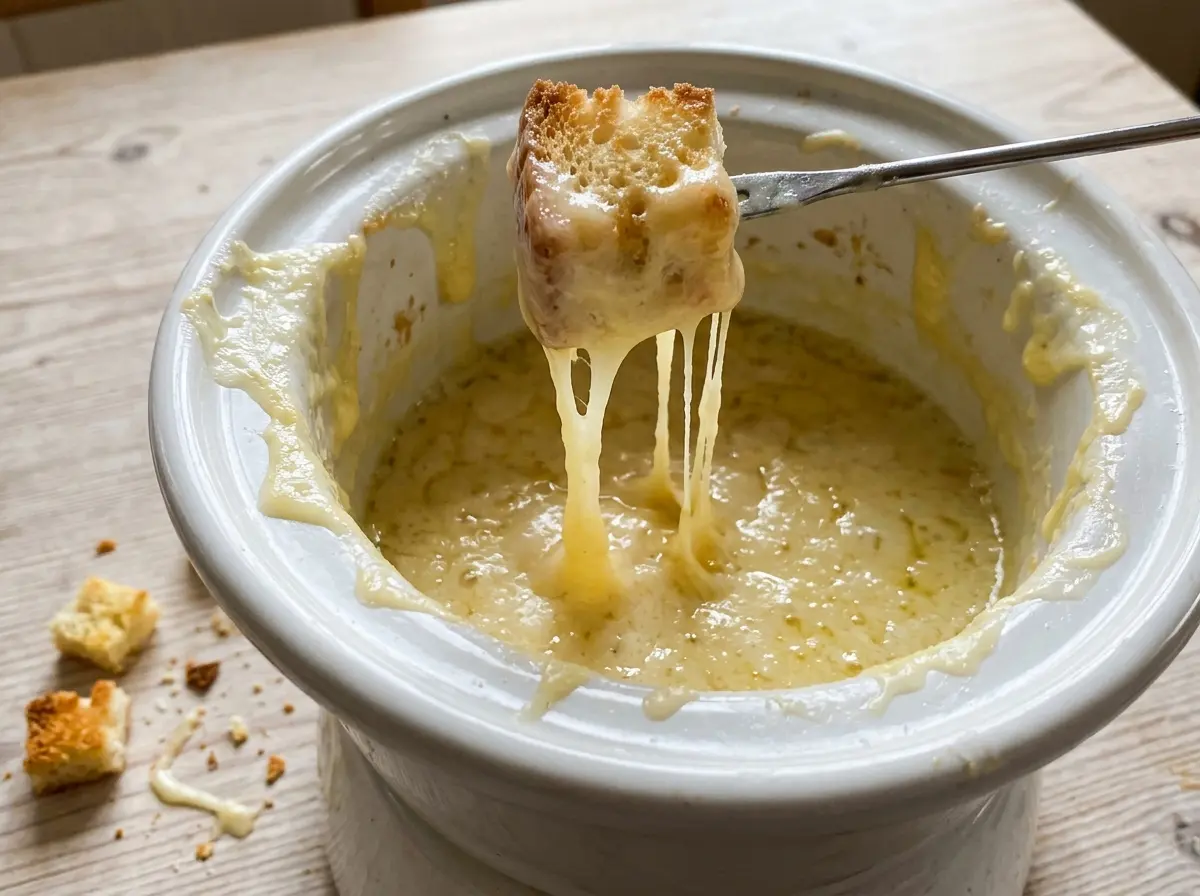
Kitchen Note
I put the bread platter within reach before I start melting the cheese. Once the first handful goes into the wine, the stirring needs your attention, and you won’t want to step away to arrange the dippers.
Save this smooth Gruyère and Emmental cheese fondue for a cozy meal with crusty bread ready for dipping.
Why the Cornstarch Has to Reach the Cheese Before the Wine Does
It’s easy to think of cornstarch as something you add to a liquid when you want it thicker. For fondue, it works better when it’s already distributed over the grated cheese. Tossing the Gruyère and Emmental with cornstarch first helps keep the shreds from clumping together as they melt, and gives the finished mixture support as the cheese and wine come together.
That order also makes it easier to add the cheese in manageable handfuls. If the starch goes straight into the warm wine, it’s harder to disperse evenly and you risk little lumps before the cheese has even started to melt. Coarsely grated cheese gives the cornstarch plenty of surface to cling to; take a moment to toss until you don’t see dry pockets at the bottom of the bowl. The result should turn smooth as you stir, not feel pasty or thick from a pocket of loose starch.
Why Gruyère and Emmental Belong in the Same Fondue

- Gruyère and Emmental — Gruyère brings a deep, savory cheese flavor, while Emmental softens the blend with its milder character. Using both gives the fondue more dimension than relying on one cheese alone. Buy them in blocks and grate them coarsely at home; pre-shredded cheese may have a coating that makes it harder to melt evenly. Remove the rinds before grating, as the fondue uses the cheese without them. There isn’t a direct one-for-one substitute in this ingredient list that keeps the same balance.
- Dry white wine and lemon juice — The wine makes the liquid base, and the lemon juice adds brightness against the richness of the cheese. An expensive bottle isn’t necessary, but choose a dry wine rather than one that tastes sweet. The wine should be steaming with small bubbles at the edges before the cheese goes in; a rolling boil is too hot for this mixture.
- Cornstarch — This is tossed with the cheese so it’s spread across the shreds before melting. It’s a small but important part of the fondue’s texture, so don’t skip it or sprinkle it loose into the saucepan.
- Kirsch and black pepper — Kirsch adds a subtle, fruity note at the end, and freshly ground black pepper gives the cheese a little lift. Stir both in after the cheese has melted. If you don’t have kirsch, it’s an ingredient you can omit; the fondue will lose that faint cherry aroma but will still be a cheese fondue.
- Crusty French bread — A crusty loaf gives you cubes with enough structure to pick up the melted cheese. Cut it into even 1-inch pieces so each dipper is easy to handle. A soft, squishy loaf is more likely to break apart in the pot.
- Garlic — Halving the clove exposes the cut surface for rubbing around the saucepan. The clove is discarded afterward, so the garlic stays in the background rather than taking over each bite.
The Gentle Heat That Keeps Cheese Fondue Smooth
Set Out the Bread Before You Start
Cut the crusty French bread into 1-inch cubes and arrange them on a serving platter. Keeping the pieces close in size makes them easier to pick up and dip. Set the platter where it’s easy to reach once the fondue is ready. This first bit of setup lets you stay with the saucepan during the melting.
Warm the Wine Without Boiling It
Rub the cut sides of the halved garlic clove over the inside of a medium, heavy 2-quart saucepan, then discard the clove. Add the dry white wine and lemon juice, and heat over medium for 3 to 4 minutes. Look for steam and small bubbles gathering around the edges. If the surface starts boiling, the heat is too high; the liquid should be hot, not bubbling vigorously.
Melt the Coated Cheese in Handfuls
Toss the coarsely grated Gruyère and Emmental with the cornstarch until the cheese is evenly coated. Turn the burner to medium-low, then add the cheese a handful at a time while stirring constantly. Let each addition mostly melt before adding the next one; a large dump of cold cheese can cool the liquid and leave you chasing lumps. Continue for 5 to 8 minutes, stirring until the fondue looks smooth, and don’t let it boil.
Finish and Keep It Gently Warm
Stir in the kirsch and freshly ground black pepper once the cheese is smooth. Transfer the fondue to a warmed 1 1/2-quart fondue pot, then keep it gently warm over a low flame. The fondue should stay fluid enough to coat a bread cube, not simmer around the edges. Serve it with the prepared bread while it’s warm.
Small Changes That Keep the Fondue’s Texture Intact
Leave Out the Kirsch
Skip the kirsch when you stir in the finishing ingredients. The fondue will miss its light fruity note, but the Gruyère and Emmental still make a rich, smooth dip. This doesn’t make the dish alcohol-free, since the wine remains in the base.
Make a Garlic-Free Pot
Leave out the garlic rub if you want the cleanest possible cheese flavor. The fondue will still come together with the wine, lemon juice, cheese, and cornstarch, though it won’t have the faint garlic aroma from the saucepan.
Skip the Black Pepper
Omit the pepper for a softer finish that lets the two cheeses stand out. It changes the seasoning, not the way the fondue melts, so you can leave it out without changing the cheese-making process.
Storage and Reheating
- Refrigerator: Store leftover fondue in a covered container within 2 hours and use it within 3 to 4 days. It will firm up as it chills.
- Freezer: Freezing isn’t recommended; the cheese mixture can separate and turn grainy after thawing.
- Reheating: Warm leftovers gently in a saucepan over low heat, stirring often. Avoid high heat, which can cause the cheese to separate instead of becoming smooth again.
Questions That Come Up Once the Fondue Is on the Table
Cheese Fondue
Ingredients
Equipment
Method
- Arrange the bread cubes on a serving platter.
- Rub the inside of a medium, heavy 2-quart saucepan with the cut sides of the garlic, then discard the garlic.
- Add the wine and lemon juice to the saucepan and heat over medium until steaming and small bubbles form around the edges, 3 to 4 minutes; do not let it boil.
- Toss the Gruyère, Emmental, and cornstarch together in a bowl until the cheese is evenly coated.
- Add the cheese mixture to the saucepan a handful at a time, stirring constantly and letting each addition mostly melt before adding the next; cook over medium-low heat for 5 to 8 minutes, until smooth, and do not let the fondue boil.
- Stir in the kirsch and black pepper.
- Transfer the fondue to a warmed 1 1/2-quart fondue pot and keep it gently warm over a low flame.
- Serve with the bread cubes.