
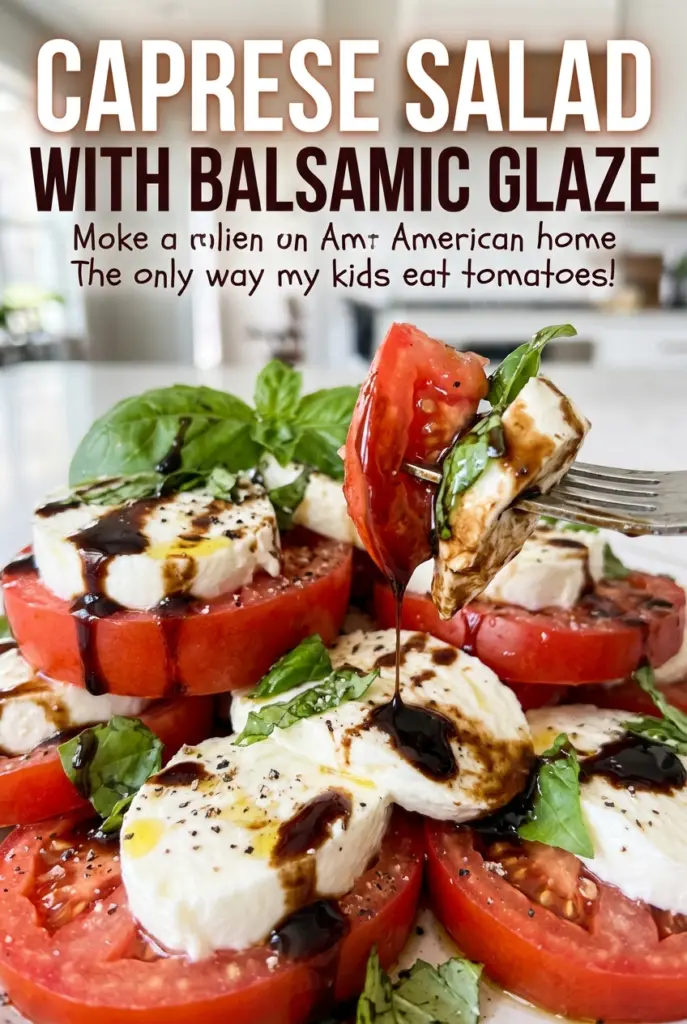
Caprese Salad with Balsamic Glaze
The balsamic glaze looks far too thin while it’s hot, and it’s easy to wonder whether it’ll cling to anything on the platter. Give it time to reduce and cool,…

By Ava
•
•
Reading time: 8 min
Tip: save now, make later.
The balsamic glaze looks far too thin while it’s hot, and it’s easy to wonder whether it’ll cling to anything on the platter. Give it time to reduce and cool, though, and it turns glossy enough to follow the curves of ripe tomato and fresh mozzarella without covering up their clean, milky taste. That balance is what makes this Caprese Salad with Balsamic Glaze feel finished with just a few ingredients.
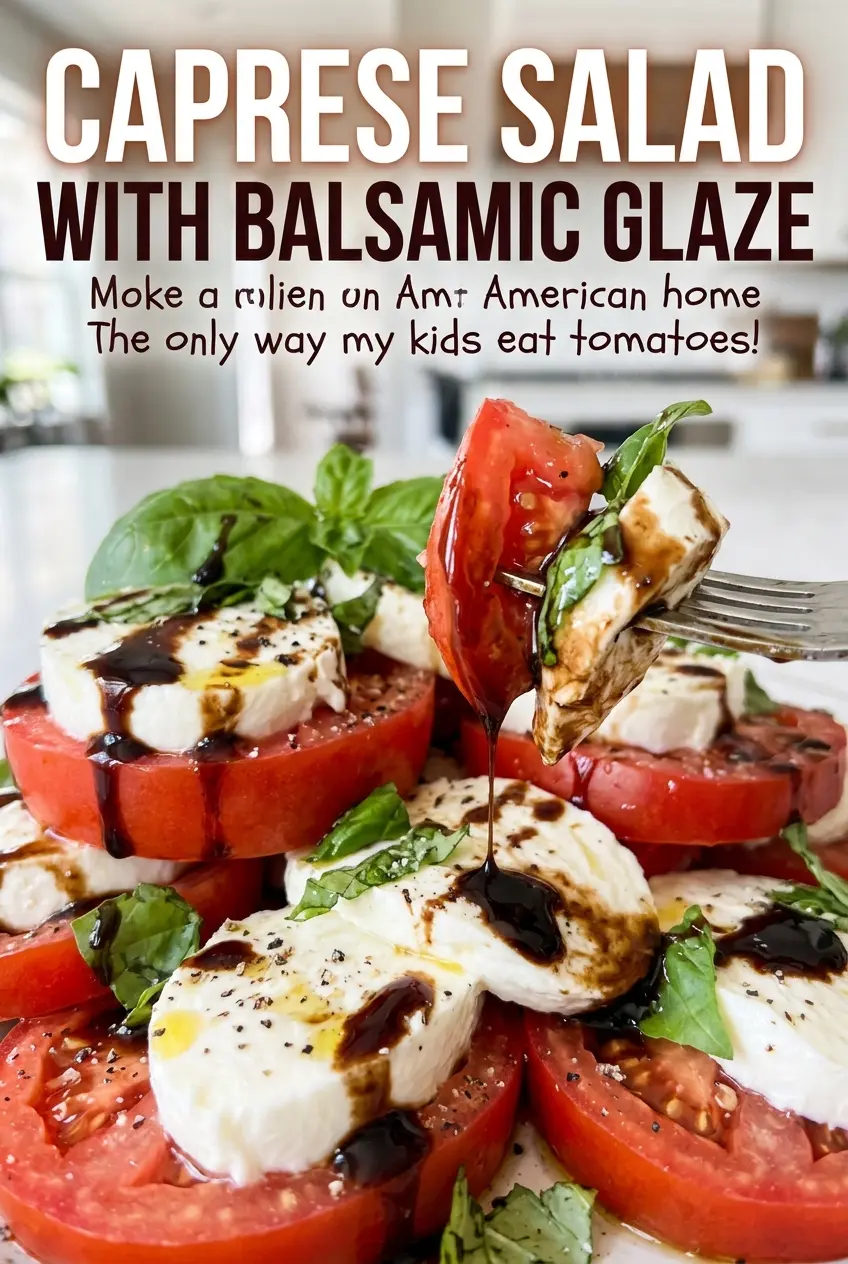
I slice the tomatoes and mozzarella to the same thickness, then layer them so each forkful gets a little of both. Honey softens the sharp edge of the balsamic, while fresh basil and extra-virgin olive oil keep the salad bright. Assemble it close to serving time, when the basil is still fragrant and the tomato slices hold their shape, and you’ll have a platter of tender cheese, juicy tomatoes, and a sweet-tart ribbon of glaze.
Kitchen Note
Drain the fresh mozzarella well before slicing it. Any extra whey runs across the platter and dilutes the olive oil and balsamic glaze.
Save this Caprese Salad with Balsamic Glaze for a fresh, colorful platter with creamy mozzarella and a sweet-tart homemade drizzle.
Why This Caprese Salad Is Better Layered Than Tossed
Caprese is a short ingredient list, so the way the pieces meet matters. Alternating tomato and mozzarella slices gives each portion a balanced bite instead of leaving all the cheese in one spot and all the tomato in another. Matching their thickness also helps: a thin tomato slice beside a thick piece of cheese can slide around, while slices cut to the same thickness sit neatly together.
A tossed salad takes away that tidy contrast. The tomatoes can release juice as they move around, the mozzarella loses its clean slices, and the basil gets pressed into the dressing instead of resting in fragrant leaves across the top. Layering keeps the platter easy to serve and gives the olive oil and glaze a clear path over both ingredients. Leave a little space between the slices rather than packing them tightly; then a light drizzle can reach the tomato and cheese instead of pooling in one place. Each serving stays distinct, with the balsamic adding a tangy-sweet finish rather than turning the whole platter into dressing.
The Fresh Ingredients That Make This Caprese Taste Like Caprese
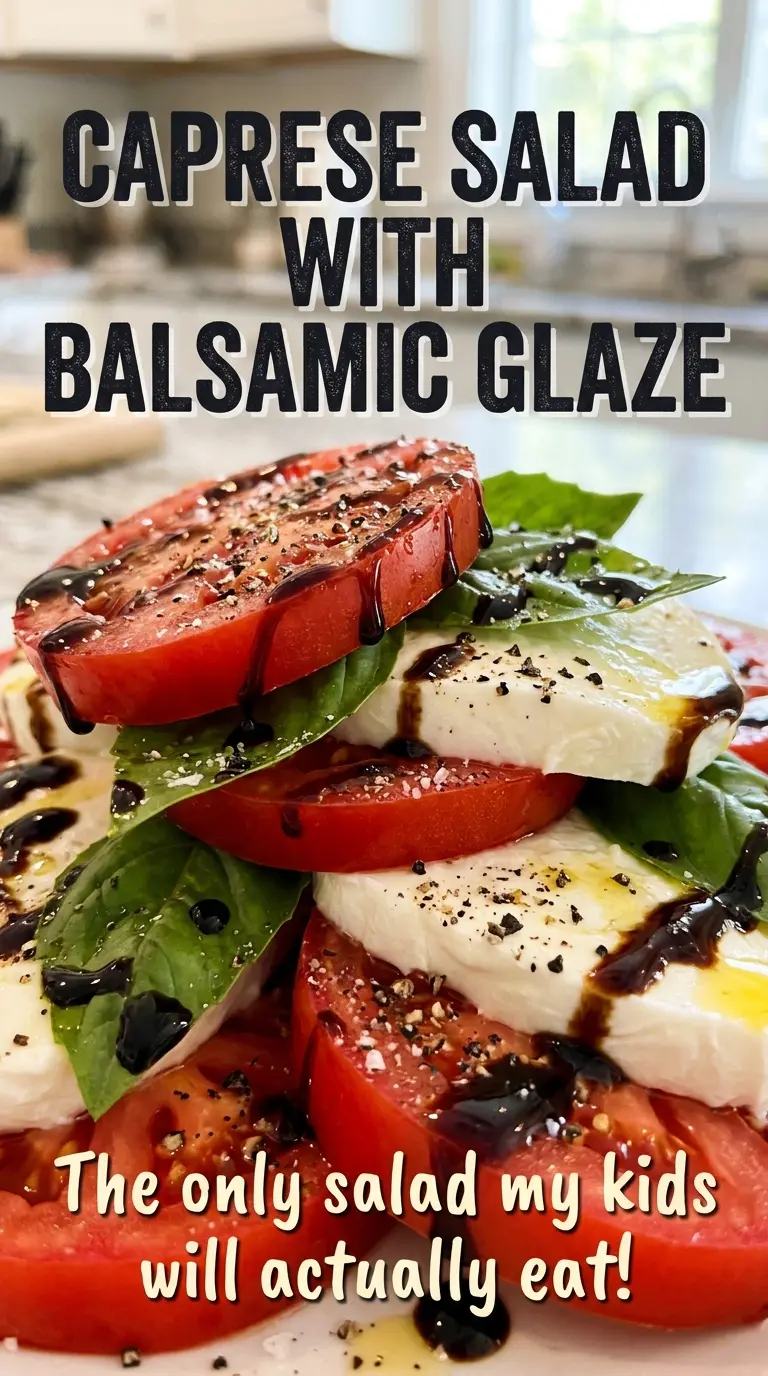
- Ripe tomatoes — Choose tomatoes that smell fragrant and yield slightly when pressed, but aren’t collapsing or leaking. A ripe, firm tomato gives you juicy slices that still hold their shape; heirloom tomatoes work well, though their colors and sweetness vary. If yours are very soft, slice them gently and handle the platter less.
- Fresh mozzarella — Its soft, milky texture is the defining counterpoint to the tomatoes, so fresh mozzarella is worth choosing here. Low-moisture mozzarella can stand in if that’s what you have, but it’ll be firmer and less delicate. Drain fresh mozzarella before slicing so excess whey doesn’t water down the platter.
- Fresh basil — Fresh leaves bring a fragrant, green note and look lovely scattered over the layers. Dried basil won’t give the same aroma or texture; if fresh basil isn’t available, a few fresh oregano leaves make a pepperier, less classic substitute.
- Balsamic vinegar and honey — A standard grocery-store balsamic is fine because simmering concentrates its flavor; there’s no need to use an expensive aged bottle. Honey rounds out the vinegar’s sharpness and helps the glaze feel mellow. Maple syrup can replace the honey in the same quantity, with a more woodsy sweetness.
- Extra-virgin olive oil — Since it goes on uncooked, choose an oil you like the taste of, but an everyday bottle is perfectly suitable. A strongly peppery oil can compete with the basil, while a mild one lets the tomatoes and cheese stay in front.
Reduce the Glaze, Then Dress the Salad at the End
Start the balsamic and honey gently
Combine the balsamic vinegar and honey in a small saucepan, then bring them to a gentle simmer over medium heat. Keep an eye on the pan as it starts to bubble; you want a steady, quiet simmer, not a hard boil. A vigorous boil can reduce the vinegar too quickly around the edges before the center has thickened evenly.
Stop when the glaze coats a spoon
Lower the heat to medium-low and simmer gently for 8–12 minutes, swirling the pan occasionally. The glaze should reduce to about 1/4 cup and coat the back of a spoon. If it still looks loose, give it a little more time and check again rather than turning up the heat. Remove the pan from the heat and let the glaze cool for 10 minutes; it thickens further as it cools.
Layer and finish the platter
Arrange the tomato and mozzarella slices in alternating layers on a serving platter. Scatter the basil leaves over the top, then drizzle with the olive oil and cooled balsamic glaze. Season evenly with kosher salt and black pepper so no section tastes flat. Add the glaze in a light stream, keeping the slices visible beneath it.
Three Changes That Give This Platter a Different Turn
Make it dairy-free with sliced plant-based mozzarella
Replace the fresh mozzarella with a plant-based mozzarella that comes in a sliceable block or log, then layer it with the tomatoes as usual. The platter will be less milky and may have a firmer bite, but the basil, olive oil, and balsamic still bring the familiar Caprese contrast.
Trade some tomato for ripe peach
Replace part of the tomato with ripe peach slices and layer them alongside the mozzarella. Peach makes the platter sweeter and softer, so keep the balsamic drizzle light enough for the fruit’s own flavor to come through.
Add a gentle chile kick
Scatter a small pinch of crushed red pepper over the finished platter with the salt and black pepper. The heat cuts through the creamy mozzarella and sweet glaze, though too much can overpower the basil.
Make-Ahead and Leftovers
- Prep ahead: Make the glaze in advance and refrigerate it in a covered container. It will firm up when cold; warm it gently until pourable before serving.
- Refrigerator: Keep leftover assembled salad covered and eat it within a day. The tomatoes soften and the basil loses its fresh appearance as it sits.
- Freezer: Don’t freeze the assembled salad. The tomatoes turn watery and the mozzarella loses its tender texture after thawing.
Questions That Come Up When Building a Caprese Platter
Caprese Salad with Balsamic Glaze
Ingredients
Equipment
Method
- Combine the balsamic vinegar and honey in a small saucepan and bring to a gentle simmer over medium heat.
- Reduce the heat to medium-low and simmer gently for 8–12 minutes, swirling the pan occasionally, until reduced to about 1/4 cup and thick enough to coat the back of a spoon.
- Remove from the heat and cool for 10 minutes.
- Arrange the tomato and mozzarella slices in alternating layers on a serving platter.
- Scatter the basil over the salad, drizzle with the olive oil and cooled balsamic glaze, and season evenly with the salt and black pepper.