
Butter Pecan Shortbread Cookies
The pecans give off a warm, toasty smell before the oven even comes on. I keep them moving in the skillet; they can go from fragrant to scorched quickly, and…

By Ava
•
•
Reading time: 8 min
Tip: save now, make later.
The pecans give off a warm, toasty smell before the oven even comes on. I keep them moving in the skillet; they can go from fragrant to scorched quickly, and burned nuts would follow these buttery cookies all the way through the bake. Once cooled and folded into the dough, they bring a crisp little bite to every round of Butter Pecan Shortbread Cookies.
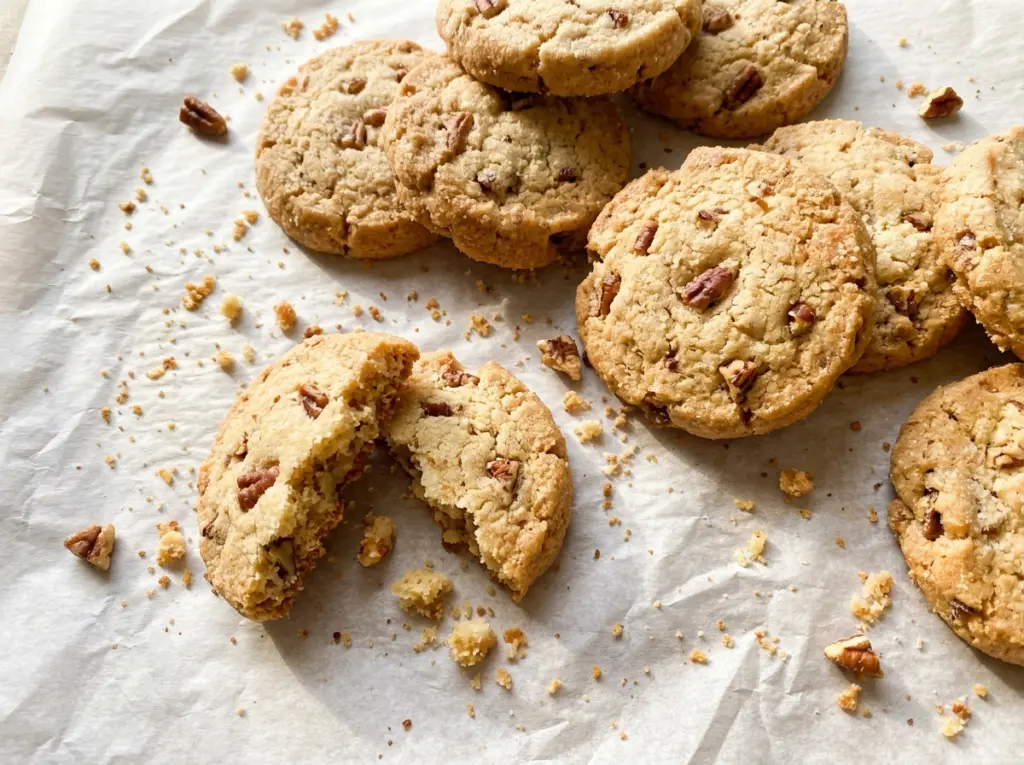
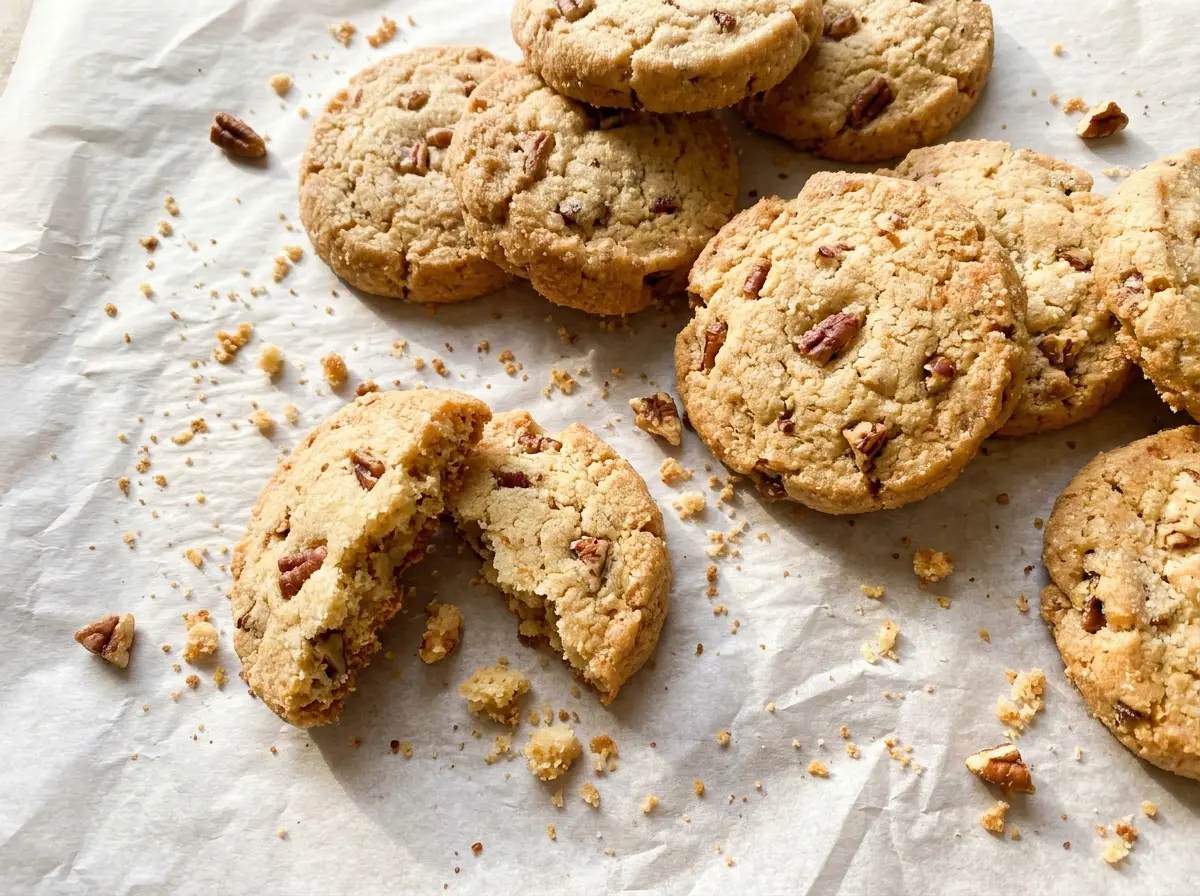
Shortbread dough should feel rich and compact, not fluffy like cake batter. I beat the softened butter and powdered sugar until smooth, then keep the mixer on low once the flour goes in. A short chill firms the dough enough to shape without making it difficult to handle, and the cookies bake gently until just their edges turn lightly golden. The finished rounds are tender, buttery, and full of toasted pecan flavor.
Kitchen Note
Let the toasted pecans cool completely before they go into the butter mixture. Warm nuts can soften the butter, and cool pecans stay distinct instead of disappearing into the dough.
Save these Butter Pecan Shortbread Cookies for a buttery, tender cookie with toasted pecans in every bite.
Why These Shortbread Cookies Stay Tender Without Eggs or Leavening
Shortbread has a different structure from a typical drop cookie. There’s no egg or baking soda in this dough to make it rise or spread; instead, butter holds the flour together, and the result is a close, tender crumb. That’s also why the mixing matters. Once the flour is added, mixing only until the dough comes together keeps the cookies from becoming tough.
The powdered sugar blends smoothly into the softened butter and supports that fine, delicate texture. The dough also gets a brief rest in the refrigerator before shaping, so the butter firms up and the rounds hold their shape in the oven. Flattening each ball to about half an inch gives the cookies an even thickness: they bake through gently while their edges take on just a little color. Expect a pale center; waiting for the entire cookie to turn golden would take them past the texture I want.
What the Pecans, Butter, and Sugar Bring to the Dough

- Pecans — Finely chopped pieces distribute through the cookies without making the dough difficult to shape. Fresh pecans have a sweeter, cleaner taste; because they’re toasted before mixing, even a basic bag gets a fragrant boost. Avoid pecan meal here: it won’t give the same little nutty pieces or texture.
- Unsalted butter — Butter provides the rich flavor and tender structure that define shortbread. Use it softened, not melted; melted butter makes the dough greasy rather than smooth and creamy. A good everyday butter works well, and unsalted butter lets the listed salt stay in balance.
- Powdered sugar — Its fine texture dissolves into the butter more readily than granulated sugar and helps keep the crumb delicate. Use powdered sugar rather than swapping in regular sugar, which would give these rounds a different texture.
- All-purpose flour — This gives the dough enough structure to hold its shape while keeping the cookies tender. Scoop and level it rather than packing it into the measuring cup; too much flour can leave the dough dry and crumbly.
- Vanilla extract — Vanilla rounds out the buttery dough without competing with the pecans. A standard pure or imitation extract both work; use the one you keep on hand.
- Salt — Salt sharpens the butter and nut flavors. Keep it in the dough when using unsalted butter; the cookies can taste flat without it.
From Toasted Pecans to Lightly Golden Edges
Toast the Pecans Until Fragrant
Set the finely chopped pecans in a dry skillet over medium-low heat and stir often for 3–5 minutes. You’re looking for a warm, nutty aroma, not dark patches or smoke. The pieces can toast unevenly if left sitting, so keep them moving around the pan. Transfer them to a plate as soon as they smell fragrant and let them cool completely.
Mix a Smooth, Compact Dough
Heat the oven to 325°F and line an 18×13-inch baking sheet with parchment. In a large bowl, beat the softened butter and powdered sugar until smooth and creamy, about 2 minutes, then beat in the vanilla. Add the flour and salt and mix on low just until the dough comes together; stop when there are no loose dry pockets rather than beating until the mixture looks fluffy. Mix in the cooled pecans.
Chill, Portion, and Flatten
Cover the dough and refrigerate it for 30 minutes, until it feels firm enough to shape. Roll the dough into 1-tablespoon balls and arrange 15 on the prepared sheet, leaving about 2 inches between them. Flatten each ball to about 1/2 inch thick so the cookies bake evenly. If the dough is still too soft to handle, give it a little more time in the refrigerator before shaping.
Bake the First Batch, Then Cool the Pan
Bake at 325°F for 15–18 minutes, watching for lightly golden edges. The centers will stay lighter, so don’t wait for the tops to brown all over. Let the cookies cool on the baking sheet for 5 minutes before moving them to a wire rack. Let the baking sheet cool before arranging the remaining dough on it; a hot pan can start softening the next batch before it reaches the oven.
Three Practical Swaps for Butter Pecan Shortbread
Use Walnuts for a Milder Nut
Replace the pecans with the same amount of finely chopped walnuts and toast them using the same skillet method. Walnuts keep the crisp nut pieces but taste a little more earthy and less buttery-sweet than pecans.
Make the Cookies Gluten-Free
Swap the all-purpose flour for a gluten-free measure-for-measure baking blend designed to replace wheat flour. The cookies may be more delicate, so handle them gently when transferring them from the sheet to the rack. Choose a blend intended for baking rather than a single gluten-free flour.
Use Salted Butter
If salted butter is what you have, use it in place of the unsalted butter and leave out the added salt. The cookies will taste a touch saltier, so this swap works best when you enjoy a more pronounced sweet-and-salty balance.
Storage and Reheating
- Room temperature: Store fully cooled cookies in an airtight container for up to 5 days. They’ll soften slightly as they sit.
- Freezer: Freeze baked, completely cooled cookies in an airtight freezer container for up to 2 months. Separate layers with parchment so the cookies don’t stick together.
- Reheating: These are best at room temperature and don’t need reheating. If you want a warm cookie, heat it briefly in a low oven; avoid the microwave, which can soften the shortbread unevenly.
Questions That Come Up While Baking These Cookies
Butter Pecan Shortbread Cookies
Ingredients
Equipment
Method
- Toast the pecans in a dry skillet over medium-low heat, stirring often, for 3–5 minutes until fragrant.
- Transfer the pecans to a plate and let cool completely.
- Heat the oven to 325°F.
- Line an 18x13-inch baking sheet with parchment paper.
- Beat the butter and powdered sugar in a large bowl until smooth and creamy, about 2 minutes.
- Beat in the vanilla.
- Add the flour and salt, mixing on low just until the dough comes together.
- Mix in the cooled pecans.
- Cover the dough and refrigerate for 30 minutes, until firm enough to shape.
- Roll the dough into 1-tablespoon balls and place 15 on the prepared baking sheet about 2 inches apart.
- Flatten each ball to about 1/2 inch thick.
- Bake at 325°F for 15–18 minutes, until the edges are lightly golden.
- Cool on the baking sheet for 5 minutes.
- Transfer the cookies to a wire rack.
- Let the pan cool before baking the remaining dough.
- Bake the remaining dough at 325°F for 15–18 minutes, until the edges are lightly golden.