

Brown Sugar Cinnamon Kabocha Squash with Toasted Pecans
The knife can catch on kabocha’s thick skin, especially when the squash is cold and the blade has nowhere to settle. A quick turn in the microwave softens it just…

By Ava
•
•
Reading time: 9 min
Tip: save now, make later.
The knife can catch on kabocha’s thick skin, especially when the squash is cold and the blade has nowhere to settle. A quick turn in the microwave softens it just enough to make halving and cutting into wedges more manageable, without cooking the squash before it reaches the oven. That little head start is what makes this brown sugar cinnamon kabocha squash with toasted pecans a comfortable side dish to prepare instead of a wrestling match.
I leave the skin on and cut the squash into even wedges, then toss them in melted butter, brown sugar, cinnamon, and salt. They roast cut-side down until their edges brown and a fork slips into the dense flesh. Meanwhile, the pecans toast in a dry skillet, so the oven and stovetop do their jobs at the same time. The finished squash is tender and lightly sweet, with toasted pecans for a crisp contrast.

Kitchen Note
Pecans keep toasting for a moment after they leave the skillet. Once they smell fragrant, get them out of the hot pan so their edges stay toasted rather than turning bitter.
Save this brown sugar cinnamon kabocha squash for a cozy side with browned edges, tender centers, and toasted pecans.
Why Kabocha’s Dense Flesh Needs Less Glaze Than You’d Expect
Kabocha is naturally sweet, with dense flesh that turns tender without collapsing into a watery pile. That makes it a good match for a light coating of butter, brown sugar, cinnamon, and salt: the squash stays the main event, and the coating settles onto the cut surfaces as they roast. A heavier layer of sugar would cover up the squash’s own sweetness and could make the edges scorch before the wedges turn fork-tender.
The shape matters, too. One-inch wedges have enough surface area to brown while keeping a substantial center, so you get a contrast between caramelized edges and soft flesh. Cutting them much thinner changes the balance: they soften sooner and have less room between browned exterior and tender middle. Keep the wedges roughly even, and the whole pan will finish at a similar pace. The brown sugar adds a gentle glaze, not a thick candy coating; the toasted pecans bring the crunch that the squash itself doesn’t have.
What Kabocha, Brown Sugar, and Pecans Each Bring to the Pan
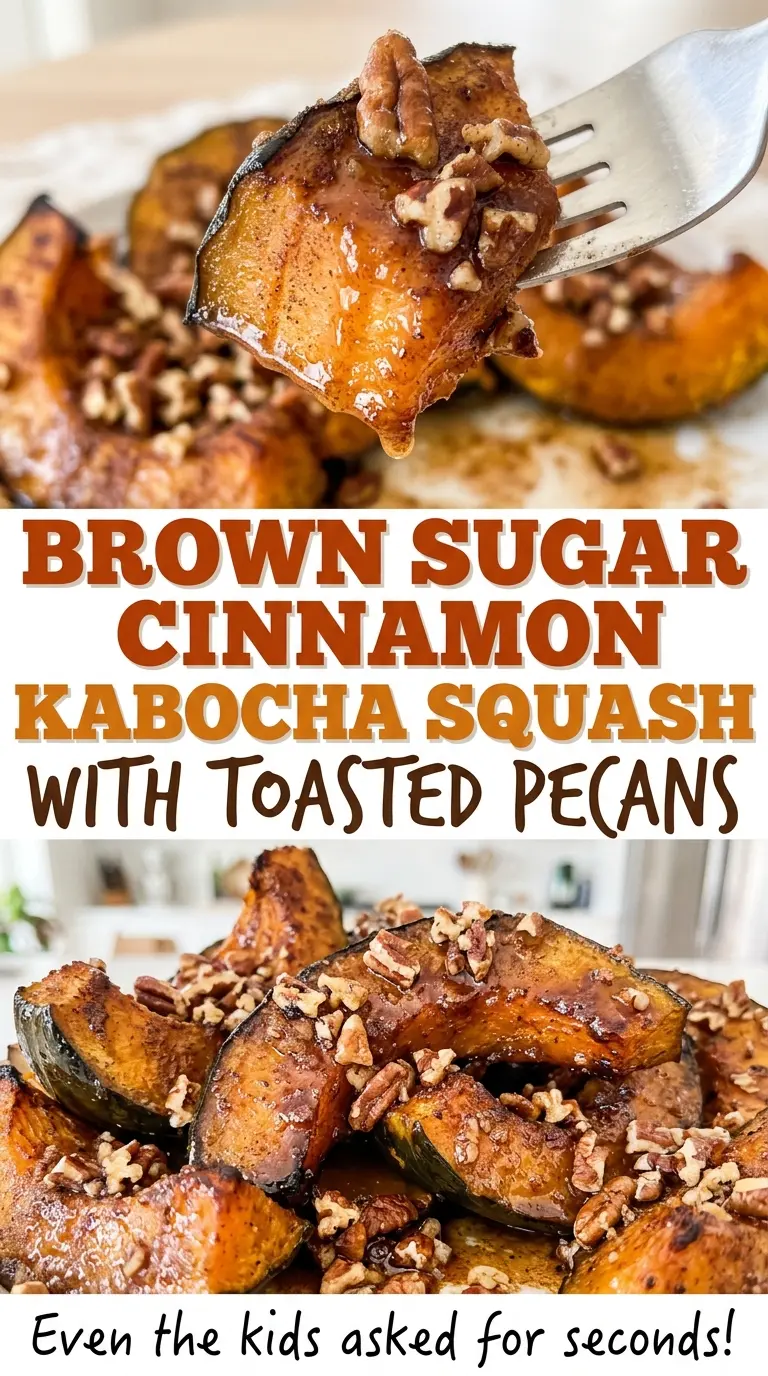
- Kabocha squash — Choose one that feels firm and heavy for its size, with intact skin. The flesh is naturally sweet and dense, while leaving the skin on helps the wedges keep their shape as they roast. The cooked skin is edible, though its texture can be firmer than the flesh.
- Unsalted butter — Melted butter carries the sugar and cinnamon across the squash and helps the coating cling. Unsalted butter lets the kosher salt stay in balance; salted butter changes that balance, so I’d stick with unsalted here rather than guessing at a salt adjustment.
- Light brown sugar — Its moisture helps the coating cling and gives the edges a lightly caramelized finish. Pack it when measuring so the amount is consistent. Dark brown sugar would bring a deeper molasses note, but light brown sugar keeps the squash’s own sweetness in front.
- Ground cinnamon — Cinnamon gives the sweet coating its warm, familiar aroma. Fresh, fragrant cinnamon makes a noticeable difference; if the jar has been open for ages and smells faint, the finished squash will taste flatter.
- Chopped pecans — The dry skillet brings out their toasted aroma and gives the soft squash a crunchy finish. Buy pieces that smell fresh, not stale or oily. If you need a nut-free dish, leave them off rather than replacing them with another topping.
How to Cut, Coat, and Roast Kabocha Without Losing the Wedge Shape
Soften the Shell Before Cutting
Heat the oven to 400°F and line an 18×13-inch rimmed baking sheet with parchment. Set the whole squash on a microwave-safe plate and microwave it for 2 minutes, turning it halfway through. Let it cool until it’s easy to handle; it shouldn’t be hot in your hands when you start cutting. Halve it, scoop out the seeds, and cut the squash into even 1-inch wedges.
Coat the Wedges Evenly
Melt the butter in a large bowl, then stir in the brown sugar, cinnamon, and kosher salt until the mixture is combined. Add the wedges and toss until the cut surfaces are coated. If the butter starts to collect at the bottom of the bowl, toss again before moving the squash to the pan. Arrange the wedges in one layer, cut sides down, with enough room that they aren’t piled on top of one another.
Roast Until Fork-Tender and Browned
Roast for 30–40 minutes, turning the wedges halfway through. The precise finish depends on the thickness of the pieces, so check for a fork that slides into the flesh easily and edges that have taken on color. If the edges are browning but the centers still feel firm, keep roasting until the fork-tender cue is there. Crowding the pan slows browning, so keep the wedges in a single layer.
Toast the Pecans and Finish
While the squash roasts, put the chopped pecans in a dry 10-inch skillet over medium heat. Stir often for 3–5 minutes, staying close as their aroma becomes pronounced. Rest the squash for 5 minutes, then transfer the wedges to a serving platter and sprinkle the pecans over the top. That short rest helps the wedges settle before you move them.
Two Simple Ways to Adapt the Squash and Its Topping
Make It Pecan-Free
Leave off the pecans for a nut-free version. You’ll lose the crunchy contrast, but the browned, cinnamon-coated squash still works as a side on its own. For a serious allergy, keep the squash and serving equipment away from pecan residue.
Skip the Cinnamon for a Simpler Brown-Sugar Finish
Leave the cinnamon out of the butter and brown sugar mixture when you want the squash’s sweetness to come through more plainly. The coating will still cling and brown, but you’ll miss the warm spice aroma that defines the original version.
Storage and Reheating
- Refrigerator: Store leftovers in an airtight container for 3–4 days. The squash softens a little, and the pecans lose some crunch. Refrigerate within 2 hours.
- Freezer: Freeze cooled squash in an airtight container for up to 2 months. The texture will be softer after thawing; pecans also lose their crunch, so freeze them separately if you haven’t added them yet.
- Reheating: Warm the squash in a 350°F oven until heated through, then add any pecans you kept separate. The microwave works for a quick portion, but it softens the edges instead of bringing back their roasted texture.
Questions That Come Up When Cooking Kabocha
Brown Sugar Cinnamon Kabocha Squash with Toasted Pecans
Ingredients
Equipment
Method
- Preheat the oven to 400°F.
- Line an 18x13-inch rimmed baking sheet with parchment paper.
- Microwave the whole squash on a microwave-safe plate for 2 minutes, turning it halfway through.
- Let the squash cool until easy to handle.
- Halve the squash and scoop out the seeds.
- Cut the squash into 1-inch wedges.
- Melt the butter in a large bowl.
- Stir in the brown sugar, cinnamon, and salt.
- Add the squash wedges and toss to coat.
- Arrange the wedges in a single layer, cut sides down, on the prepared baking sheet.
- Roast for 30–40 minutes, turning the wedges halfway through, until fork-tender and browned at the edges.
- While the squash roasts, toast the pecans in a dry 10-inch skillet over medium heat for 3–5 minutes, stirring often, until fragrant.
- Rest the squash for 5 minutes.
- Transfer it to a serving platter and sprinkle with the toasted pecans.