
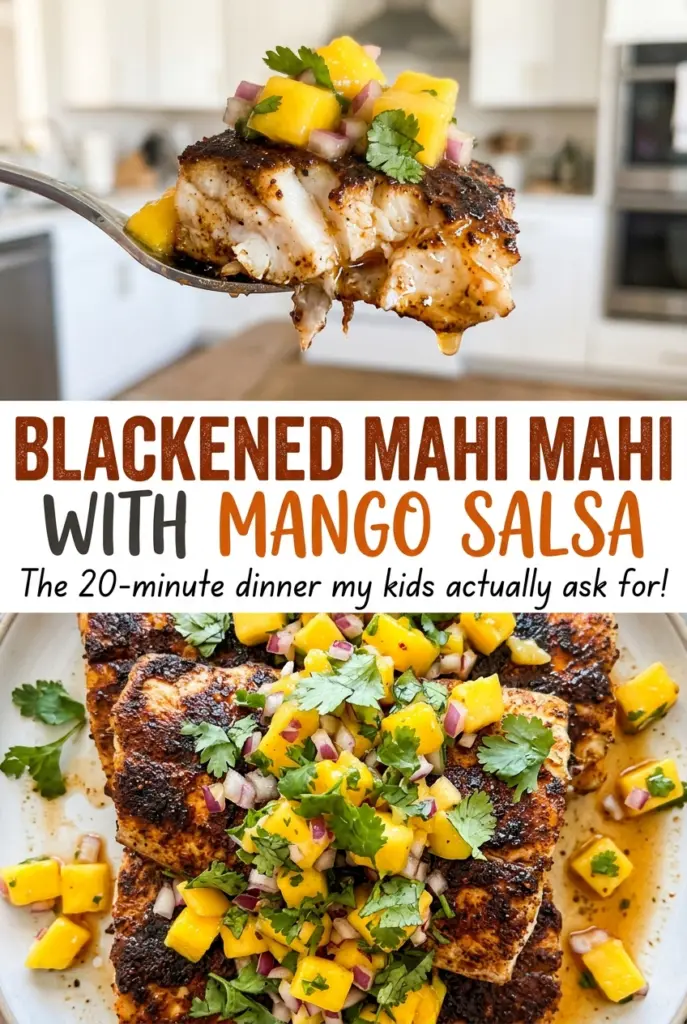
Blackened Mahi Mahi with Mango Salsa
The first fillet should hit the skillet with a sharp sizzle, not sit there quietly while moisture gathers underneath. I learned that a damp surface makes it harder to get…

By Ava
•
•
Reading time: 9 min
Tip: save now, make later.
The first fillet should hit the skillet with a sharp sizzle, not sit there quietly while moisture gathers underneath. I learned that a damp surface makes it harder to get the deep, dark crust that gives blackened mahi mahi its name. Now I pat each piece dry before brushing on butter and pressing the spice blend over both sides. The fish browns beautifully, while the center stays moist and flakes into clean, tender pieces.
The mango salsa does more than add color. Its bright lime and crisp red onion balance the warmth of cayenne and the smoky edge of the spice crust. I stir it together first and give it time to chill while I season and cook the fish; that short rest takes the raw bite off the onion and lets the mango pick up the lime. Each plate gets a spoonful of cool, juicy salsa beside the hot mahi mahi.
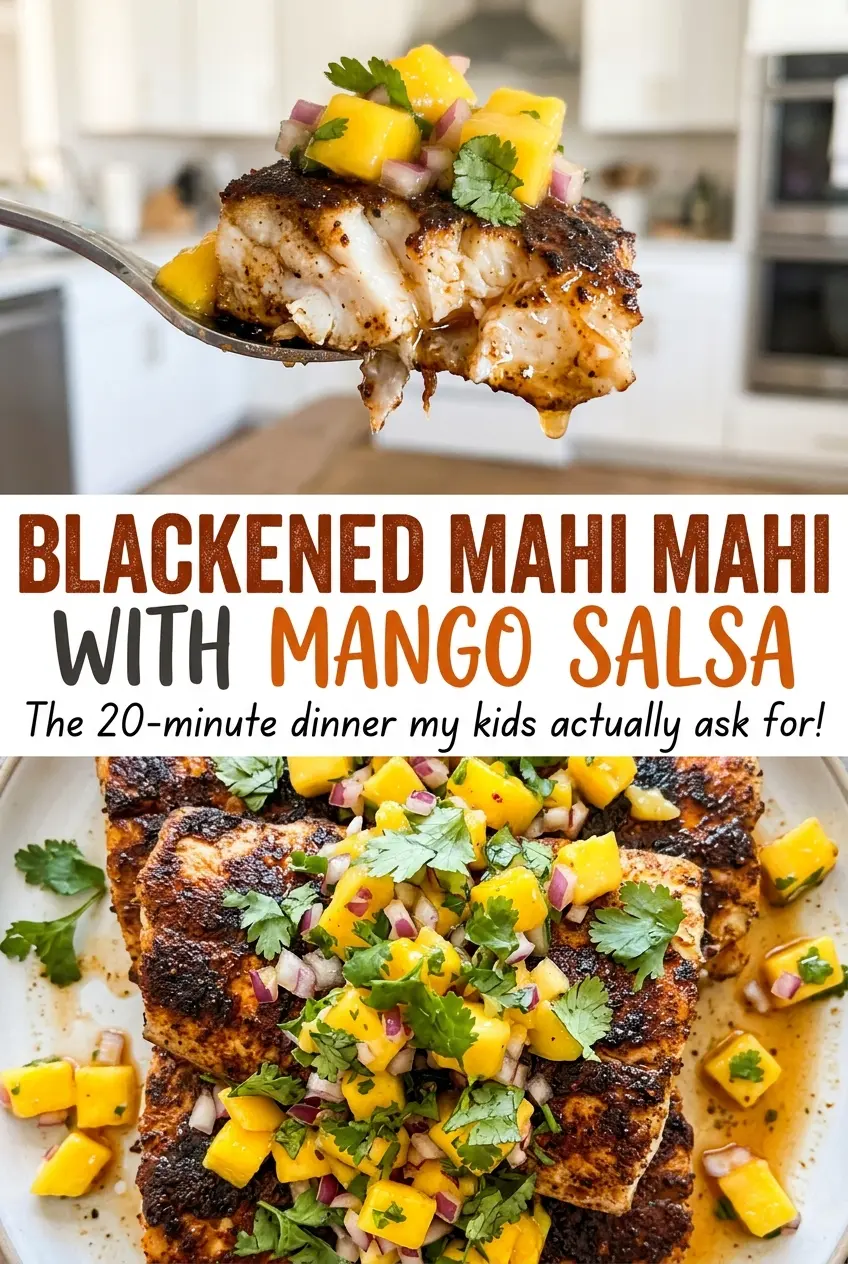
Kitchen Note
Give the mango salsa its full 15 minutes in the refrigerator. The onion and jalapeño mellow a little as they sit in the lime juice, and the chilled salsa is a refreshing contrast to the hot fish.
Save this blackened mahi mahi with mango salsa for a quick, bold dinner with a crisp spice crust and cool, tangy fruit salsa.
Why the Cast-Iron Skillet Must Be Hot Before the Fish Goes In
A dark crust comes from a quick, direct sear; it shouldn’t take a long time for the fish to brown. If the skillet is still warming when the fillets go in, the fish releases moisture before the surface can brown, and the spice coating turns soft instead of forming a crisp, deeply colored layer. Heating the 12-inch cast-iron skillet over medium-high heat for about 3 minutes gives the fish a hot cooking surface from the start.
There is a useful difference between a deeply browned spice crust and scorched spices. Paprika, cayenne, garlic powder, and the dried herbs all sit on the outside of the fish, so they color quickly once they meet the pan. Let the skillet get very hot, but if the spices are darkening abruptly or the oil is smoking heavily, lower the heat rather than leaving the fillets to burn. The goal is a firm sear on each side while the thick center cooks through.
Working in two batches also matters. Four fillets crowded into one skillet would cover too much of the cooking surface and make it harder to keep good contact between the fish and the pan. Two at a time leaves room to turn each piece without scraping away the spice crust.
What the Mango, Butter, and Spice Blend Each Bring
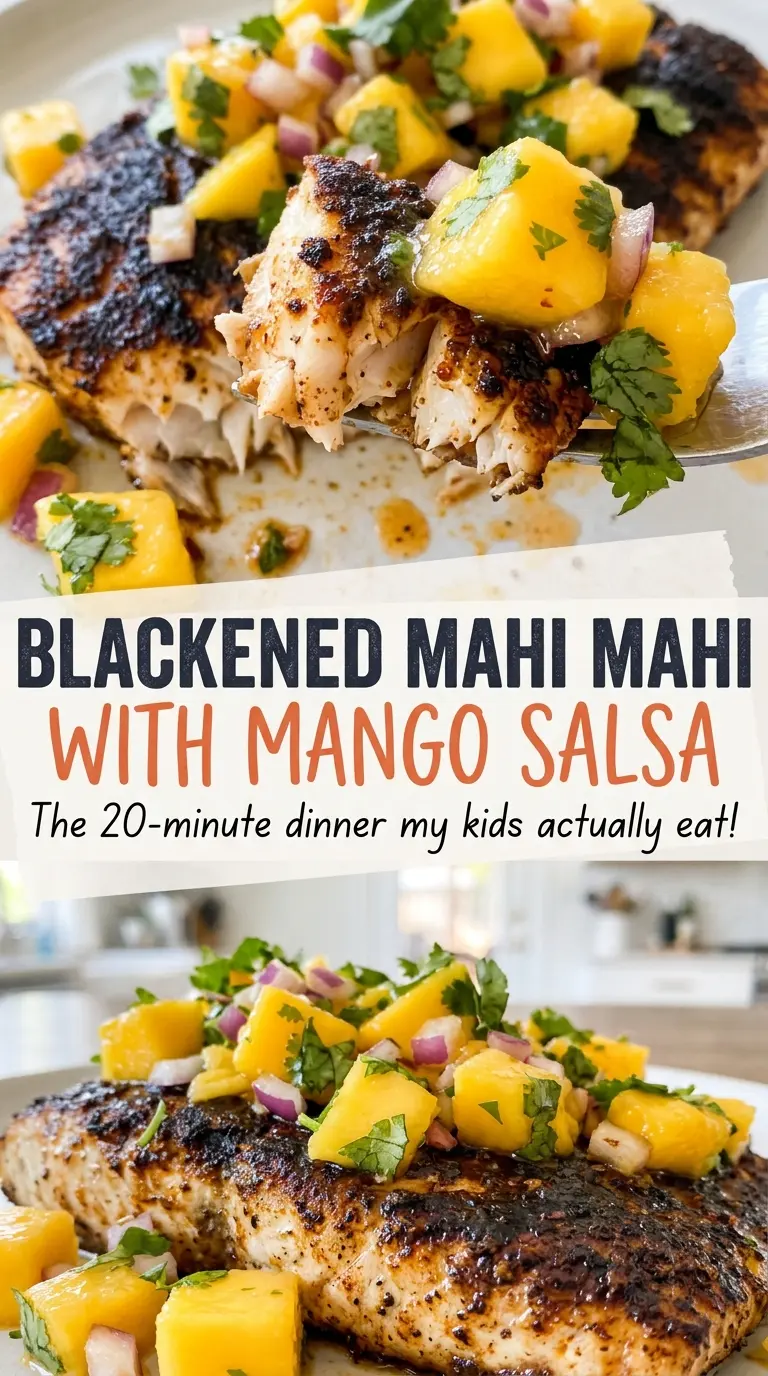
- Mahi-mahi — Choose fillets that are close to an inch thick so they cook at a similar pace. The fish should smell clean and mild; freshness matters more here than paying extra for a particular brand. Patting the surface dry is worthwhile because water left on the fish interferes with the spice coating and sear.
- Mango and lime — A ripe mango should be fragrant and yield slightly when pressed, but it still needs enough firmness to hold its diced shape in the salsa. Lime juice gives the fruit and onion a bright, tart counterpoint; bottled juice won’t have quite the same fresh aroma. Dice the mango into small, even pieces so each forkful gets a little of everything.
- Red onion, jalapeño, and cilantro — Finely diced onion and seeded, minced jalapeño distribute their sharper flavors without overwhelming a bite of fish. The jalapeño seeds are removed before mincing, so the heat comes from the pepper itself rather than its seeds. Fresh cilantro is worth using here because its leafy, citrusy character brightens the salsa in a way dried herbs can’t.
- Paprika, cayenne, and dried herbs — The paprika gives the crust its warm color, while cayenne supplies the heat and garlic powder, onion powder, thyme, and oregano round out the savory seasoning. Ordinary pantry spices work well; use them while they still smell distinct when you open the jar. Dried thyme and oregano are intentional here: fresh herbs would add moisture and would not coat the fish the same way.
- Butter and canola oil — Melted butter helps the spice blend cling to both sides of the fillets and brings a rounded, rich note to the crust. Canola oil goes into the hot skillet, where its neutral flavor lets the seasoning stand out. The butter’s quality matters less than using it melted and brushing it evenly across the fish.
From Chilled Salsa to a Crisp, Dark Fish Crust
Let the Mango Salsa Rest
Stir the diced mango, finely diced red onion, seeded and minced jalapeño, chopped cilantro, lime juice, and salt together in a small bowl. Cover the bowl and refrigerate the salsa for at least 15 minutes while you work on the fish. The pieces should stay distinct rather than turning into a puree, so fold them together gently. Give the salsa another stir before serving to redistribute the lime juice.
Mix the Seasoning Before the Fish Gets Buttered
Combine the paprika, cayenne, garlic powder, onion powder, dried thyme, dried oregano, kosher salt, and black pepper in a small bowl. Stir until the colors and herbs look evenly distributed, breaking up any clumps of powder with the back of a spoon. Pat the mahi-mahi dry, then brush both sides of every fillet with melted butter. Coat both sides evenly with the seasoning mixture so there aren’t bare patches or thick piles of spice.
Heat the Skillet and Sear the First Pair
Set a 12-inch cast-iron skillet over medium-high heat and let it heat until very hot, about 3 minutes. Add half of the canola oil and swirl it around to coat the pan. Lay in two fillets with room between them, and cook each side for 3 to 4 minutes. Turn carefully so the browned seasoning stays on the fish rather than sticking to the pan.
Finish the Second Pair and Check the Thickest Part
Transfer the first two fillets when they’re cooked, then add the remaining canola oil to the skillet and swirl to coat. Cook the other two fillets for 3 to 4 minutes per side in the same way. The surface should be deeply browned, and a thermometer inserted into the thickest part should read 145°F. Serve the hot fish with the chilled mango salsa.
Two Simple Ways to Adjust the Heat or Make It Dairy-Free
A Milder, Fruit-Forward Version
For a gentler finish, leave out the cayenne and omit the jalapeño from the salsa. The paprika, garlic, onion, thyme, and oregano still give the fish a savory, browned crust, while the mango and lime taste brighter without the extra heat. The change softens the kick without changing the cooking method.
A Dairy-Free Spice Coating
Replace the melted butter used to brush the fillets with an equal amount of the canola oil already used for the skillet. Brush it on lightly so the seasoning has a surface to cling to, then cook the fish in the listed pan oil. The crust will be less buttery, but the spices will still coat and brown on the mahi-mahi.
Storage and Reheating
- Refrigerator: Store leftover fish in a covered container for up to 3 to 4 days. The crust softens in the refrigerator, though the fish remains good for a quick meal.
- Freezer: Cooked mahi-mahi freezes best without the salsa. Wrap the cooled fillets airtight and freeze for up to 2 to 3 months; the fish may be a little less tender after thawing. The fresh salsa is better made separately rather than frozen.
- Reheating: Warm the fish gently in a covered skillet over low heat or in a low oven until heated through; leftovers should reach 165°F. High heat can dry out the center before it warms evenly, so skip a ripping-hot pan.
Questions That Come Up When Cooking Blackened Mahi-Mahi
Blackened Mahi Mahi with Mango Salsa
Ingredients
Equipment
Method
- Stir together the mango, red onion, jalapeño, cilantro, lime juice, and salt in a small bowl.
- Cover and refrigerate for at least 15 minutes.
- Stir together the paprika, cayenne, garlic powder, onion powder, thyme, oregano, kosher salt, and black pepper in a small bowl.
- Pat the mahi-mahi dry.
- Brush both sides of each fillet with the melted butter.
- Coat both sides evenly with the spice mixture.
- Heat a 12-inch cast-iron skillet over medium-high heat until very hot, about 3 minutes.
- Add 1/2 tablespoon of the canola oil and swirl to coat the pan.
- Cook 2 fillets for 3 to 4 minutes per side, until deeply browned and the thickest part reaches 145°F.
- Add the remaining 1/2 tablespoon oil.
- Cook the remaining 2 fillets the same way and serve with the mango salsa.