
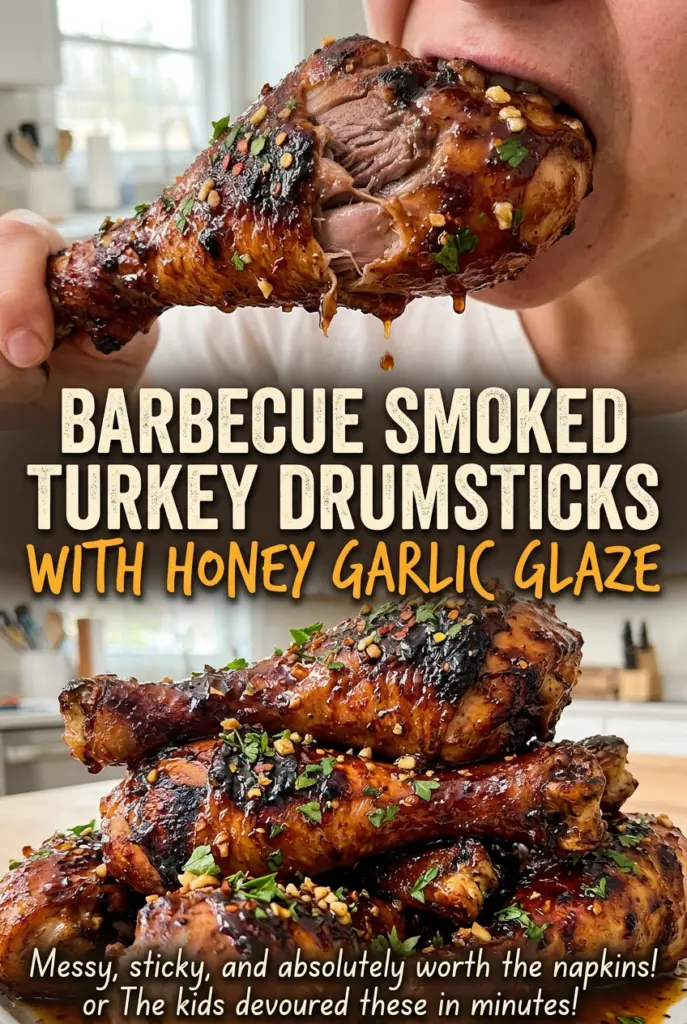
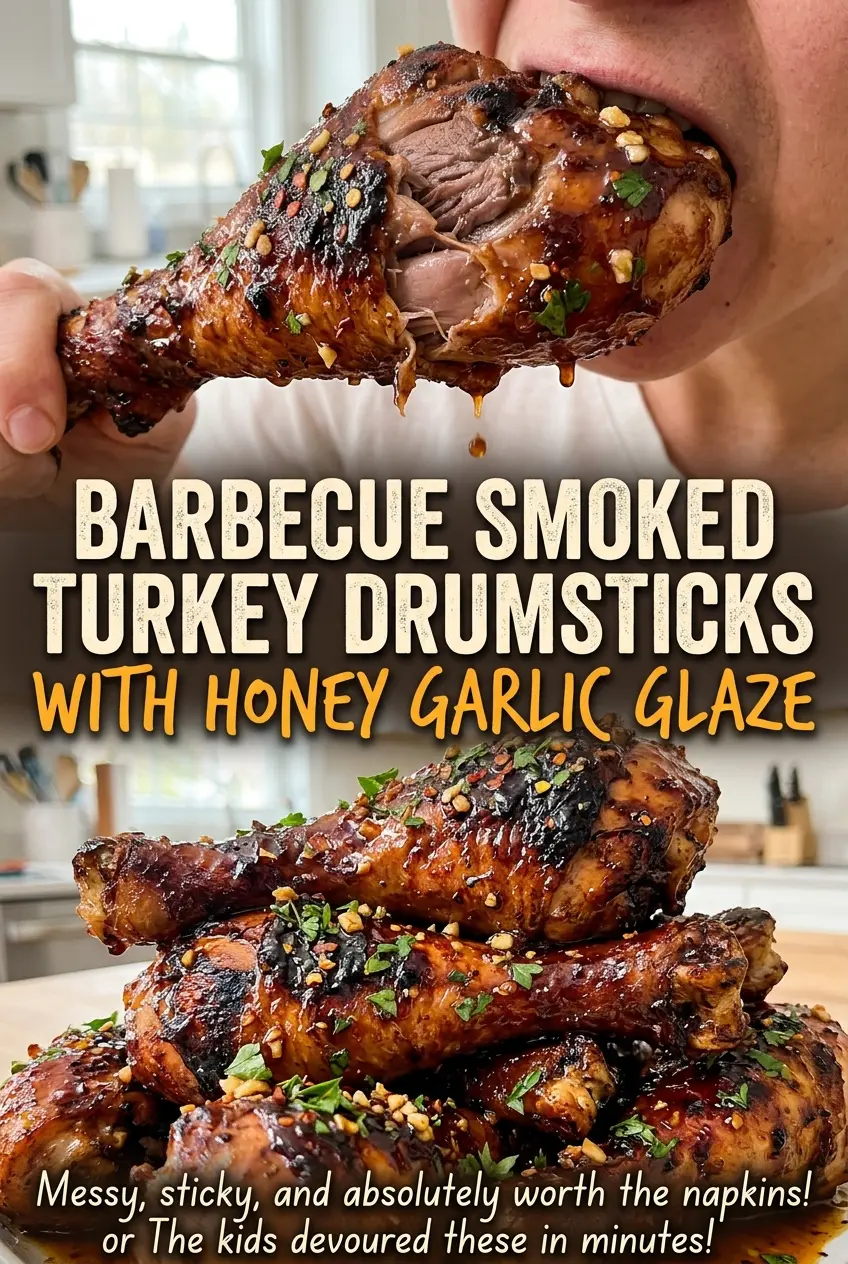
Barbecue Smoked Turkey Drumsticks with Honey Garlic Glaze
The glaze starts to shine as soon as it hits the hot drumsticks, and the smoky barbecue smell gets even deeper during those last few minutes on the grate. I…

By Ava
•
•
Reading time: 9 min
Tip: save now, make later.
The glaze starts to shine as soon as it hits the hot drumsticks, and the smoky barbecue smell gets even deeper during those last few minutes on the grate. I like this method because the turkey gets a long, steady smoke before the sweet glaze goes on, so the honey garlic coating finishes sticky instead of scorched. These barbecue smoked turkey drumsticks are hearty enough to stand on their own, with a savory paprika-and-garlic rub underneath the glossy finish.
Drumsticks need more time than a quick-cooking cut, but they reward the wait with rich, tender dark meat. I pat them dry before adding the oil and seasonings, which helps the rub cling instead of sliding around on a damp surface. The glaze comes together in a small saucepan while the smoker heats: butter softens the garlic, then honey, barbecue sauce, and a little cider vinegar turn it into a sweet-tangy coating. By the time the turkey is ready for its first brush, the glaze is waiting and the whole cook feels nicely under control.
Kitchen Note
Garlic needs just 30 seconds in the butter before the other glaze ingredients go in. Keep it moving and take the pan off the heat if it starts to brown; scorched garlic makes the honey glaze taste bitter.
Save these barbecue smoked turkey drumsticks with honey garlic glaze for a smoky, sticky main dish with a savory paprika rub.
Why Turkey Drumsticks Need a Higher Finish Than a Quick-Cooking Cut
Turkey legs are dark meat, and they don’t turn tender on the same schedule as a lean breast. A drumstick can look beautifully browned and still feel firm near the joint if it comes off the smoker too early. For this cook, the first temperature check tells you when the meat is ready for glaze; it isn’t the final doneness point.
The drumsticks finish after the glaze goes on, with the thickest part reaching 175 to 185°F. That longer cook gives the connective tissue more time to soften, which is what makes a drumstick pleasant to bite rather than merely cooked through. Check the thickest part and keep the thermometer tip away from the bone, since bone contact can skew the reading. The change in target is deliberate: you’re taking the turkey through a first smoke, then giving it a final stretch to become tender while the glaze sets.
That finishing window also gives you a useful cue beyond the color of the skin. The coating should look glossy and cling to the meat, while the turkey itself has had enough time on the grate to soften. A deep brown surface alone can’t tell you what’s happening at the center.
What Gives the Rub and Honey Garlic Glaze Their Character
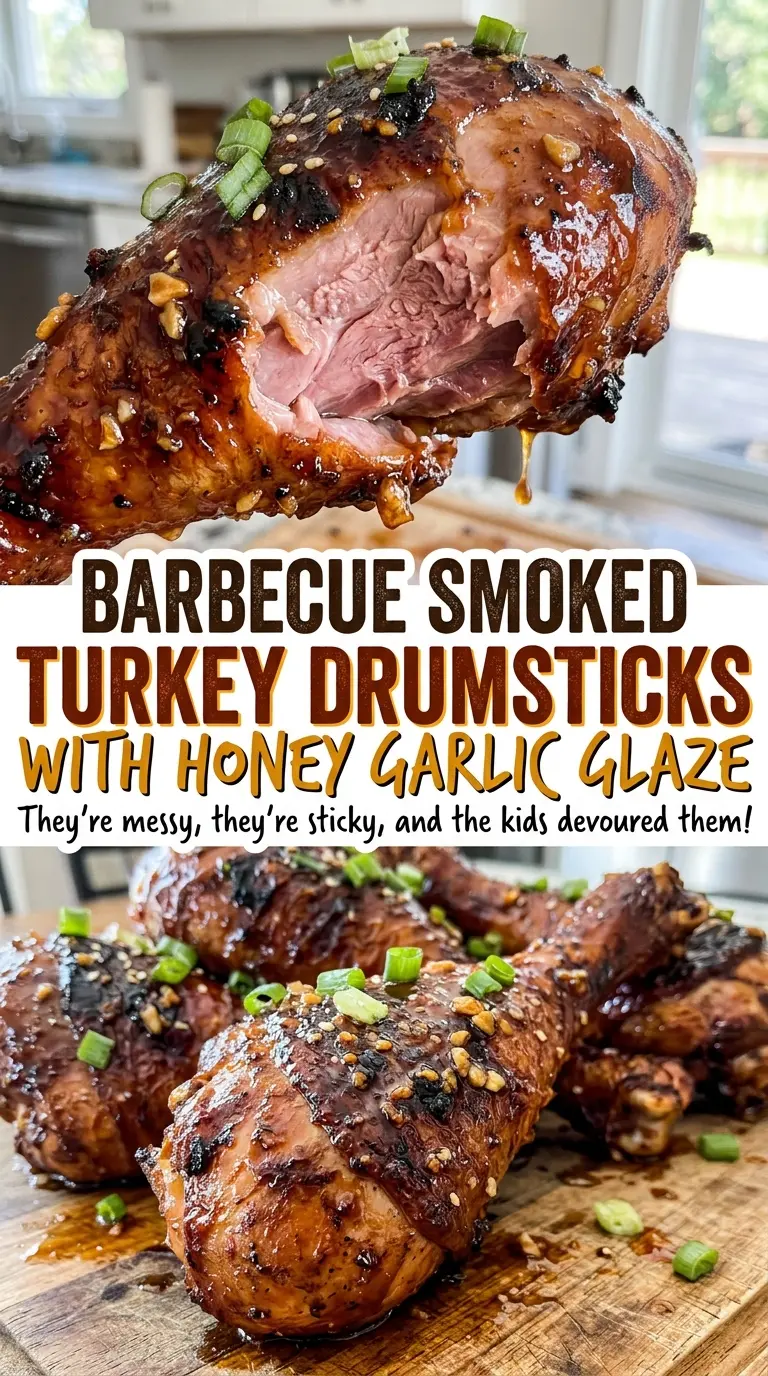
- Turkey drumsticks — Large drumsticks give you enough meat for a substantial serving and stand up well to the long smoke. Choose pieces close in size so they cook at a similar pace; the exact shape varies, so temperature matters more than matching the clock alone.
- Vegetable oil and dry seasonings — Oil helps the salt, pepper, smoked paprika, and garlic powder adhere across the drumsticks. Smoked paprika adds a warm, earthy note that complements the smoker; regular paprika won’t bring the same smoky character. Garlic powder seasons the meat evenly, while fresh garlic stays in the glaze.
- Honey — Honey supplies the glaze’s sweetness and helps it turn shiny as it cooks on the turkey. Maple syrup can replace it in the same amount for a darker, woodsy sweetness, though the glaze won’t taste quite as honey-forward.
- Barbecue sauce — This brings the tangy, spiced base that would be difficult to recreate with honey alone. Use a sauce you already enjoy, since its flavor will come through; a smoky or sweeter sauce shifts the finished glaze in that direction.
- Butter, garlic, and apple cider vinegar — Butter gives the glaze a rounder, savory base, fresh minced garlic brings a sharper aroma than the powder in the rub, and vinegar cuts through the sweetness. For a dairy-free version, use vegetable oil in place of the butter; the glaze will be a little less rich but still coats the turkey well.
Smoke the Drumsticks First, Then Build the Glaze in Two Coats
Dry the Turkey and Season Every Side
Pat the drumsticks dry, then rub them all over with vegetable oil. Sprinkle on the salt, black pepper, smoked paprika, and garlic powder, turning each piece so the seasoning covers the sides and the narrower ends. A dry surface helps the oil and seasoning stay in place as you move the turkey to the grate. Set the seasoned drumsticks aside while you make the glaze and preheat the smoker.
Simmer the Honey Garlic Glaze Gently
Melt the butter in a small saucepan over medium-low heat and add the minced garlic. Cook it for 30 seconds, then stir in the honey, barbecue sauce, and apple cider vinegar. Let the mixture simmer gently for 2 to 3 minutes; it should come together into a smooth, pourable glaze rather than boil hard. Remove the pan from the heat so the garlic and sweet sauce don’t keep cooking.
Smoke Until the First Temperature Check
Preheat the smoker to 275°F and arrange the drumsticks on the grate. Smoke them for about 2 to 3 hours, checking the thickest part of each drumstick with a thermometer and avoiding the bone. The turkey is ready for its first glaze when those readings reach 155 to 160°F. Drumsticks vary in size, so use the temperature reading along with the estimated time rather than relying on the clock alone.
Brush, Turn, Glaze Again, and Rest
Brush the drumsticks with half of the glaze and smoke for 10 to 15 minutes. Turn each one, brush with the remaining glaze, and return them to the smoker for another 10 to 15 minutes, until the thickest part reaches 175 to 185°F. The glaze should look shiny and set against the surface, not runny. Transfer the drumsticks to a platter and rest them for 10 minutes before serving.
Simple Swaps for a Different Glaze or a Dairy-Free Finish
Use Maple Syrup for a Deeper Sweetness
Replace the honey with the same amount of maple syrup in the glaze. It gives the finish a woodsy sweetness and a slightly less floral taste; keep the simmer gentle because the syrup is still sweet and can darken quickly.
Make the Glaze Dairy-Free
Use vegetable oil instead of butter when cooking the garlic. The glaze loses some buttery richness, but the honey, barbecue sauce, and garlic still make a cohesive coating for the smoked turkey.
Bring More Heat with Spicy Barbecue Sauce
Swap in a spicy barbecue sauce for the sauce you usually use, keeping the rest of the glaze the same. The heat carries through the sweet coating without changing the cooking method, though the final balance depends on how fiery the sauce is.
Storage and Reheating
- Refrigerator: Store cooled leftovers in an airtight container for 3 to 4 days. The glaze will firm up when cold and look less glossy until reheated.
- Freezer: Freeze cooled drumsticks in an airtight freezer-safe container for up to 3 months. Thaw them in the refrigerator before reheating; the glaze may be less shiny after freezing but the meat remains suitable for reheating.
- Reheating: Warm the drumsticks covered in a 325°F oven until the center reaches 165°F. Leaving them uncovered the whole time can dry the meat and darken the sugary glaze before the center is hot.
Questions That Come Up While Smoking Turkey Drumsticks
Barbecue Smoked Turkey Drumsticks with Honey Garlic Glaze
Ingredients
Equipment
Method
- Pat the turkey drumsticks dry.
- Rub the drumsticks all over with the oil.
- Season the drumsticks evenly with the salt, pepper, smoked paprika, and garlic powder.
- Melt the butter in a small saucepan over medium-low heat.
- Add the garlic and cook for 30 seconds.
- Stir in the honey, barbecue sauce, and vinegar.
- Simmer gently for 2 to 3 minutes, then remove from the heat.
- Preheat a smoker to 275°F.
- Arrange the drumsticks on the grate.
- Smoke for about 2 to 3 hours, until the thickest part of each reaches 155 to 160°F, avoiding the bone when checking.
- Brush the drumsticks with half the glaze and smoke for 10 to 15 minutes.
- Turn the drumsticks, brush them with the remaining glaze, and smoke for another 10 to 15 minutes, until the thickest part reaches 175 to 185°F.
- Transfer the drumsticks to a platter and rest for 10 minutes before serving.