
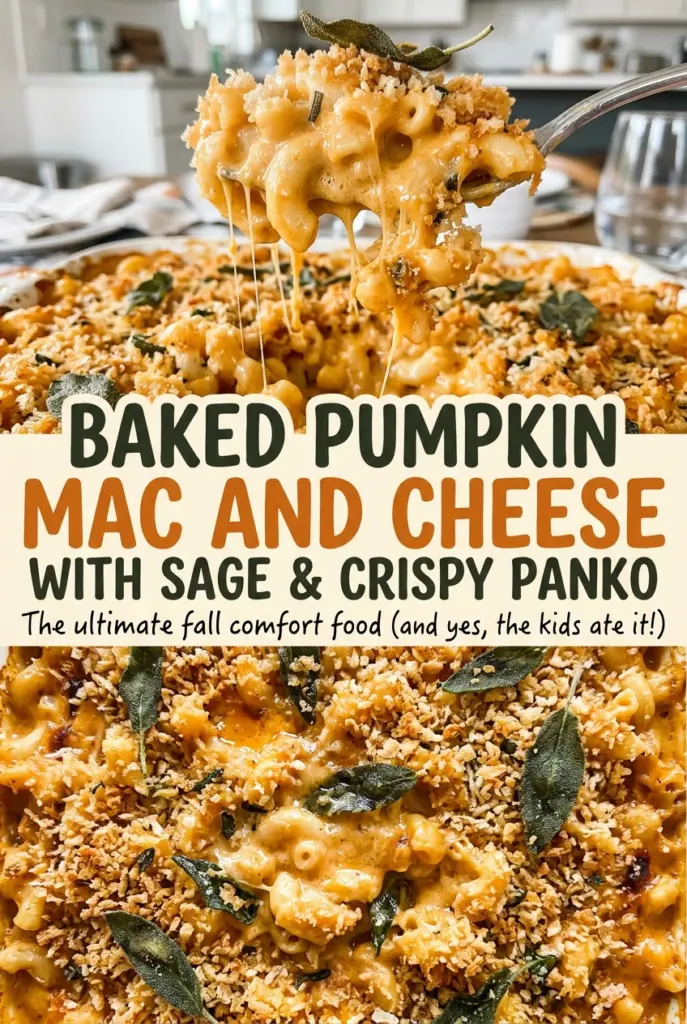
Baked Pumpkin Mac and Cheese with Sage and Crispy Panko
The panko is the first thing to change in the oven: pale crumbs turn golden while small bubbles rise around the edges of the dish. That contrast gives baked pumpkin…

By Ava
•
•
Reading time: 9 min
Tip: save now, make later.
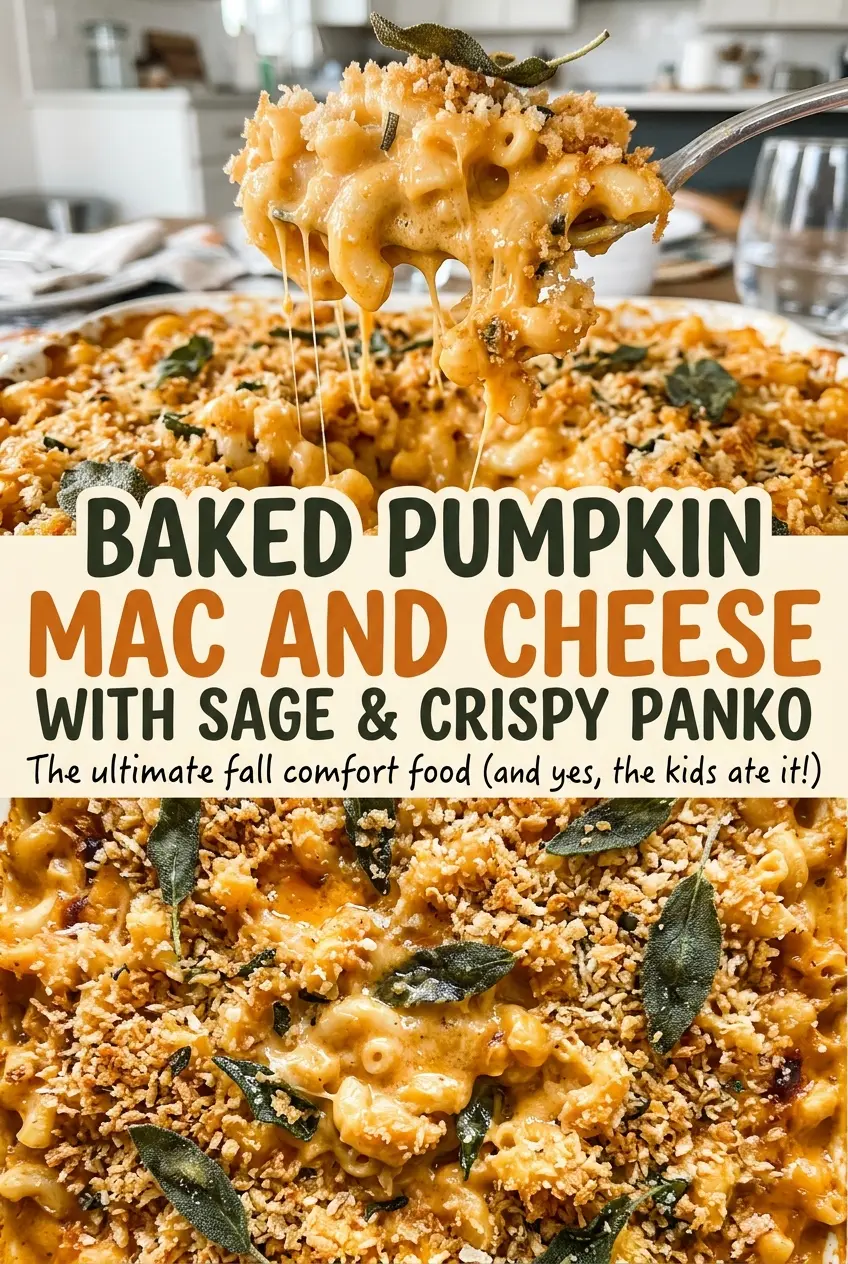
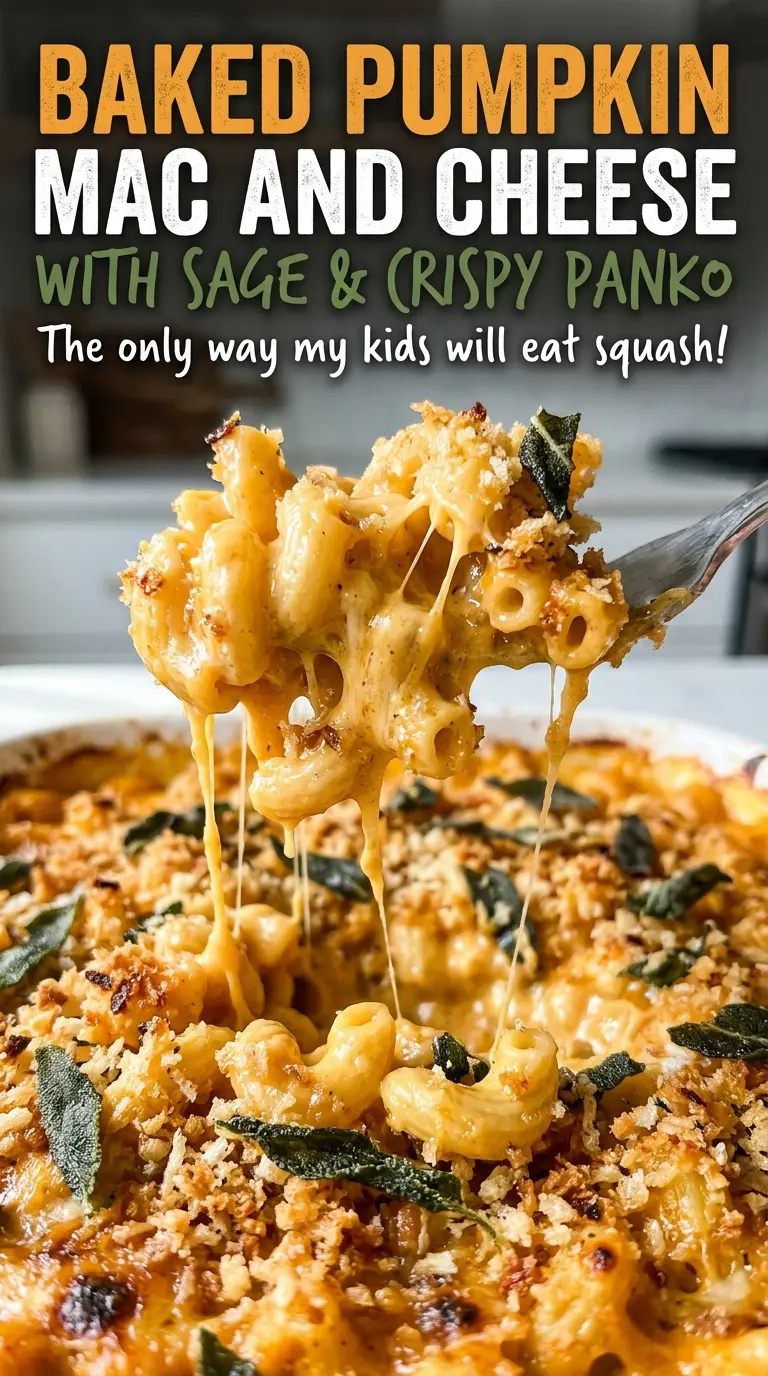
The panko is the first thing to change in the oven: pale crumbs turn golden while small bubbles rise around the edges of the dish. That contrast gives baked pumpkin mac and cheese with sage and crispy panko its appeal—a crisp top, tender elbows, and a creamy center underneath.
Pumpkin brings a gentle earthiness to the sauce without pushing it into sweet territory. Sharp cheddar keeps the cheese flavor clear, Gruyère rounds it out, and fresh sage makes the whole dish taste firmly savory. I like how each forkful has a little crunch before you reach the soft macaroni.
This is a generous 9×13-inch bake that serves eight, so it works well when you want a substantial side or a meatless main. The pumpkin blends into the cheese sauce rather than sitting in a separate layer, coating the elbows from edge to edge. A golden top and a bubbling rim are the inviting signs that it’s ready for the table.
Kitchen Note
Check the can before you start: plain pumpkin puree belongs in this savory sauce, not pumpkin pie filling. Pie filling is already sweetened and spiced, which would throw off the balance with the cheese and sage.
Save this pumpkin mac and cheese for its savory sage sauce, golden panko top, and cozy creamy center.
Why Pumpkin Gives This Mac and Cheese Body Without Making It Sweet
Pumpkin puree is thicker than a liquid flavoring, so it adds substance as well as color. It won’t take the place of the flour-and-milk sauce here: the roux gives the cheese something smooth to blend into, while the pumpkin brings its own soft, earthy character. That distinction matters in a baked mac and cheese, where a sauce that starts out too stiff can turn heavy once the pasta and topping go into the oven.
The cheeses help keep the pumpkin in the background. Sharp cheddar has enough bite to stay recognizable alongside it, and Gruyère brings a mellow, nutty note that makes the sauce feel rounded rather than one-dimensional. Dry mustard and a little nutmeg support those savory flavors without making the dish taste sharply spiced.
Think of the pumpkin as part of the sauce’s body, not as a substitute for the dairy or cheese. The result should taste like comforting mac and cheese first, with pumpkin adding depth behind it. That balance is what makes this a savory casserole rather than a sweet pumpkin dish with pasta stirred in.
The Ingredients That Keep Pumpkin Mac Savory and Creamy
- Pumpkin puree — Its smooth consistency folds into the sauce evenly and gives it a deeper color and fuller texture. Canned puree is a dependable choice here; use it plain and stir it in until no streaks remain.
- Sharp cheddar and Gruyère — Cheddar brings the familiar tangy cheese flavor, while Gruyère softens the edges with a nutty note. Shred the cheese finely so it melts into the warm sauce without leaving large pockets.
- Fresh sage — Fresh sage gives the dish its fragrant, savory edge, especially against pumpkin. Chop it finely so the leaves distribute through the sauce and breadcrumb topping instead of clumping.
- Panko breadcrumbs — Their larger, airy flakes make a lighter, more craggy crust than fine breadcrumbs. Toss them thoroughly with melted butter so the topping browns evenly instead of leaving dry patches.
- Whole milk and flour — Together, they form the creamy base that carries the pumpkin and melted cheese. Whisk the milk in gradually to keep the flour mixture smooth; whole milk gives the sauce a richer texture than a thinner milk would.
Building the Sauce and Getting the Panko Golden
Boil the Elbows Just Short of Tender
Bring a large pot of water to a boil, add the tablespoon of kosher salt, then cook the elbow macaroni until it’s two minutes shy of the package directions. It should still have a little firmness when you bite into it, since it will finish cooking in the oven. Drain it well so excess water doesn’t loosen the cheese sauce, then set it aside while you make the base.
Start the Sage Roux and Whisk in the Milk
Melt the butter in a large saucepan over medium heat, add one tablespoon of the chopped sage, and cook for 30 seconds. Whisk in the flour and keep it moving for one minute; the mixture should look smooth and lightly foamy, not browned. Gradually whisk in the milk, adding it in a steady stream so the sauce stays lump-free. If you spot a floury clump, whisk it out before adding the next splash.
Thicken the Pumpkin Sauce Before Adding Cheese
Whisk in the pumpkin, dry mustard, remaining salt, black pepper, and nutmeg. Cook for 5 to 7 minutes, whisking often, until the sauce thickens enough to coat a spoon; a thin, milky sauce hasn’t reached that cue yet. Take the saucepan off the heat before stirring in the cheddar and Gruyère. Once the cheese has melted, fold in the drained macaroni until the elbows are evenly coated.
Top the Casserole and Bake Until Bubbling
Stir the panko with the melted butter and the remaining sage, breaking up any dry clumps as you mix. Spread the macaroni mixture in the greased 9×13-inch baking dish, then scatter the crumbs evenly over the top so the edges aren’t left bare. Bake at 375°F for 20 to 25 minutes, until the topping is golden and the edges are bubbling. Let the casserole rest for 10 minutes before serving so it’s easier to scoop.
Three Changes That Shift the Flavor Without Losing the Creamy Center
Make It Gluten-Free
Use gluten-free elbow pasta, a cup-for-cup gluten-free flour blend in the roux, and gluten-free panko. The sauce method stays the same, though gluten-free pasta brands vary in how quickly they soften, so use the package timing as your guide and stop two minutes early as you would with regular macaroni.
Lean Into a Sharper Cheese Flavor
Replace the Gruyère with the same amount of sharp cheddar. You’ll keep the same total amount of cheese, but the sauce will taste more direct and tangy, with less of Gruyère’s mellow nuttiness. Stir the cheese into the sauce off the heat for the smoothest result.
Keep the Sage Flavor in the Sauce
For a more blended sage flavor, stir all of the chopped sage into the sauce and leave it out of the panko. The topping will taste more buttery and less herbal, while the same amount of sage still perfumes the macaroni throughout.
Storage and Reheating
- Refrigerator: Keep leftovers covered in an airtight container for 3 to 4 days. The panko softens in storage, but the cheesy pasta stays satisfying.
- Freezer: Freeze cooled portions in airtight containers for up to 2 months. The sauce may lose a little silkiness after thawing, and the crumb topping won’t stay crisp.
- Reheating: Warm individual portions in the microwave at medium power, covered, with a small splash of milk to loosen the sauce. Avoid blasting it on high, which can make the cheese sauce oily at the edges.
Questions That Come Up While Making Pumpkin Mac and Cheese
Baked Pumpkin Mac and Cheese with Sage and Crispy Panko
Ingredients
Equipment
Method
- Heat the oven to 375°F.
- Grease a 9x13-inch baking dish.
- Bring a large pot of water to a boil, add 1 tablespoon of the salt and the macaroni, and cook until 2 minutes shy of the package directions; drain.
- Melt 4 tablespoons of butter in a large saucepan over medium heat, add 1 tablespoon of the sage, and cook for 30 seconds.
- Whisk in the flour and cook for 1 minute.
- Gradually whisk in the milk until smooth.
- Whisk in the pumpkin, dry mustard, remaining 1 teaspoon salt, pepper, and nutmeg; cook, whisking often, for 5 to 7 minutes, until the sauce thickens enough to coat a spoon.
- Remove the saucepan from the heat and stir in the cheddar and Gruyère until melted.
- Fold in the drained macaroni.
- Stir together the panko, melted butter, and remaining 1 tablespoon sage.
- Spread the macaroni mixture in the prepared baking dish.
- Sprinkle the panko mixture evenly over the top.
- Bake for 20 to 25 minutes, until bubbling at the edges and the topping is golden brown.
- Rest for 10 minutes before serving.