
Asian Salmon
The glaze starts out thin in the saucepan, and it’s easy to wonder whether it’ll cling to the salmon at all. Give it a few minutes over a gentle simmer…

By Ava
•
•
Reading time: 8 min
Tip: save now, make later.
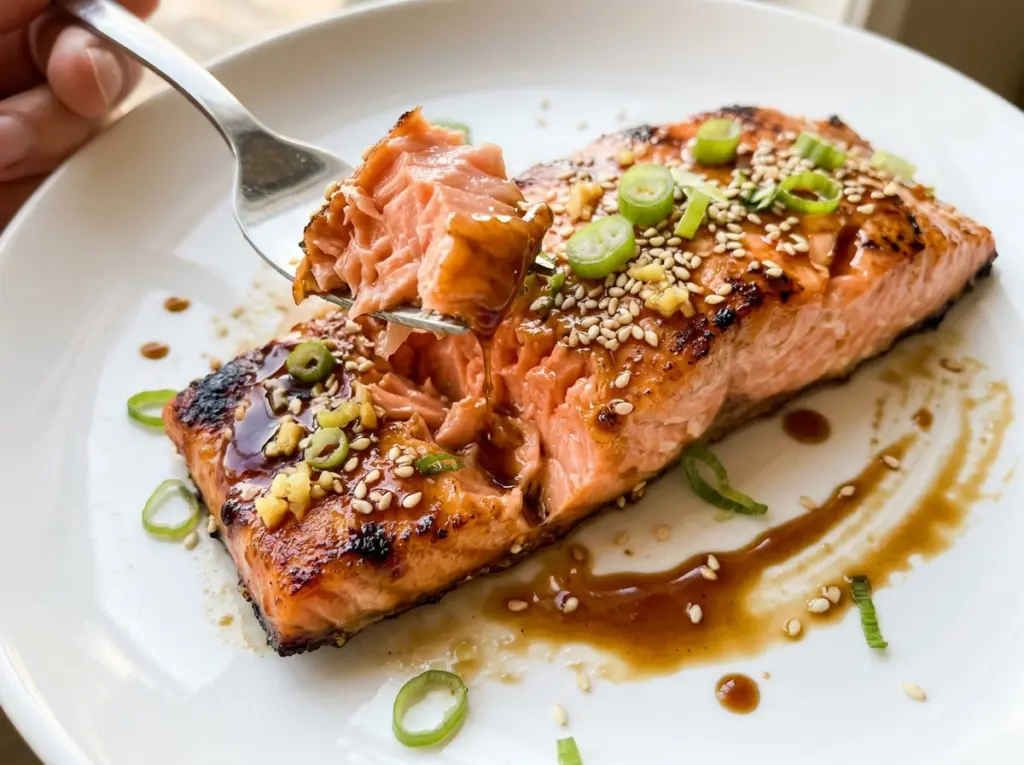
The glaze starts out thin in the saucepan, and it’s easy to wonder whether it’ll cling to the salmon at all. Give it a few minutes over a gentle simmer and it turns glossy, with just enough body to coat the back of a spoon. I make this Asian Salmon when I want a savory-sweet finish without a long marinade or a pan full of splattering oil.
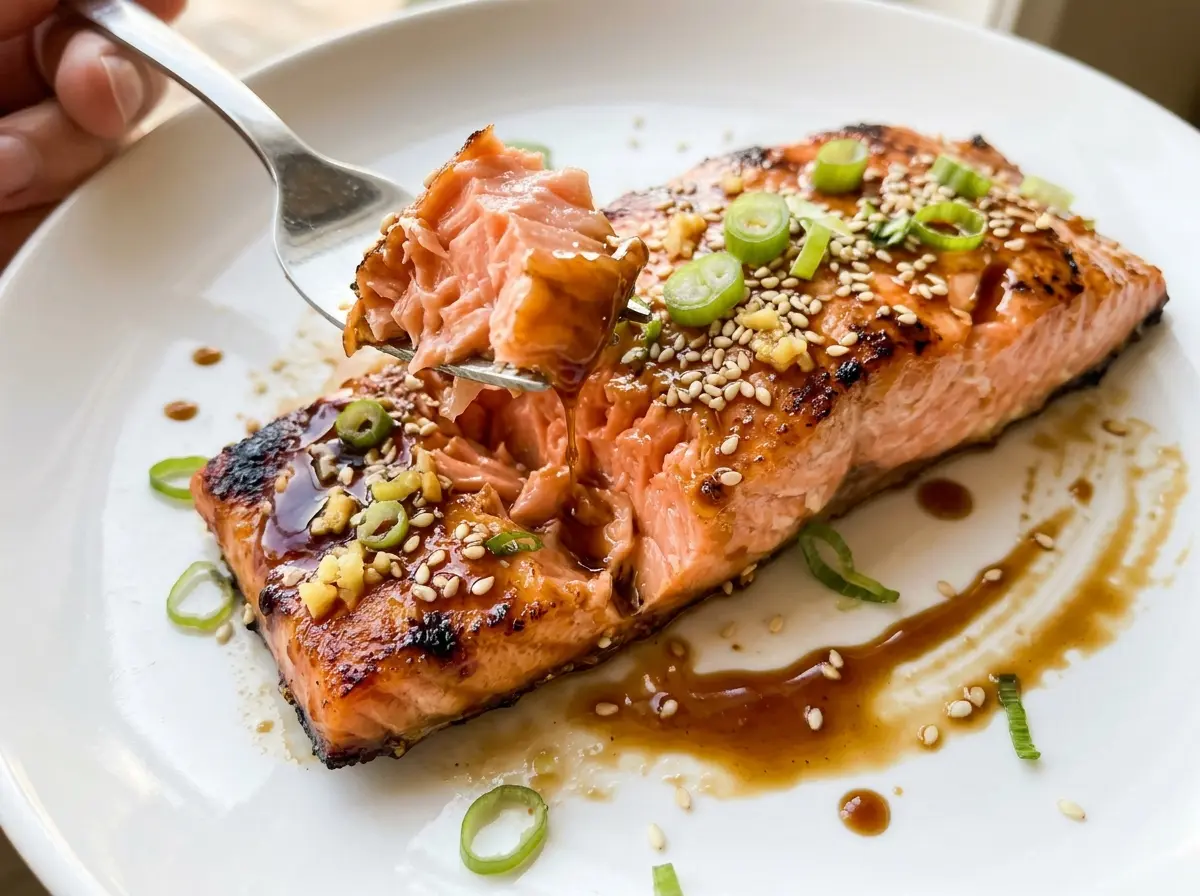
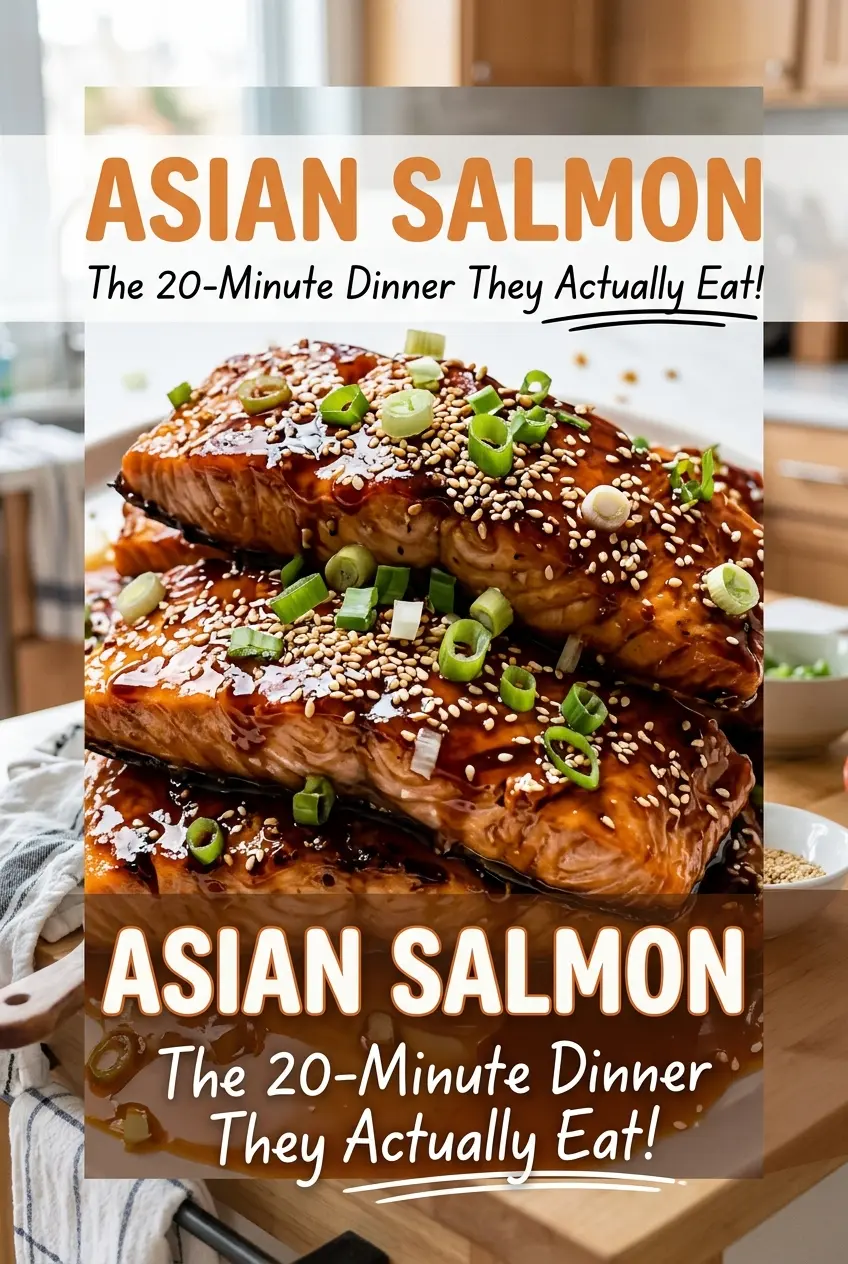
Cooking the glaze separately gives you control over its texture before it goes anywhere near the fish. The salmon bakes skin-side down on a lightly oiled, foil-lined sheet, then gets brushed once it’s cooked. That keeps the honey-soy glaze from spending the whole bake in the oven and leaves extra for serving. The finished fillets are tender, lightly savory, and glossed with ginger, garlic, and sesame.
Kitchen Note
Brush the foil with a thin film of neutral oil before setting the salmon down. Skin-side down is the right position here, and that little bit of oil helps keep the fillets from sticking to the foil.
Save this Asian Salmon for a quick dinner with glossy honey-soy glaze and tender ginger-scented fish.
Why This Soy-Honey Glaze Gets Cooked Before It Meets the Fish
A glaze with honey can scorch if it’s exposed to oven heat for the full time the salmon needs. Cooking it on the stovetop first solves that problem and lets you see its texture change before it coats the fish. The glaze only needs a short simmer; you’re not reducing it into a sticky candy coating.
Cornstarch does the quiet work here. Whisking it with the other glaze ingredients before heating disperses it through the liquid, so it can thicken evenly instead of forming little lumps. As the mixture simmers, it turns glossy and slightly thicker. Take it off the heat at that point. If you keep cooking until it looks very thick in the saucepan, it can be harder to brush smoothly over the salmon.
Keeping the glaze separate also gives you a better finish at the table. The cooked salmon gets a light coating, while the remaining glaze stays available for anyone who wants more. That way, the fish keeps its baked texture rather than sitting in a pool of sauce.
What Soy Sauce, Honey, and Fresh Ginger Each Bring to the Glaze
- Soy sauce — It supplies the salty, fermented backbone of the glaze, so a familiar standard soy sauce works well. A gluten-free tamari swap is described below; its flavor can be a little different, so taste the finished glaze before serving.
- Honey — Honey brings sweetness and helps the glaze coat the fish. Use a mild honey if you want the ginger and garlic to stay forward; a strongly flavored honey will be more noticeable. Pure maple syrup is a workable replacement, though it gives the glaze a woodsy sweetness instead.
- Fresh ginger and garlic — Freshly grated ginger disperses through the sauce and tastes brighter than dried ginger, while minced garlic adds a savory edge. Grate the ginger finely and mince the garlic small so neither leaves large, sharp pieces in the glaze.
- Rice vinegar — Its clean acidity balances the honey and soy sauce. The flavor is subtle, so there’s no need to seek out an expensive bottle for this recipe.
- Toasted sesame oil — This brings a distinct nutty aroma; a small amount goes a long way. Keep it in a cool, dark spot after opening so it holds onto that toasted character.
- Cornstarch — It gives the glaze a smooth, glossy consistency. Whisk it thoroughly into the liquid ingredients while they’re still cool; adding it after the sauce is hot makes lumps more likely.
- Skin-on salmon — The skin helps the portions hold together on the baking sheet and gives you a clear skin-side-down orientation. Choose fillets with similar thickness so they’re more likely to finish at about the same time.
The 15-Minute Bake: From Oiled Foil to Glossy Finish
Whisk and simmer the glaze
In a small saucepan, whisk the soy sauce, honey, rice vinegar, grated ginger, minced garlic, toasted sesame oil, cornstarch, and water until the mixture looks smooth. Set it over medium heat and keep whisking as it comes to a simmer. Cook for 2 to 3 minutes, watching for a glossy surface and a slight thickening. Remove the pan from the heat once it reaches that point.
Set up the salmon on the baking sheet
Heat the oven to 400°F, then line a rimmed baking sheet with foil and lightly brush the foil with neutral oil. Arrange the salmon portions skin-side down so the flesh is facing up. Season them with the kosher salt and black pepper. Keep the pieces in a single layer, with a little space between them rather than letting them overlap.
Bake, check, and brush
Bake the salmon for 12 to 15 minutes, until the thickest part reaches 145°F and the fish flakes easily. The clock gives you a useful window, but the thickest part is the place to check because fillets can vary in shape. Once the salmon is cooked, brush it with half of the glaze. Serve the rest alongside so the sauce stays glossy and easy to spoon over each portion.
Two Smart Swaps for the Glaze and the Salmon
Make the glaze gluten-free with tamari
Replace the soy sauce with the same amount of gluten-free tamari. The glaze keeps its savory base, though tamari can taste less sharp or more rounded than soy sauce. The rest of the ingredients and cooking method stay the same.
Use maple syrup instead of honey
Swap in the same amount of pure maple syrup for a deeper, less floral sweetness. The cornstarch still thickens the glaze, while the maple brings a slightly woodsy note that stands out against the ginger and soy.
Storage and Reheating
- Refrigerator: Store leftover salmon in a covered container for 3 to 4 days. The fish will be less tender after chilling, and the glaze may set on the surface.
- Freezer: Freeze cooked portions in an airtight container for up to 2 to 3 months. Thaw them in the refrigerator before reheating; the texture will be softer than freshly baked salmon.
- Reheating: Warm covered in a 275°F oven until the center reaches 165°F. Gentle heat helps keep the salmon moist; high heat can dry the edges before the middle is warm.
Questions That Come Up While Making Asian Salmon
Asian Salmon
Ingredients
Equipment
Method
- Whisk the soy sauce, honey, rice vinegar, ginger, garlic, sesame oil, cornstarch, and water in a small saucepan until smooth.
- Bring the mixture to a simmer over medium heat, whisking, and cook for 2 to 3 minutes until glossy and slightly thickened; remove from the heat.
- Heat the oven to 400°F.
- Line a rimmed baking sheet with foil and lightly brush it with the neutral oil.
- Arrange the salmon skin-side down and season with the salt and pepper.
- Bake for 12 to 15 minutes, until the thickest part reaches 145°F and the fish flakes easily.
- Brush the salmon with half of the glaze.
- Serve with the remaining glaze.