
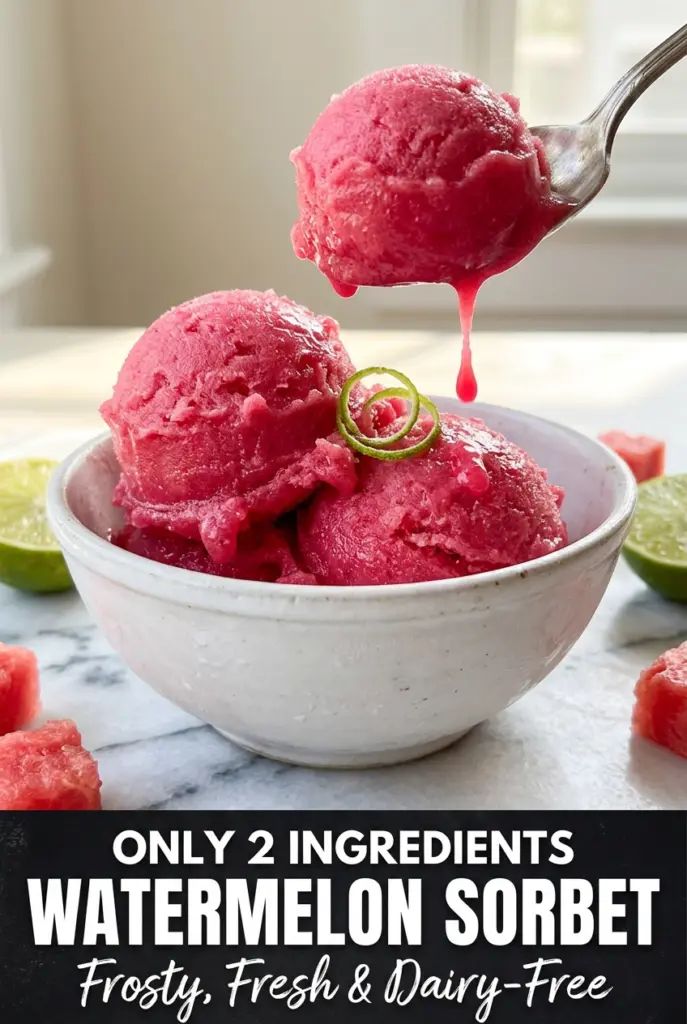
2-Ingredient Watermelon Sorbet
Frozen watermelon turns into a shockingly smooth sorbet with almost no effort, and the texture is the part that keeps me making it again. The blender does the heavy lifting…

By Ava
•
•
Reading time: 9 min
Tip: save now, make later.
Frozen watermelon turns into a shockingly smooth sorbet with almost no effort, and the texture is the part that keeps me making it again. The blender does the heavy lifting here: once the fruit is fully frozen and broken down with a little lime juice, it goes from icy chunks to a soft, spoonable dessert that tastes clean and bright instead of heavy. It’s one of those recipes that feels a little magical the first time you make it.
The two details that matter most are the size of the watermelon pieces and how fully they freeze. Small chunks blend faster and more evenly, which keeps the machine from straining and helps the final texture stay creamy instead of grainy. The lime juice isn’t just for flavor, either — it sharpens the sweetness and keeps the sorbet from tasting flat.
Below, I’m walking through the parts that actually affect the texture, plus a few ways to adjust the sweetness, firmness, and serving style depending on what you need that day.
I froze the watermelon in one layer like you said, and it blended into the creamiest texture without turning watery. The lime made it taste brighter, and my kids ate the whole batch before I could even move it to a container.
Creamy watermelon sorbet with just lime? Yes, and it blends into the smoothest summer dessert when the fruit is frozen solid.
The Trick to Sorbet That Stays Creamy Instead of Turning Icy
Watermelon has a lot of water in it, which is exactly why this recipe can go wrong if the fruit isn’t frozen hard enough or if the blender has to keep stopping and starting. If the pieces are still soft in the middle, you’ll get slushy patches that freeze into ice crystals later. Fully frozen chunks give the blades a clean path and help the mixture emulsify into a smooth puree instead of a rough, watery one.
The other mistake is overthinking the texture at the beginning. At first it will look crumbly and stubborn, and that’s normal. Keep scraping, pulse if the machine needs a little help, then let it run until the mixture suddenly loosens and turns glossy. That shift is the whole game.
What the Watermelon and Lime Are Each Doing Here
- Watermelon — Use ripe, sweet fruit with a deep pink center. Bland watermelon makes a bland sorbet, because there’s nowhere for the flavor to hide. Seedless is easiest, but if you’re starting with a seeded melon, take the time to remove every black seed before freezing so you don’t end up picking them out of the finished texture.
- Fresh lime juice — This is the ingredient that keeps the sorbet from tasting one-note. Bottled juice works in a pinch, but fresh lime gives a brighter edge and a cleaner finish. Start with the full amount, then add a little more only if the watermelon tastes flat after blending.
Blending the Frozen Fruit Until It Turns Silky
Freezing the Watermelon in a Single Layer
Spread the chunks out on a parchment-lined baking sheet so they freeze individually instead of clumping into one solid block. That small step matters because loose pieces hit the blades evenly and blend faster. If the fruit freezes together, you’ll end up waiting for the machine to catch up or adding more liquid than you want.
Letting the Blender Work Through the Crumbly Stage
Add the frozen watermelon and lime juice to a high-powered blender or food processor and start blending on high. The mixture will look dry and broken up before it turns creamy, and that’s the point where people usually quit too early. Stop to scrape down the sides, then keep going until it becomes smooth and thick like soft serve.
Serving Soft or Freezing for Scoops
Scoop it out right away if you want a soft, silky texture straight from the blender. For firmer scoops, transfer it to a freezer-safe container and chill it for 1 to 2 hours. Wait much longer than that and it can freeze hard, so if it sits overnight, let it rest on the counter for a few minutes before serving.
How to Adapt It When You Want a Different Finish
For a sweeter sorbet
If your watermelon is sweet on its own, the recipe is balanced as written. If it tastes a little pale, add a teaspoon or two of honey or maple syrup after blending. That gives the fruit a rounder finish, but it also softens the clean, fresh edge a little.
For a firmer dairy-free scoop
Freeze the blended sorbet in a shallow container and press parchment directly against the surface before covering it. That limits ice crystals and helps the texture stay smoother. It still won’t behave like churned ice cream, but it will scoop cleanly after a short freeze.
For a minty version
Blend in a few small mint leaves with the watermelon if you want a cooler finish. Too much mint can take over fast, so start small and taste as you go. It should taste fresh, not like toothpaste.
Storage and Reheating
- Refrigerator: Not recommended. Watermelon sorbet melts into juice fast and loses the texture that makes it work.
- Freezer: Store in a freezer-safe container for up to 1 week for the best texture. After that, it can become icier and less vibrant.
- Reheating: No reheating needed. Let frozen sorbet sit at room temperature for 5 to 10 minutes before scooping so the edges soften just enough to serve cleanly.
Answers to the Questions Worth Asking
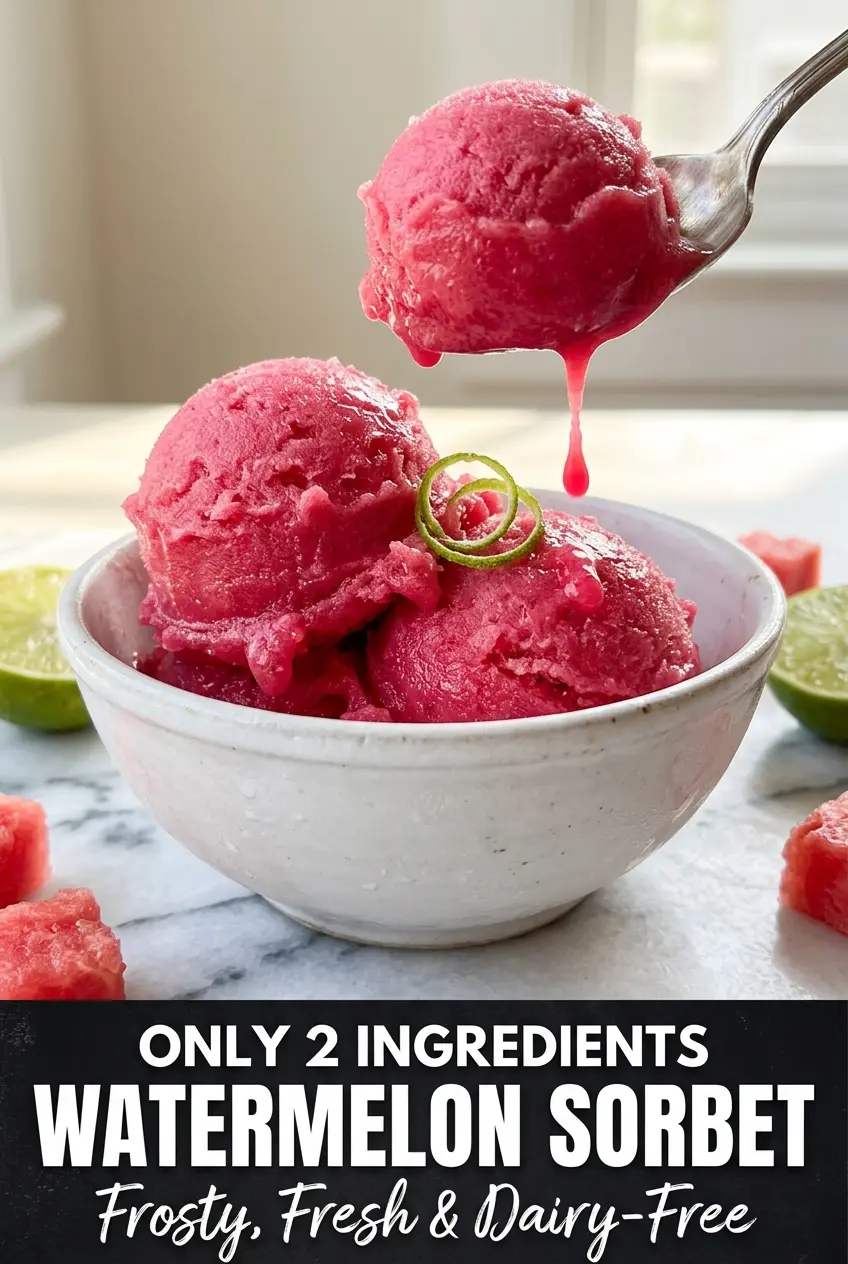
2-Ingredient Watermelon Sorbet
Ingredients
Equipment
Method
- Cut the watermelon into rough chunks, removing all seeds, then spread the pieces in a single layer on a parchment-lined sheet pan so they freeze evenly. Aim for a single, flat layer with no overlap.
- Freeze the watermelon chunks for at least 2 hours, or until completely solid. The pieces should be firm all the way through with no soft centers.
- Transfer the frozen watermelon chunks to a high-powered blender or food processor. Keep the blades covered by the fruit and work quickly so it stays frozen.
- Add the fresh lime juice to the blender. Make sure the lime juice is evenly distributed over the frozen fruit.
- Blend on high, scraping down the sides as needed, until completely smooth and creamy. Stop when it looks like soft-serve sorbet with a thick, spoonable texture.
- Taste the sorbet and add a little more lime juice if you want it brighter and tangier. The color should stay vibrant and the flavor should pop without tasting icy.
- Serve immediately as a soft sorbet for a creamy, spoonable texture. It should hold shape briefly before relaxing into the bowl.
- Transfer to a freezer-safe container and freeze for 1–2 hours for a firmer, scoopable texture. Chill until the sorbet firms up and can be scooped cleanly.
- Scoop into bowls or cones and serve right away. If desired, garnish with a small wedge of lime or fresh mint.